Ep. 191: From $3K to $12K: The SPRINT Campaign That Changed Everything
EPISODE 191
From $3K to $12K: The SPRINT Campaign That Changed Everything
About the Episode:
What does it look like when a solo nonprofit founder stops playing small and finally breaks through her fundraising ceiling?
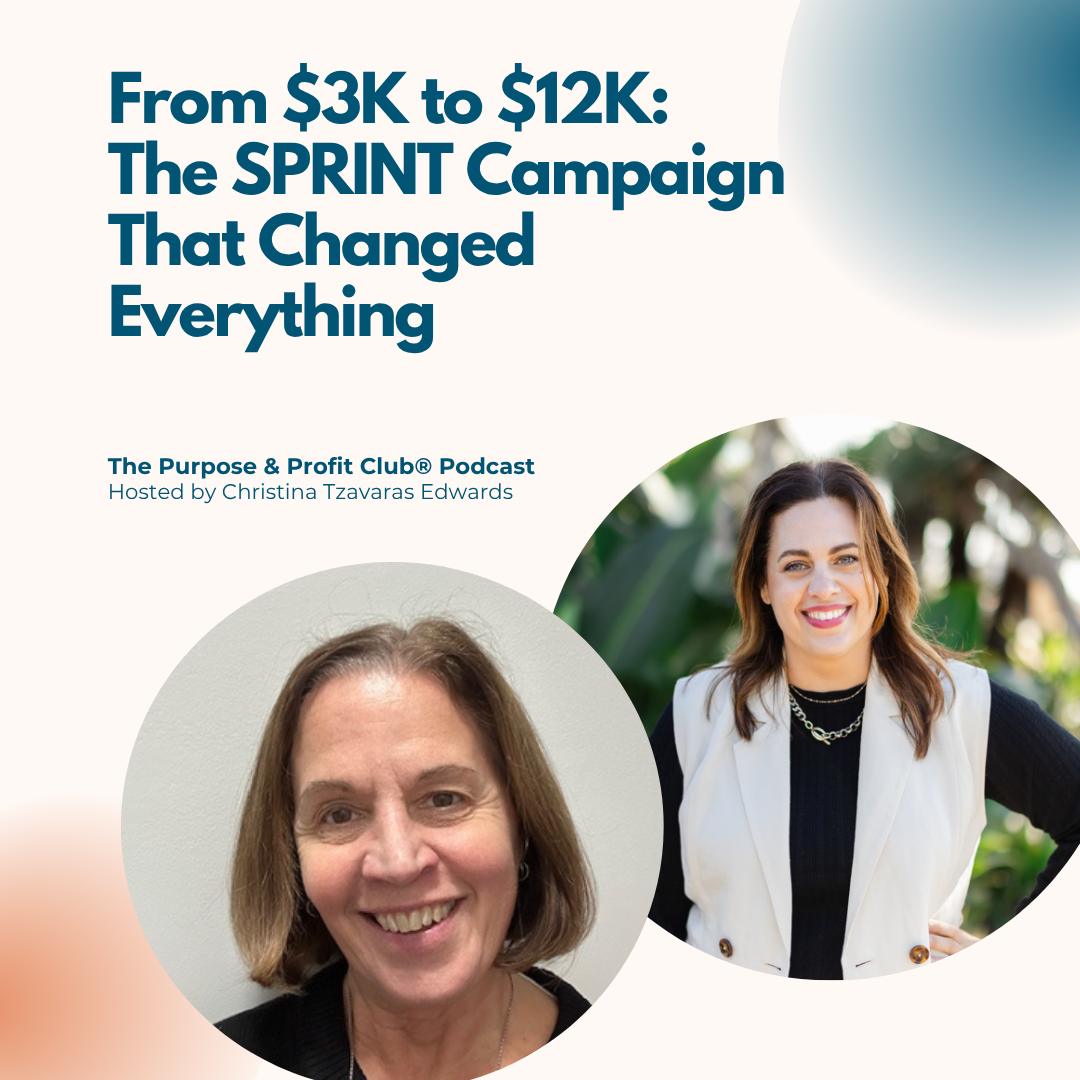
In this episode, I’m joined by Mary Muroski, founder and Executive Director of the Children's Legacy Partnership Foundation. After 20 years of teaching middle school and nearly a decade building her Uganda-based foundation (largely alone), Mary hit a wall. She was doing everything, raising from the same small circle of friends and family, and couldn't figure out what came next. Then she discovered The SPRINT Method™. Mary shares how she went from a $3,000 year-end campaign to hitting a $12,000 goal, achieving her first five-figure revenue month, and building the systems, confidence, and board accountability that will carry the organization forward. This is a must-listen for any small nonprofit founder who feels like they've taken their organization as far as they can go alone.
Topics:
Building a nonprofit solo while working full-time, and knowing when to go all in
How weekly emails became the foundation for consistent donor engagement and campaign conversions
Running a focused SPRINT Method™ campaign that raised $12K to fully fund a girls' vocational center in Uganda
Why monthly donors are your biggest evangelists (not a group to protect from your asks)
The difference between therapy and coaching, and how accountability drives fundraising results
Board building done right: applications, term limits, and having the hard conversations
It’s not your stories—it’s how you’re telling them. If your amazing work isn’t getting the attention (and donations) it deserves, it’s time for a messaging shift. The Brave Fundraiser’s Guide guide gives you 10 done-for-you donor prompts to make your message impossible to ignore. Get it for free here! https://christinaedwards.krtra.com/t/xKuLs6tOiPZa
Christina’s Favorite Takeaways:

“People want you to succeed.” Mary
“Monthly donors are your evangelists. They're your super fans.” Christina
“You hire a therapist to talk about your past; you hire a coach to take you into the future.” Mary
“The social media landscape has changed, so you can't replace the power of one-to-one outreach.” Christina
“You can't just come straight on and ask people for a donation; you need to build the trust.” Mary
“Monthly recurring revenue is so helpful for organizations scaling up.” Christina
“I needed that permission to send more weekly emails.” Mary
“If you start the foundation, take the time, slow down, and build the board that you need to grow.” Mary
“There's so much abundance in the world.” Christina
“I expand abundant success and love, and I inspire others to do the same, helping people give through me to the children.”
ABOUT Mary:
Mary Muroski is the founder and Executive Director of the Children’s Legacy Partnership Foundation. Mary had a 20-year career teaching middle school in the Champlain Valley district in Vermont. Her work in the classroom and her early visits to Uganda showed her how extreme poverty and violence can limit a child’s future. Those experiences led her to build a foundation dedicated to breaking those cycles through education and leadership development. Over the past nine years, the foundation has helped hundreds of mothers and children in Uganda move toward independence through vocational and business training, reproductive health and women’s rights education, and global leadership programs.
Connect with Mary:
Instagram: @ourclp
Episode Resources:
FREE Resources from Splendid Consulting:
How to Work with Christina and Splendid Consulting:
Double Your Donations - Raise More From Your Laptop Without Chasing Grants or Galas
Easy Emails For Impact™ - Turn Your Inbox into an Income Stream
Donations on Demand: Build a $5K Email Campaign System in 30 min/week
Connect with Christina and Splendid Consulting:
-
*Links may be affiliate links which means I may earn a commission at no cost to you.
Christina Edwards 0:00
Welcome back to the podcast. We have a very special guest. I've been looking forward to this conversation, Mary for a couple of coaching calls now where I'm like, we've got to get you on the podcast. So I'm so excited to introduce you to Mary maroski. She's the founder and executive director of the children's legacy partnership foundation. Now I'm going to let her tell you about the incredible work she's doing with that organization. How you got involved first, let's like, start with, like, a round of intros, and then we'll get into your biggest fundraising wins. I'm so excited to share so welcome. Great.
Mary Muroski 0:32
Thank you so much. I am very honored to be on this podcast, and I've listened to you for, couple years now, and you've made a big difference. So I'm very honored to be asked. So tell
Christina Edwards 0:44
us about the work that you do with your organization. I'm also curious myself how you first got involved with it. Sure.
Mary Muroski 0:51
So I traveled to Uganda 16 years ago with a colleague. I had always wanted to go to Africa. She was volunteering for an organization. The opportunity came up, and I said, I'm in. I'll go. I was still teaching full time at the time. And I said, you know, at every turn there were sites that were unbelievable, as far as poverty and schools in disrepair. Grandmothers raising, you know, their grandchildren because their daughters had died of childbirth. But equally unbelievable was a spirit, the ingenuity, the resilience of the Ugandan people, especially the women, they just welcomed me in. So I knew after that first trip, I would have to go back. And so I continued volunteering. And then, you know, I was as I was teaching in my own classes, I was seeing my middle school students were struggling with substance families with substance addiction and poverty. And so I was having that feeling that I needed to do something else. I wanted to go beyond the scope of the work that that original foundation was doing. And so nine years ago, I started the Children’s Legacy Partnership Foundation. As I was teaching full time. I retired from teaching four years ago, and now these last three years, I've really thrown myself into it full time.
Christina Edwards 2:07
That's incredible. I love it. From middle school teacher to nonprofit founder, that's so cool. I'm sure you have some middle school stories. Oh, I do.
Mary Muroski 2:17
I always say I want to wear a t shirt I serve you. You Can't scare me. I teach middle school. I arrived Middle School.
Christina Edwards 2:22
That's right. I think I don't know that I've met a person yet in my life that is like middle school. Now, that was the best time of my life. Like my my niece and nephews all agree they're they're 18 and in their 20s and and they all agree they're like, middle school just sucks. It's just hard. And so there is a certain love that I have for like all of the teachers who lean in and say, I'm gonna I got this group. It's awkward, it's hormonal, it's, I've got this group, and it's, I'm sure it's a very specific set of skills and patience and love, and so I'm sure that has transferred to the work that you do here, for sure. So I'd like to hear what fundraising looks like before joining my program, the sprint method. Now I know you were an Easy Emails For Impact™, so you sort of got a taste of of what we do, and then at some point, you decided to join the sprint method. And where were you like? What were you trying and where tell us about that fundraising experience.
Mary Muroski 3:22
Okay, so, you know, when I was at the beginning of the foundation, I was doing what I could with what came in. I was working full time, I had a lot of demand. So I said, You know what? And I'd seen other organizations get locked into having such reliance on them, and that the aid that then they couldn't like, they couldn't match that. And so I said, I never wanted to do harm. I didn't want to like, come in and give people hope and then pull it out from under them. I think that's one of the worst things, you know, that you can do. So we kind of raised money, you know, I was so naive thinking, if I build it, they will come, you know. So really, friends and family were giving, you know, a bulk of the time. Then when I threw myself in full time, I'm like, Look that we're at that turning point. I either have to give it everything, or we need to close. And then after the pandemic, we lost a lot of ground in Uganda and the pandemic, but once everything opened again, you know, I retired, then we were like, okay, full steam ahead. So what I was doing was the same thing, asking people for funding. You know, I was able to reach out a little bit, but it was really still tapping that same, that same group of people, yeah, so I had heard Rhea Wong you. I had heard you on Rhea Wong's podcast. I want to tell people the journey, because I think for small organizations, they will see themselves here. Yeah, and so you were on her podcast, and you really resonated with me, and I started listening to your podcast, and you know, and probably other people have done this, you start lurking, and you're like, Okay, what can I go? Clean, sure, what is the free stuff I can't invest because we don't have the money. And then I knew that. I knew that email was really important. I had seen other people like, you know, think that their social media channels was the way to go, and then have those, have those closed down, or, you know, whatever happens or they get hacked. So I knew that we own, we would own our email list, and that was where I needed to build. So then I started putting together, you know, like the monthly email, where it was long and it had boxes, the small font, trying to throw everything in there, and I just didn't feel right. And then somewhere along the way, I heard you, you know, offer the Easy Emails For Impact™. And that was kind of the that, course, was a real turning point for us, because they gave me the permission to, like, yes, you can email every week. Keep it short, keep it personal. You know, have those stories that resonate. And that has been, that was the first game changer for us, really, yeah, so I got to know you, I saw the platform, and then, you know, I really created a system. So since the since October of 2023 I think it was, I've sent no less than one email every week, and I'm really proud. That makes me want to cry.
Christina Edwards 6:23
That's happy tears. That's incredible, that's and that's amazing. Like, those commitment, yeah, yeah.
Mary Muroski 6:34
And there's sometimes they're like, oh, it's Wednesday, you know, I try to get sometimes it's Wednesday. You're like, oh. And then, you know, now I have that Bank of of emails. So there are times when you know of new donors, I'll just repurpose something say, hey, you know, here's the here's our the story about our name, and I'm going to reuse that. I don't do a whole lot, but I need to. The other thing that I did was really maximize that weekly email content. So it's the weekly email content, but then it's also repurposed as the blog post on our website the following week. And, you know, I use some snippets for social and then I post it as an article on LinkedIn. So good, then as a post on LinkedIn. We need to
Christina Edwards 7:23
get we're syndicating. Yes, this is so good. It's, it's, we don't have to start every platform from scratch. It's just like, use this pillar piece of content. Boom, syndicate
Mary Muroski 7:33
it out somewhere. Yes. And then the other thing, and this is, you know, since I've joined the sprint method, yes, maybe I just needed that permission, or that kick in the pants, because I will tell listeners, Christina is the kick in the pants that you need when you are feeling like you don't want to do it, or you're stuck, whether it's the podcast the program. So you know, that was the permission that you gave, was you there are times when you're doing a campaign that you can email more often. That was really tough for me, because I'm so protective of our donors. Since you know, down that list almost are people that I know, people that have given and so, you know, I always wanted to be protective of that, but I will tell you it has worked like people. People want you to succeed, they're behind you. So we did, you know, two campaigns, and I emailed, you know, within two weeks, I think I emailed five times that first time, last one, end of the year campaign, like, you know, I hit it hard. Yeah, it worked. It really did. And then, oh, I love hearing that, yeah. And then my next journey was like, I will say, you know, that again, I invested in that myself, not even money from the foundation for Easy Emails For Impact™ and but then again, I was like, okay, took that as far as I could. And I was, you know, a lurker. I was on your calls, the free calls, and was like, oh, you know, I remember one time you said you were doing some coaching, some tough coaching, and you said, What would you do if you were told that your foundation would close tomorrow? If you couldn't, you know, come up with whatever $10,000 I would ask anybody I could, like, you wouldn't let the doors close. That's always resonated with me. You were
Christina Edwards 9:22
so brave to get coached. And I thought it was you Mary. So I'm glad that I was like, that was Mary. I coached that day. So for the listeners, this was some free coaching I did, I don't know, and you were so we had a group on, but you raised your hand. You're like, I'll come on. I'll get coached. And I gave you this, thought experiment, which is, you will lose your 501, c3, you'll lose your nonprofit status if you don't raise 10k, this week or this month or something like that. I'll kind of, depending on where the organization is, I'll change the number to add. I'm adding friction, right? And I said to you, what would you do? Like, what would you do in that scenario? And you, you unlocked, like, I remember this. You. Go unlocked. You go, Well, I'd ask everyone like that, what you were saying is, Christina, that's not an option. We are never like these girls. I'm taking care of them. We are growing. This is happening. And I was like, Well, where is that unlocked today? Like, why do we have to put everything on the line for you to reach that label level of courage? And a lot of times it's what I need, the strategy, but it's also too, like, I need the support. It's really hard to do it alone. I need the kick in the pants coach, you know? And so I remember that coaching call, and I was like, I think that was Mary. So, yeah. So, like, I don't think it was for another year, maybe something like that that you you ended
Mary Muroski 10:37
up joining this friend, right? That investment at that time was, like, it just wasn't something we could show and, you know, we had other things that we had invested in, but then The SPRINT Method™ came and boy, that just clicked. And the reason it clicked was because those were other participants, like me. I wear all the hats right now. I'm getting better this year's gonna be a shift. But, you know, I'm the founder, the director, the board, the board president, you know, doing the marketing, doing pretty much all of it, and the other people in the club were mostly in that, yep, in that realm. And I felt like you really understood that there are other things out there that are hard for me to relate to, because people are talking about their problems with, you know, millions of dollars their major
Christina Edwards 11:26
gifts officer, yes, and you're like, we don't even have a development person, right? So a lot of our sprinters are solo, LED or part time. Have a small team. We also have a really great several organizations that serve Africa and Uganda specifically, which is so amazing I see y'all in the chat, like connecting, cheering each other on, really understanding that it is different. It is a different strategy. It is a different level of coaching to take the organization that's doing $5 million a year has a marketing team, a communications team, a development team, and the organization that is like, well, for this hour, I'm going to be admin, then I'll be ops, then I'll be programs, and I guess I got a fundraise at some point. But all I'm being pulled in all of these different directions.
Mary Muroski 12:15
Yes, yes. And I had gotten to the point where I felt like I was so, you know, doing everything, I felt like I was doing an okay job, but I taken the foundation as far as I could go. I got to that point where it was a door, and I was like, I need some way to unlock this door, like, I don't know what to do next. And so that's what the sprint method did you know for for us and, and I would say rousing success, like it has just been phenomenal. So do you want me to talk about our our campaigns?
Christina Edwards 12:51
And yeah, I want to Yeah. I want to share that I remember when you first joined and you were running multiple fundraisers at once. Do you remember this like they were sort of and I think that this is really common where you're trying to appeal to the market, so you're trying to go, what do donors want? Do they want this over here? Maybe they want this over here. I'll do a pop up fundraiser over here. And so it versus drilling in to one The SPRINT Method™, which is what we had you do with one strong story, so you had the her future starts now campaign. So walk us through one of your SPRINT Method™ or year end. Yeah, right. So our
Mary Muroski 13:28
First SPRINT Method™, when I had first joined, and I joined, I think, around the end of August, so I wasn't ready to open up our end of the year campaign. Was sure be careful, like not to overwhelm donors. We had 15 monthly donors, again, mostly friends and family. There's two people on there that I don't know. So I thought this will be the first SPRINT Method™, is I'm going to try, you know, two weeks, to increase our monthly donors. And really it was just within that email list that I had, and I did put some out on social, but it was mostly like asking those because I have a really warm list, you know, I only have 200 people, but we have over 55% open rate, which I think, with industry standards, is pretty good.
Christina Edwards 14:16
That's like double Yeah, yeah.
Mary Muroski 14:18
So, you know, and it was my first attempt using, you know, doing that, doing more than one email. We hadn't started with givebutter yet, and I'll talk about that in a minute. And so we had three new donors that joined up for month. He joined up monthly. Now that doesn't sound like a lot right now, but percentage wise, that's pretty good. And over the lifetime of that donor, we took two people who had only given a maximum of $100 a year to $300 a year. They're giving $25 a month, and then we had a new board member who joined as a new donor, you know, so to me, that was, that was a win. You know, it's huge. He went. As doing a SPRINT Method™, yeah, so that was Yeah, and that gave me confidence, then to move into our end of the year fundraising. So the things that we kept the same were our outreach letter, but the SPRINT Method™ that I was able to improve the wording, put a QR code on it, so we did have a better response rate. But we have started our campaign. And you know, this was a real stretch for us to put she, Christina knows, I will tell you, prior to the SPRINT Method™, prior to doing this peer to peer fundraising, our end of the year campaign. And this was in end of 2024 was maybe $3,000 so it was low. And again, we were tapping that same group over and over again. Yeah. So we set our goal at $12,000 and the reason that I sent did $12,000 was because that's what would fund our girls Vocational Center in Uganda for the year. I remember telling you in the group like, I need to be able to sleep at night knowing that these girls have a place to go to be safe for, you know, the next year. So that's right, 30 for 30 girls. Narrowing the focus on a fundraising campaign has also been a game changer. People are not out there like, well, I'll just give to this or that, when you can be super clear and narrow on your focus, 100% difference. So we had eight peer fundraisers, again, friends and family, but most of those were our monthly donors. And our monthly donors gave over each one gave over and above what they do for the year. So that's another myth. This is what they do.
Christina Edwards 16:45
Give more. Yes, monthly donors are your evangelists. They're your super fans. And yes, we're scared. We're like, well, crap. They already give monthly. I don't want to ask them to give to this campaign. They want to. They want this. I'm having goosebumps when you're like, I get now sleep at night. I know these girls have this for a full year. They want that too. Your donors want that. They also were like, We don't want this, you know, break in service, or break in programming, or, you know, we want to make sure these girls are taken care of. So I think that's so keep going.
Mary Muroski 17:16
Yes, we hit our goal $12,000 and it took a while. It was longer than probably traditional SPRINT Method™. And I learned many, many lessons. I got a lot of good stuff in place for when we do this again. Gained a lot of knowledge, but I was persistent. I gave, you know, every week I had a playlist for our donors. Yeah, you know, the rah, rah and cheering. And it ebbed and flowed. So, you know was there was a spike for GivingTuesday, sure down another little spike before Christmas. But surprisingly, and Christina kept saying this, people will give up until 11.59 on, you know,
Christina Edwards 17:56
December 31 Yeah, and it happened, yeah. I just want to honor a couple things. You said it was longer than a normal SPRINT Method™, and year end will be your year end campaign will be longer than your April SPRINT Method™campaign, traditionally speaking. The other thing is, when a campaign stretches out that long and it has the bigger goal than you've ever had, the the what the desire to give up is big, the desire to say, This isn't working. We're too far away from our goal. We're never going to hit it. Like to really stay with, like, 12k we're doing the 12k it's happening by December 31 like, that's where I really, like, I saw you change too in the past few months in running this campaign. And I really just want to say, like, kudos to you, because you stuck with it and so many other people, they quietly give up. Like, technically, the fundraiser is still live. You know, they're throwing a few things out on social but like, they don't believe they're going to hit their goal, and they quietly give up, which means that they then stop asking, they stop showing up so loud that energy is gone, and you stuck with it. And then, you know, your team members also saw that too, right? And so like that, energy is a huge part of your success.
Mary Muroski 19:10
Yes, when I read, when I went over it with our board at our last meeting, at the end, the board member who actually raised the most money, yeah, and he's got a great network people. He goes, Well, he goes, You were persistent. Yes, thank you. Because, you know, yeah, there were times you're just like, oh, nobody's listening. Like, I'm not gonna make it, ya know, but I'll say that's the difference in coaching. You know, I heard somebody say the other day, like, you hire a therapist to talk about your past 100% hire a coach to take you into the future. Yes. And so you like that coaching makes all the difference, because a coach is not there to be your best friend or your mother or to say, you know, that's okay, take it easy. Yeah. And I think that that coaching is like. So when I said, Well, I don't know what we're gonna I forget what part of. The campaign. And you said, Well, what are your board members doing? And yeah, commiserated that you know they weren't. And you said, you need to call them. You need That's right.
Christina Edwards 20:08
That's right. The hard conversations I remember that let's go. We're going to hold them accountable. They are board members. It is your end. It is everyone's super bowl season. Let's go. And you're totally right about therapy versus coaching. So therapy is like, where we generally unpack our past, or sometimes our present, but definitely our past. I call it like rear view. Totally need to do that stuff. Lots to do there. Very good. I think of coaching is one of those things that we have from age zero, if we're lucky, to about age 18, because I think teachers, the great teachers, and you, I'm sure you've seen this, even athletic coaches or art teachers, like they are coaches. And something happens when we become adults that no one we don't really have that person in our life. In general, you have to go seek it out. Sometimes you have a mentor. But I think about like my kid, so my second child, when she took her first steps, she took them very early. So what am I? I'm on the other side of the room, and I'm like, Come here, come here, come here, come here. That's what your coach is doing. We are holding that goal for you, and we're like, we got you, you can do it when you fall we I got you, you can pick yourself back up. We're talking you through it. Like, at no point are we like, well, I guess she's just not going to hit that milestone, right? It's like, I guess she's not going to hit that goal. It's like, Nope, that's what a coach does. It's very much centered on future, focused and the goal that you're presenting to me, and so the goal you're presenting to me, I'm like, we're getting there. It's happening. And when the fails happen, when the curve balls happen, because they do, because it's life, it's like, then we can go in and we can ideate, we can figure out, okay, well, what do we want to do here? What are we doing next instead? And part of that for you was like, Okay, we're going to talk to the board. Where's the board here? Yeah. So that was, like, a big conversation, a big, a big shift for you.
Mary Muroski 21:52
And absolutely, and it's the person you know. You hire a coach that has experience. Like, if you're going to hire a sports coach, you're not going to hire somebody that's never, you know, played football before. And it's also, you know, I think, for us that wear all the hats, especially we're so in it day to day, and so to help with that person who's objective, and even with the other people in the club, like, they can take in the information, and sometimes easier, you know, for somebody else to see, like, see what's going on. Yes, that out and say, Okay, now try this. Try this. For the next steps, it's been a game changer for us. Absolute game changer. We had our first five figure revenue month December, and same thing for January. Now, some of that's some of that's carry over 100% Yeah, from people that are like, Oh, I didn't get my donation and on time. And we had that last year too. That momentum carried.
Christina Edwards 22:51
But that's you're like, you're like, no problem. You can give in January.
Mary Muroski 22:56
It is not a problem. I literally had a donor in Korea who is expat living over there, yeah, she is messaging me on New Year's Eve, yeah. She's like, I forgot there's a time difference. I need to get this donation to you before. So we were back and forth, yeah, trying to figure that out. But yeah, yeah. And you had the experience, so you were able to say, this is what's going to happen. This is Yes, happen and yes, you know, those pieces fell into place. Oh, I love that.
Christina Edwards 23:27
So many big changes in you as a fundraiser. So tell us about how you've changed now, having run a couple of SPRINT Method™, and how you how you think about fundraising in your organization now,
Mary Muroski 23:41
yes, so I learned a lot of lessons. I learned a lot of lessons starting that was our I knew peer fundraising was somewhere we wanted to go to grow. I couldn't do any more myself. But again, I was still naive back in October, thinking like, if I build it, if I put it, you know, if I build it in, givebutter, share the links with people and ask them, surely, you know, people will come, they'll put it out on their network. Well, that's not, you know what's happening these days, like Facebook numbers or, you know, whatever the algorithms are, yes, even if they're not making it easy, you know, yes, even if you have a lot of friends. So that was a misconception that I had, yeah. So the growth that I've experienced, and what I'll do next time is meeting with those peer to peer ambassadors, like one on one face on the phone, like, these are the steps, and they need to, they need to get out there personally, yeah, and hit their network like they talk to their friends in person, call them, text them. I think gone are the days when you could put the link out there, when, you know, several years ago when that was new, and then people were like, Sure, I'll give $10 $25 that's what I found. That is not the case anymore. Yeah.
Christina Edwards 25:00
Yeah, that that, I would say the social media landscape has changed, and you can't replace just the power of one to one outreach. And so what we can do for you, so it's not all on Mary, to do one to one outreach is, boom, we've we're creating a team, right? We're creating a SPRINT Method™ team. And so that's how we help replicate that. And then one of the things I want to anchor in on is you mentioned, like, you know, you were asking mainly just a small group of friends and family, and for anyone who has started a nonprofit, who is a small business owner, like, yeah, that's how it starts. And it does feel like, Is this ever going to end? Where I stopped texting my aunt, my neighbor, and where are the people? But I want to honor that's how you start. And so you started by that, and then the next brick is okay, going outside of that bubble, friends of friends, right? Community members. And you're doing that so beautifully. And not only did you raise more money in this last campaign, you've brought in new donors. Now you have the system set up with the weekly email, so they're getting nurtured, because what we'll see is there are a lot of people who don't necessarily have that, that knowledge, right? They're not problem aware of what your organization does, and so that's just, I'm so excited for you to bring in new people in your pipeline that way, and also honor that. Like, the first step is networking. It's like that friends and family, I want to talk about, though, you're, you're a great networker, you're out there, you're talking
Mary Muroski 26:30
about, and it's not been, it's not easy for me. Like it doesn't come naturally. But, yeah, I might have said this to the group, like, I've joined groups, you know, since, yes, so I just get, if you're
Christina Edwards 26:43
just, you do if your desire is to not rely solely on friends and family for organization to grow, which I would say, like 99 out of 100 or like, yes, that's my desire. You're going to have to be in other rooms. You're going to have to do strategic networking. And you're really, you're excellent at putting yourself in other rooms, so I want to just give you kudos for that. And also, like, yeah, you're like, doesn't necessarily come naturally, but this is the part of, part of our organization's growth. And then it gets easier, and I know you're going to start to see it this year, is like, you're out in other rooms, you're talking, you're networking. Meanwhile, you've got these great SPRINTs Method™ coming up, right? So you'll be able to, like, bridge the gap to fundraising, because it's not just like, will you donate to our organization for any reason whatsoever? You're going to have some anchor stories, some anchor SPRINTs Method™ to draw new people in. So I'm really excited about that for you, too.
Mary Muroski 27:37
Yeah, great. Yeah, thanks. Yeah. So I started taking a Tai Chi class this year, which something I'd want that really gets me out of my comfort zone 100% Yeah, well, we were waiting for class the other day, I was talking to a woman, and, you know, I forget what I said, but it came up, you know, that I run a foundation. She goes, oh my gosh, I'd love to hear more about that. She goes, I, you know, traveled to Africa once, and, you know, I really loved it. So let me know more. So it's those kind of conversations. So that's been a big growth for me too, is, you know, you have to the relationships are so important. You can't just come straight on asking people, you know, you need to build that trust. And that's what I think that weekly email does, too. It really builds the trust people get to know you. They see you're consistent. And you know, when you're working in Africa, that's that's really hard sometimes, sometimes I wish, like, Oh, I wish we just worked, yeah, you know here, because it's easier for people to connect to, to people's experience,
Christina Edwards 28:35
yeah, you can't say, pop over. I'll give you a tour of our facility. There's no that, right?
Mary Muroski 28:40
Yes. So you want to keep that connection. One of the things that I'm really proud that we do is, you know, we provide photos and videos of where people's donations are going and the stories so people can make those connections. And I think our team in Uganda is fabulous. They do a they do a great job with that. And we're really proud of that. The donors get to see where their where their money is going, the impact it has. I love it 100%
Christina Edwards 29:07
that's going to keep your retention high. So you touched on it earlier. I do want to talk about your donation tool, because I don't remember what you were using before, but you did change what you were using to run your SPRINT Method™. Right? You switched for something else. And then you started creating them on givebutter. Is that what happened? Yes. So we used,
Mary Muroski 29:25
we've used donorbox, the free version, yeah, for several years. And then, and I was resistive when I first saw it, so I was like, oh, changing. You know, what's that gonna mean? And so, but again, you want to listen to your coach, just like I said, you know, my mantra for this year is not to say that won't work for us, because I want to be open, to be like, you know, if you're suggesting I'm gonna be like, Okay, I'm gonna give it a try. So it was so you had said, you know, look at good, good butter. And then, in the meantime, I was going to amuse. Event, and it was a nonprofit that was holding it, and they used give butter. And I'm like, Okay, there's something's aligning there. And when I went to the music event, I was asking the promoter, like, yeah, you use givebutter. And so she talked about, like, she said, it's worked really well for us, yeah, so, and I have to say again, I you know, right now we're using the free version. At some point, I'm pretty sure we're going to go into, you know, the other features of the version down the road, but I've been very impressed with it. Yeah, it's, it's been easy enough for me without the tech background. I mean, I'm fairly savvy, but to figure it out and that, you know, the thermometer, the just the the layout of it, I feel like it's
Christina Edwards 30:44
it does a lot of heavy lifting.
Mary Muroski 30:46
Yes, yes. And the other thing, again, another game changer for this last you know, our end of the year campaign was it allows you to take donations from so many different
Christina Edwards 30:58
Yes, yes. The
Mary Muroski 31:00
other one that we the other tool we were using, they weren't at that point. They may be now, yeah, but it was so easy for me to set it up through givebutter, like again, step by step. You know, we had people giving through donor advised funds, ch, PayPal,
Christina Edwards 31:17
Venmo, yeah, it was
Mary Muroski 31:19
really opened it up for people.
Christina Edwards 31:21
Yeah, I think that that. There's a couple of reasons why I have said you don't have to, but our most successful sprints are on givebutter, because it's just doing a lot of heavy lifting. You've got the supporter wall. It's easy to use. I've been in so many tech tools where I'm like, I log in. I'm like, get me out of here. I'm overwhelmed, I'm stressed. I don't want to learn this looks clunky, and so I knew the back end was good. I knew the user experience for the donors were good, and it just had just it had a lot of what we need, and when we are running peer fundraisers, in particular, you need your tool to not give that overwhelm to the people you're asking to be your peer fundraisers, because it needs to be, like, easy peasy. And so it checked a lot of boxes. So I was really happy that that you liked it as well, and it's been such a great tool for you. That's really interesting, that you got to, like, try it too for the concert, so you you were on the other side, right, and yeah, and just being able to have PayPal, have Venmo, have all of these other options. I mean, this is no longer a nice to have in fundraising. It really is a non negotiable. It's like, how easy Can I check out? Even in my own, in my own business, I've been looking at, we did some updates to our checkout where I was like, Okay, I need to make sure that it's, it's, it's, you know, Apple, pay Google, we have all of these things because I want somebody to also pass the litmus test. Can they run a transaction from the couch, right, without getting up and grabbing their credit card? And that's what we need. That's definitely what we need for them.
Mary Muroski 32:54
We're seeing, I'm seeing more people ask me about accepting donor advised funds.
Christina Edwards 32:58
Yes. I think DAFs are huge this year, yeah. So we had a few of those this year, amazing.
Mary Muroski 33:04
And this year, for the first time, we had five individuals give, oh, maybe more than that, but at least five gave over $1,000 it means huge for us.
Christina Edwards 33:14
You have a major donor pipeline. And so that's what I love about SPRINTs Method™, is it's so much data comes from it. So you got data on your recurring donors, right? You got data on all of the people outside of your your network that are new people for you to really kind of roll out the red carpet for and start to connect with. You got data on the people who are leaning in and like, Hi, I have capacity to give more, and also I have alignment with your cause, so it gave you new leads for your pipeline. So I think that's so exciting. Yes, as you look into what's next, next for your organization, walk us through your vision this year, I want to know what's next.
Mary Muroski 33:54
So our vision this year is, first of all, you know, again, I would say, as I was so new doing this, you think you're going to be able to help everybody with everything? Yes, we've really narrowed our focus so that we are much more clear to donors on our three specific, you know, areas, you know, girls and women's economic empowerment, food security and youth leadership and global citizenship. So we're really looking at those buckets and those programs. So we right now. So I joined Rotary. That was one of the things that I did first of all, because they resonated with me a couple years ago and but now they are helping us work on a global grant, which will be pretty big this year. Scary again, getting me out of my comfort zone. But our next logical move is, which you would talk about on a podcast a couple times ago, with these small
Christina Edwards 34:51
micro events.
Mary Muroski 34:52
Yes, micro events where you get groups together, yes, so and just talk. You're not asking for a donation. So I see that as the next logical place 100% and so I have two people in mind. One had already talked to me the end of last year about possibly doing, you know, for a group of friends, either at their home or at this the clubhouse in the community where they Yeah, so you know that at the end of this month, which is coming quick, I know, but that's going to be our next logical move. And then I will plan out a couple more SPRINTs Method™ that are based on some outreach that we're doing. Yeah, if I go over to Uganda, that'll be a logical one where, yes, you know, gather for programs, and, oh yes. And I like to do a couple, at least two SPRINTs Method™ throughout this year for monthly donors. That's 100% really, really want to increase, because that makes such a difference for us that, yeah,
Christina Edwards 35:53
That monthly can plan on it. Recurring revenue is so, so helpful for organizations scaling up.
Mary Muroski 35:59
Yeah. And then the other thing, our other area of focus, again, is getting, you know, growing that email list, growing those contacts. And so you and I have spoken
Christina Edwards 36:09
on that, yeah, and it's just like, I love SPRINTs Method™ for this too. Is because you're getting new donors this way, which is naturally growing your email list. It's like it's all serving the bigger picture. So I'm so excited to support you this year on that. As we wrap up today, I'm curious, what would you say for somebody who's listening, who's juggling too many fundraisers, not hitting their goals? What would you tell them?
Mary Muroski 36:34
I would say, get. I would say, get, get coaching. Like, yeah, absolutely. I like, I feel like, you know, I can navigate information. You know, I know, as a teacher, I know how I took in information. Give me a book, I'll read it and figure it out, yeah, and sometimes you know what to do, where you just need that person to give you that push or that like, I needed that permission. I needed that permission to send weekly emails. I needed that permission to send, you know, more emails. When it was a campaign, I couldn't push myself, and I talked to other people that run foundations all the time, and I said that, you know, sending those emails has just been the game changer for us, you know, number one. But then taking it, then it, like I said, I took it as far as I could
Christina Edwards 37:21
Yeah, when you have, like, the email Foundation, and then we layer on the SPRINT Method™ campaign, that's when we see the conversions happen.
Mary Muroski 37:27
Yeah, it's been huge. And again, you know, to have other people in the group. And I think there are four other people in our group that have foundations in Africa, yeah, but sometimes we can commiserate, yes, oh yeah.
Christina Edwards 37:42
It's different. Being an international organization, it is different. And so yeah, to have somebody who's like, yeah, I get it totally and I think we've got such we have such an affirming, positive group in there, it's just yeah,
Mary Muroski 37:55
yeah, it is. So when you see, like, you know, that level of poverty that we deal with every day, like that, extreme poverty, yeah, where kids are, you know, eating maybe one meal every other day. You know, we can kind of talk about like, you know, what that, what that, how that lays on your heart, and how you have to keep going, yes, so how you take care of yourself so that you can keep going, so that you can that's important to find that balance.
Christina Edwards 38:21
Yeah, that for your nervous system, yes, yes. 100%
Mary Muroski 38:25
my other piece of advice, which I wish I had done at the beginning, but you learn, is, you know, you you start an organization, and you want to get up, get up and running again. You think, if you want to do it like all your friends and family are going to be so excited. And so, you know, I asked friends and family to be board members because you just want to get going. So any advice I would have is, like, slow down. First of all, ask yourself, if you haven't started a foundation and you want to, like, do I need to start a foundation? Or can this need be met by me helping another organization? Yep, but if you start one, take the time, slow down, to build the board that you need to grow. So now we're very careful, you know? I haven't I'm so proud of this that we have an application process, you know, we're asking the right people. We just got another application from somebody who's very it was going to make a big difference for us. There's a lot of tech skills. She's young, she has energy, but we're really clear on on the application that you just because you say you want to do it doesn't mean you're going to be on the board. Consider it an application that's right through the application. Yes. Check references, yes, and so that you know, and then give term limits, yes, yeah, and just make it really clear, like, if you're on the board, we're a working board. These are the expectations.
Christina Edwards 39:49
It's very, very common for newer organizations to ask their friend, their spouse, some you know, to be their board members. And as you say, that's not the best board members. It's common to be in the spot you were at and then go, we're gonna, we're gonna revamp this, right? Having the application, having a board agreement, those are and then holding people accountable. Because sometimes people will go, I have the application, I have the board agreement. They're still not okay. Now it's hard conversation time, which is then like, okay, come get coached. Come get coached, and we'll take care of you. Yes, yeah. So we
Mary Muroski 40:21
also want to build out our volunteers, yes, but again, and it's different for us, because not everybody can go to Uganda. We don't need people to go to Uganda, but we need people to help here. But coming up with, like, a job description, like this is what we need. This is how many hours it might take. And then if you find you've started it, but then you can't like continue, just let us know, so being clear with that communication, but again, so that you know, I can start to to give out some of the jobs to other people to make the foundation sustainable
Christina Edwards 40:53
100% Yeah, I'm so excited for you. We ask everybody on the podcast to share with us one thought they like to think on purpose. So this could be a mantra, a guiding phrase, a quote that just helps you move forward and keep going. Would you share yours with us absolutely?
Mary Muroski 41:11
So every single morning for the last I think three years, I have just started like with a calm and said to myself, I said it out loud, I expand an abundant success and love, and I inspire others to do the same and help people to give through me to the children. And so I take that off of, you know, just pulling in is like, what can I do? And I probably got that phrase from someone, but that has just recentered me every day. I think it can be easy to get into that thing like, oh, that person, you know, that foundation got a million dollars, and they don't need it as much or so. I've tried to come at it with a real mindset shift of abundance. There's enough for everybody.
Christina Edwards 41:58
There is yes.
Mary Muroski 41:59
Because if you come at it like, you know, why aren't, why isn't our foundation getting this money, you're going to turn people off. People are going to feel that and sense it. It is, you know that just like span and abundance success and love, you know, today and every single day, and inspire others to do the same, has really, like, set me up for success every day. I think, Oh, that's so good.
Christina Edwards 42:21
You're reminding me. I don't know what coach I had that said it, but they said when you're in that, like, comparison mode, when you're in that like, oh, there's not enough, and that whole thing, it's like bad cologne, right? It's like body odor, right? It's like a bad cologne. And reciprocally, I think that when you're in this abundance space, when you believe there, there is enough, there is plenty people want to help my organization who also donate to another organization. We want both. I'm here to you know, I talked to my son last night next to me. I have all of my clients inside the SPRINT Method™ and in the club on the wall, and I was letting him, he was asking me about one of them, and he was like, Do you don't you want to? I was like, I want to donate to all of them, right? I want to. And so, like, we and we do, right? We can help here, we can donate there, and it's like, and so we all, if not me, it's somebody else who wants to donate. Like, there's so much abundance in the world, I think that that draws people in in the opposite way that the bad cologne does, right? I think it's like magnetizing, right? And so that's what you're doing. You're drawing people in every single day.
Mary Muroski 43:25
you know, and I hate to gush on you, because I don't want to embarrass you, but you have just like resonated with me. I think that you know, and I think you do with other people that are similar, you know, foundation and background and has just been a game changer. You know, you're accessible. You know, the courses has the resources in there. Sorry. The other thing I didn't say, too, is, mind that SPRINT Method™ that AI Assistant, oh my
Christina Edwards 43:52
gosh, she's great. We love her
Mary Muroski 43:55
game changer. We're spending a lot of time together these days. Helped with the sprint method with our website updates, like, I can't say enough good and I again, low tech skills, and it's easy. Yeah, it's easy.
Christina Edwards 44:09
Oh, I received that. Thank you for saying that. Where can everyone connect with you? Tell us social website or LinkedIn. Where do you like to
Mary Muroski 44:16
hang out? Sure we are our website is our C L p.org, o, u, r, c l p.org, we are on Facebook, Instagram and YouTube, and I post on LinkedIn also. Yes, people can reach me at Mary, at our c l p.org if they want to ask any questions about my experience. You know, in the sprint method, Easy Emails For Impact™, but I would love to connect with people and help them, you know, pay it forward. The same, the same, yeah.
Christina Edwards 44:49
You know, I've gotten well. Thank you for the work you're doing with these girls. It's so important. And thank you for letting me be your coach. It's been such an honor. So I'm excited for this year. Thank you.