Ep. 190: The $20K Pivot: Canceling a Gala and Raising More with Sharing Hope Africa
EPISODE 190
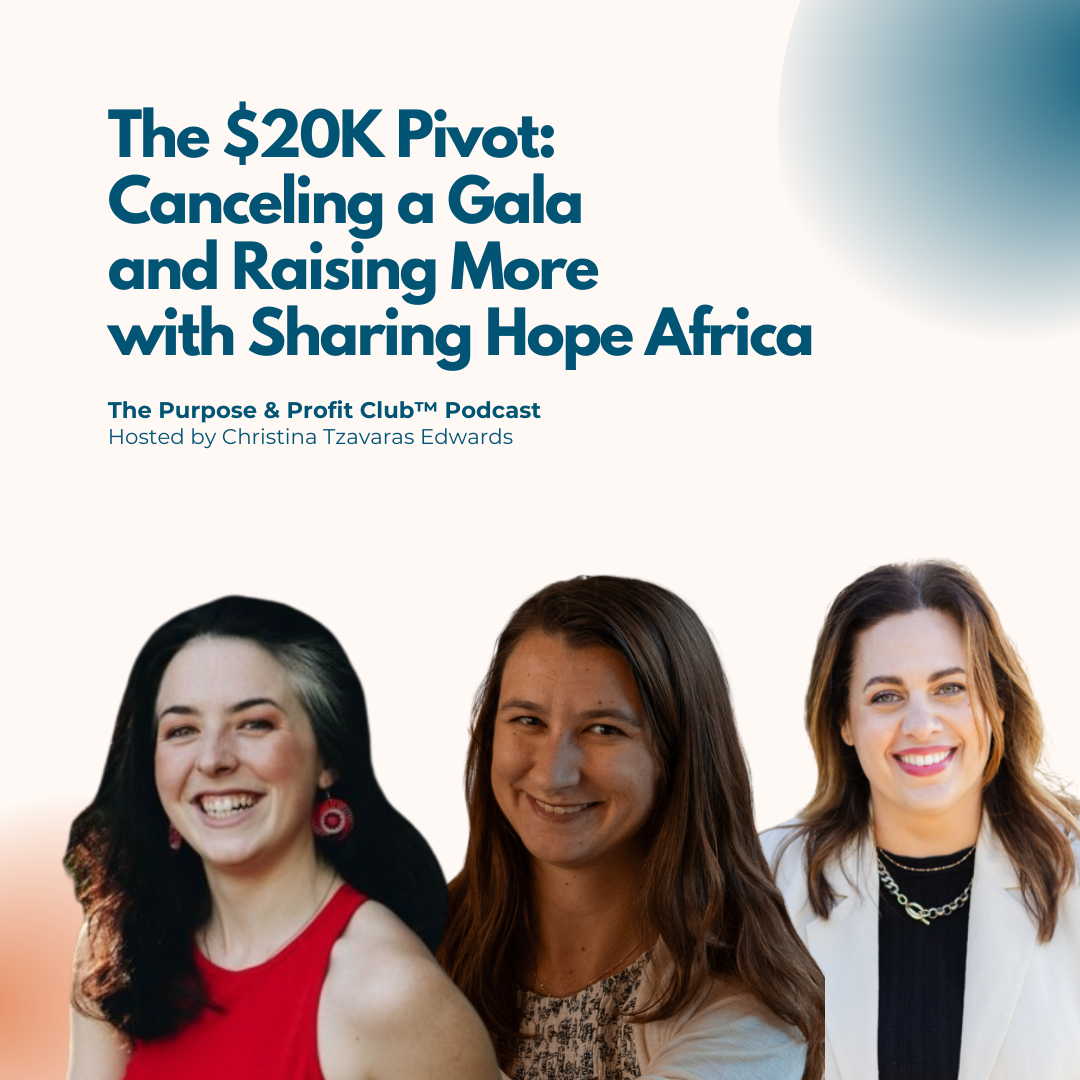
The $20K Pivot: Canceling a Gala and Raising More with Sharing Hope Africa
About the Episode:
Sometimes the most powerful shifts in fundraising start with a simple decision: we’re not doing it the old way anymore.
That’s exactly what happened for Sophia Caputo and Jami Porzl, co-founders of Sharing Hope Africa. Balancing full-time careers, they were preparing for a large gala when they decided to pause and rethink their approach. What followed was a completely different fundraising path, one built on clarity, community, and focused campaigns using The SPRINT Method™.
In this conversation, we discuss what shifted when they stopped guessing and started fundraising with intention: activating their board, building donor momentum, growing their confidence in making asks, and planning for long-term sustainability, including a community chicken coop designed to eventually fund the preschool permanently.
This episode is a powerful look at what happens when strategy replaces burnout, and when small nonprofits step into bold leadership.
Topics:
Building a nonprofit while working full-time jobs
Pivoting from a high-cost gala to a lower-lift fundraising event
Using a focused SPRINT™ strategy to raise $20K in months
Moving from friends-and-family donors to a real donor pipeline
Activating board members as fundraisers
The impact of funding on a preschool in Mozambique
Long-term sustainability through community-led solutions
The moment they hit their fundraising goal in the first 10 minutes of an event
It’s not your stories—it’s how you’re telling them. If your amazing work isn’t getting the attention (and donations) it deserves, it’s time for a messaging shift. The Brave Fundraiser’s Guide guide gives you 10 done-for-you donor prompts to make your message impossible to ignore. Get it for free here! https://christinaedwards.krtra.com/t/xKuLs6tOiPZa
Christina’s Favorite Takeaways:

“I'm not anti-in-person event. I'm anti-overhead and burnout.” Christina
“The SPRINT Method™ templates have just been literally life-changing for us.” Jami
“The SPRINT Method™ is perfect for a recurring giving campaign.” Christina
“I choose to believe that I can change the world and make a difference. And I see it every day when we get those pictures of those kids at that preschool in Mozambique.”
“Am I acting from a place of fear or love?”
ABOUT Sophia Caputo:
Sophia is a full-time business development and workforce transformation consultant with a passion for helping others and building community. After working with local startups in Cape Town, South Africa during university and falling in love with the region, she began exploring opportunities to volunteer her skills to make an impact in southern Africa. For the past 6 years, she's been able to do this through Sharing Hope Africa - partnering with local initiatives to increase access to education, employment, and healthcare.
ABOUT Jami Porzl:
Jami is a social-impact entrepreneur and co-founder of Sharing Hope Africa with a passion for community-led development. After first visiting Africa at 13 years old and falling in love with the continent, she made it her mission to help support communities in the region. With a background as a mechanical engineer and packaging project manager, she brings a practical, systems-driven lens to mission-driven work. In her free time, Jami is an avid scuba diver and traveler and loves spending time with her daughter.
Connect with Sophia and Jami:
FREE Resources from Splendid Consulting:
How to Work with Christina and Splendid Consulting:
Double Your Donations - Raise More From Your Laptop Without Chasing Grants or Galas
Easy Emails For Impact™ - Turn Your Inbox into an Income Stream
Donations on Demand: Build a $5K Email Campaign System in 30 min/week
Connect with Christina and Splendid Consulting:
-
*Links may be affiliate links which means I may earn a commission at no cost to you.
Christina Edwards 00:01
We have two very special guests today. They are my clients inside the sprint method, and I am so excited to welcome them to the podcast. We have Jami Porzl and Sophia Caputo. They are the co founders of sharing hope Africa, and I've been hanging out in the green room just just absolutely talking to Jami about everything that she's been doing and really the way that this organization got off the ground has scaled up. Even though they both have full time jobs, they both have careers, families, personal lives, and they've been able to to grow this organization. They've also done something really smart, which is I wrote down in my notes collecting shuttered organizations. So we're going to talk about that smaller organizations in Africa which had maybe great programs, but then shuttered, and being able to collect them, revive them, the work they're doing is so so great. They came into sprint and hit the ground running. So I'm really excited to welcome them both to the podcast. Let's start by just a short round of intros and tell us about sharing hope Africa, Jami, we'll start with you.
Jami Porzl 01:04
Okay, so I'm Jami. I am 29 years old. I've been working in the Africa space for about 1415, years. Now. I have a full time job, but this is really my passion project. Absolutely love it. And, yeah, I brought Sophia on, and we became partners, and here we are today.
Christina Edwards 01:30
Sophia, jump in. Tell us about sharing hope Africa.
Sophia Caputo 01:34
Yeah, hi all. My name is Sophia. I like Jami. I'm in my 20s. Little bit different, though. I didn't start going to Africa quite as early as Jami did, but during university, I went and interned with a startup accelerator in Cape Town, South Africa, and was blown away by the creativity, the resourcefulness and kind of the juxtaposition to the way that they bring about innovation and solve community problems there versus in some first World countries, and when I came back to the US, I knew that I wanted to volunteer my skills coming from a business background, to help further the mission or amplify the good work that people were doing locally in southern Africa. I like to say I don't need to have the good idea. I actually don't like it. I think one of the things Jami and I love the most about sharing hope is that we're not managing day to day operations. We're not managing the preschool that we support or the farm that we support because we haven't lived there. We don't live there, but we have incredible partners who do who believe in the work they're doing, and that's where we get to come in and support again, with product management, background, social media experience. Now that we're in SPRINT program, we're actually learning how to fundraise successfully. So thank you for that, but yeah, it's been great. So far, amazing.
Christina Edwards 02:51
So I feel like when we first met, you were at a pretty pivotal moment. You were about to do your first big gala, is that, right? It was your first one, and I think you can kind of set the stage for us. Of like, Where were you with fundraising? What were you struggling with? And you had this gala idea in flux, so, like, walk us through that.
Jami Porzl 03:18
So we brought a new board member on, and he had this idea of throwing a big gala. He has a higher network network. He really wanted to, so we were joining with that idea. But then we also were introduced to you and your method, and we were kind of in flux. I remember when we first talked to you, you're like, the point of my program is not to rely on a gala and right? The idea is originally to use the sprint method as like a jumping off point for the gala, or using the gala as a jumping off point for the sprint method to expand our donor base so that we can really cultivate them within the sprint method. But however, we actually found the sprint method way more effective and less work than doing the gala. So we actually canceled the gala and we did like a cocktail fundraiser, which was much more of a lower lift, and we use the sprint method to get people interested in the event, and then we fundraise at the event.
Christina Edwards 04:31
So you went from I'm going to have this multi five figure Gala, which was like a huge upfront investment that was going to hopefully look great, hopefully make way more than than it cost, but it was a big cost upfront. You had that sort of in motion when we were talking. And I remember when you came to a call pretty early in sprint, and you're like, Yeah, we're not doing that. And I was like, oh, oh, we have made a turn. We've made. Data change. And then you changed into this cocktail hour, which was lower lift in so many different ways. You know, everybody can picture the big gala versus like a cocktail hour with family and friends, networking, that kind of thing. And you're you were both so much more calm and excited about it. And then the idea was like, Okay, how do we package that into a sprint and Sophie, I'll kind of throw it over to you, tell us about what happened next.
Sophia Caputo 05:28
Yeah, I think one of the things that's been super helpful in working with you is re grounding in what's a realistic goal. Like, what is your realistic goal? What is your easy one? I think Jami and I have started asking each other that question when we're doing like, our own working sessions. And so I think what shifted for us was we realized we had the people to have this, this cocktail hour. We had an event. We've been doing an event annually, so we had that kind of like, people expect this from us, but you level set with us, and you're like, No, if you're doing a fundraiser, it needs to be a fundraiser. You can't just sell tickets. You have to have your fundraising strategy. And I think you'll see like, throughout this conversation, you'll hear Jami and I were maybe throwing spaghetti at the wall and seeing what stuck, and going around annually to friends and family and asking, like, Oh, can you give us some money? This is the issue. This is the issue, but there wasn't a clear strategy for growth. And so I think another benefit of the cocktail hour, we had give butter up there, which we started using again because of SPRINT program. We had that thermometer up there, but we had messaging ready for people at the event, ready to send to their friends and family. The emails already teed up. We knew what we wanted that to look like. We knew how many people we needed to engage like. We went through the checklist and the templates for Sprint method. Took what we did from our first sprint that we ran in September to raise $8,000 we raised $9,000 in a weekend, which we had never, ever done before. And we were able to take that same template, the same things that you teach us to do, apply it to selling tickets, apply it to fundraising night of at the gala, and now we're looking at how we can apply it for monthly donor drive. So like we're seeing how you can use it again for ticket sales, for night of, for 10 days sprints, five day sprints. It has been so helpful and changed how we go about this. Yep, and I think also helped our burnout too.
Christina Edwards 07:22
Yeah, it's exhausting when you're like throwing spaghetti at the wall, when you're following the well meaning board member who has a suggestion but is not implementing it, when you're asking your friends and family, and it's not coming from a place of of generosity. It's more like, can you please donate again? It's like, weird, and it's just versus, like, y'all had such good momentum and energy around both of your campaigns. I was so excited. Like, I think one of the things that people can get a little confused because I'll talk about laptop fundraising, I'll talk talk about, you know, fundraising without a gala is I'm not like, anti in person event. I'm anti overhead and burnout. I'm anti that. I'm anti what your people don't even want to go into the thing. You know, your event looks so fun. You had the little video you shared, and you were like celebrating. It was such a good event. And to get your community together, to come together to actually see the work you're doing in Africa is so, so valuable, but when you orient them to a goal, it is the difference between you and I going for our Sunday drive and we're just cruising right tops down. We're cruising, we're having fun. We end up nowhere. But we cruised and plugging it into our GPS and boom, we're, you know, we're exactly where we wanted to be. That's kind of the difference.
Sophia Caputo 08:42
Yeah, absolutely. I think Jami and I were just in like a working session. War Room type whiteboard populated yesterday. And again, we started working with you, July, August, ish of last year. Yeah. And we were able to raise nearly $20,000 using sprint method in this not even the full second half of the year. And so planning our fundraising for the year, and again, having that GPS points. Like, okay, we know we raised about $10,000 at that event last year. How can we increase that? Like, what if we want to get to 20 we know we need $30,000 by the end of the year. Where are we spacing this out? And again, like having the sprint method and having that has given us the opportunity to actually look at the strategy.
Christina Edwards 09:30
Yeah, less burnout and Jami. Anything else to add there?
Jami Porzl 09:36
Yeah, the sprint method templates have just been literally life changing for us, because, as you mentioned, we both have two full time jobs, so it's not like we have days and hours on end. We are very limited in the time that we can spend. And using our CEO time and using the templates, we're able to just get so much more done in the time that we. You have, yeah, yeah.
Christina Edwards 10:05
Can we talk about the impact of this, this increase in funding for your organization, because what you've brought in has, I've heard, and I just think it would be really cool to share, like, what you've brought in.
Christina Edwards 11:09
so how has that increase in funding impacted your programs. Like, tell us what you've been able you're smiling. Like, tell us what has happened from that
Sophia Caputo 11:27
in so, in September, we were at the preschool in Mozambique. The school's been around for over a decade now, and it has not seen really any kind of upkeep in at least six years, like we're talking pre pandemic, and so paint was cracking. One of the roofs was leaking, so it wasn't being able to be used. That's that's 30 to 60 kids that we couldn't take into the preschool because that classroom wasn't functional. The desks have completely fallen apart. They were wooden. They lasted for a decade. They did not they do not last anymore. The playground was torn down. The fences weren't there at the preschool. The schools never had electricity. There were all of these capital improvements. We did the math it was going to cost about $8,500 seemed like a lot, and then we put together sprint. We sent it out again. We raised that money in a weekend. We raised the full amount. And so for the first time, probably since sharing hope, preschool was constructed, I think, like, the full building was maybe done in like, 2012 2013 it is repainted. There's electricity, there's lights. The kids, they're starting school this week. They're going to have desks. They're not going to be sitting on the floor the school year. Yes, and
Christina Edwards 12:39
like, I could cry like I think in the States, as a parent myself, like it is, we're talking about whether it is disruptive when your kid can't go to school, when they can't go because the school can't take them for whatever reason, whether it's weather. I had my kids preschool way back when, where I we literally picked we picked him up from preschool, and on a Friday, and by Monday, his school was shut down, never to be open again, because of mold. Like it is, right? It is disruptive, which is like we look at this and or will be like, but another school was able to take us, so we had about four days of interruption, right? Four days versus the stop starts, or an environment where a child's on the floor is completely different learning environment, like what you've created for these children is remarkable in just the beginning.
Sophia Caputo 13:28
Yeah, and something I want to call out, oh Jami, go, because you're a mom now you have a new person
Jami Porzl 13:35
to say that this was my first time. You know, I've been going for 14 years, but this was my first time. And I actually brought my one year old daughter. This was my first time there with her and my husband, yeah, and being there as a mom and I Sophia, could attest. I broke down like but I think it also helped our donor base. Seeing me there with my daughter, kind of putting it in perspective for them, like these aren't just kids halfway across the world. They're the same age as Ellie. They're experiencing the same things as Ellie. The moms and parents of these kids are experiencing the same thing I'm thinking of I'm experiencing so really transformative for our donor base, because, like you're saying, it's already an uphill battle to get a job in that region, and then you have to worry about how your child's being taken care of, who's taking care of them. Is school going to be open? Is school not going to be open? What's the situation that mental load on top of trying to find a job and showing up for that job and doing a good job, it's just something that we don't want for these parents, because at the end of the day, they're the ones that need to make money to support their families.
Christina Edwards 14:55
thinking of the. Mental load of you two as founders, going, can we open next month? Can we open next week? If we don't have enough funding for it like that is a huge mental load for you. So it's both sides, yeah, Sophia.
Sophia Caputo 15:12
And what I'll say to that is, like you asked again, what? What's changed? What's the impact been? So the first part is getting the school, like, back to, yeah, good condition. The second piece is, at the end of the year, through that event that we did, through our year end fundraising, we had enough to confidently like, No, we're going to be able to keep this school open for the full year. And based on the money we have in the account, our strategy for fundraising this year, we've decided to open the school back up to full capacity and rehire two staff members we had to furlough last year. I like, are we crying on this?
Christina Edwards 15:49
Like, yes, this is so huge, huge, huge, huge. Like, I think one like, running an international organization is such a huge feat, right? Because you can't physically be there all the time, and that the two of you have been able to do this, going a few times a year with full time jobs, and have this level of impact is phenomenal. And just the beginning, just the beginning,
Sophia Caputo 16:19
I agree. I feel like we're on the precipice of something good. Yeah?
Christina Edwards 16:24
For sure, yeah. Let's talk about what's so you've had a couple of sprints under your belt. I've seen both of your confidence and fundraising change your confidence in asking change. Can we talk about that for a second? Yeah? Who's? The more who is, the more naturally confident fundraiser or more avoidant of the two. If you're like, not who's not it and who's like, I'll take it. Okay, Sophia is right, yeah, okay, so talk to me.
Sophia Caputo 16:51
Yeah. I grew up doing like, in community theater, like, I would say, like our perfect dinner theater, and like, growing up were my second homes, that being said, asking for money still feels just gross. The nice thing again, like there's the scripts that you have in smart method, and I think the best way, like I can kind of illustrate it is we were working with one of our volunteer interns at the end of the year to start activating them as a fundraiser, and he's been with our org for about six months now. Join was, like a little bit quieter, maybe has, like a marketing background, and we were, we just got on the phone, and I was like, let's, let's break this down. And I think while my confidence has grown in asking people for fundraising on like little things, what I'm also noticing is I'm having more confidence in asking others to join and to fundraise with us. Yes and Yes, such a huge I think, like what Jami and I are realizing we need to do those asks, and then we need to go for big dollar asks, like those are big gifts. So with the activation like that, volunteer, Logan, went out and he raised $500 and like half the time that he expected. Yes, yes. That confidence, I think, is like bleeding through from Jami and I into the rest of the team. And then, in terms of the larger asks, we're starting a new program for the preschool. It's about $3,000 a month to operate. Our goal is to get $1,500 from individuals, monthly recurring donations. Love it. But the other piece that we're really focusing on is a like $1,500 one time donation from 12 different groups, be it businesses, influencers, micro influencers, and so now we're starting to work on our scripts for how do we make those bigger asks? How do we have that conversation? And confidence wise, we've talked about doing this before, and I think the biggest testament is like we've talked about it since Jami and I met for five years. We talked about doing some kind of partnership, program, sponsorship thing, and this is we have a plan. We're doing it. We're starting to do outreach, I think, in two weeks, and we're just going to reach out to people, like, two or three times a week, get used to hearing the word now, because eventually a yes will come through. Like we would not have had the confidence to do this a year ago. We wouldn't have had the the resilience, tenacity, endurance, to risk getting told no for like, those larger dollar amounts, and it's so clear, like, that's where, that's where we're going to see that growth, like, that's where we're going to see that impact and change 100%
Christina Edwards 19:28
I think the confidence to hear no, to fall and get back up is that is your growth plan. And it doesn't sound like, well, I don't want to fall a bunch, but it's like the no's pave the way to the yeses, and it's cliche and it's true, and that's why I love coaching so much, because we as a community are lifting each other up. We are, as a community, are celebrating inside a sprint. We're I'm holding you all accountable. So when y'all are veering over here, I'm like, come back to me. Come back. Right? So I think that that's another layer of like. Why this is working for you and why you hit. I was looking my notes like, one of the one of the events you're I remember in the first 10 minutes, you're like, Christina, we hit our goal in the first 10 minutes. Like, it is such a change in where you were before this.
Sophia Caputo 20:15
God, yeah. And like you said the community piece, like Jami and I feel like we've tried. We've gone to a couple of, like, nonprofit events or meetups, yeah, but there's nothing that's that we've been a part of that's so consistent. So having those monthly or BI monthly calls with the rest of the sprint, yeah? Like, we're getting ideas from other people, and it's great, of course, to get your coaching. We just have other people who are, like, going through it too, and we're like, Oh, yeah. Like, that's how you're building your campaign out. Oh, we could do something. Yes, it gets so valuable. And yeah, creating in a silo, it just it gets lonely. Burnout happens faster, less creativity, all those things. I feel
Christina Edwards 20:49
like somebody in the chat said, like, Oh, I'm stealing that idea to somebody. And it was like, yes, steal the idea. Like, there's no apologies. And like, with recurring giving and things like that, sprints are perfect for a recurring giving campaign. So I love that. Like, that's something you're going to be working on. I want to talk about future focus, like, what So walk us through. Like, you've been doing some planning. We have a planning session coming up. Walk us through this year. Like, what it what? What does the organization look like? What are you working towards? What are fundraisers? Talk to us.
Jami Porzl 21:18
So I can speak a little bit towards Operation part. And then Sophia, maybe you take the fundraising plan part, because you've definitely been taking the lead on that. So in terms of operation, like Sophia said, we opened the school up fully, we tripled our intake of students, and now we're up to 100 students. And then on the back end, we're doing more in depth reporting and pictures, and we've repeated the local photographer that'll be sending us pictures every month to then work into those campaigns, because Pictures speak 1000 words, definitely. So that's what it looks like from that perspective. And then we're going to start working on the transition to self sufficiency. So Sophia can speak a little bit more to it, but our next big, big sprint is going to be fundraising for a chicken coop that will then fully, eventually fully sustain once we scale it to school and create new jobs, and then we wouldn't have to worry about funding the school, just on a month to month basis, just for capital improvements and things like that. So that's the long term vision. Sophia is going to tell you how we're going to
Christina Edwards 22:30
get better. I well, I got to jump in. And let's say I love this self sufficiency plan. That's, that's the key. That's the key, especially with an international organization like that. I think it's, it's has dignity, it helps the community scale up. So I'm really, really excited about that vision. Okay, Sophia, over to you, Christina.
Sophia Caputo 22:50
We are too. I think it was one of the first conversations Jami and I had. I think it was probably maybe in the same sentence that she introduced herself in. It was like, Hi, I've stepped in. I'm helping these programs. And, like, at one point I don't want to, like, at one point. I want us to be irrelevant, like, I want us to fix the background, for nobody to need us anymore, and for us to just, like, get to go and visit our friends. Um, so we, we've started that plan. Like, phase one was fixing the preschool and getting it open to full capacity this year, so we're there. Phase two, like, Jami was talking about the big, big piece of it is this chicken coop. So in Mozambique, it's like, your perfect, I won't bore you with the details, but perfect, like business case needs scenario, there's a shortage of chickens. There's a nonprofit that already does work with providing people chickens. We want to team up with them and build a chicken coop near the preschool within the first six months of operating. On a pretty conservative estimate, if we have 300 chickens, we're selling eggs the profits from that, like Jami said, They'll create two jobs for women in the area. It'll be food that we can feed the preschoolers, but the sales from that chicken coop are going to cover the entire year cost for food. So, yeah, we're setting up our like monthly sponsor program, which is great, like, yes, but the goal is to start shifting that ownership back into the community. And this is our like test run. We'll see how it goes.
Christina Edwards 24:19
Yes, yes. I call this upstream thinking. I think nonprofits sometimes are putting band aids on wounds, right versus going, why are we getting wounds in the first place? Right? Upstream? And so at first, yes, we need to fundraise for this here. But what does it actually look like to like solve the bigger problem with upstream thinking, and I'm really excited about this. This is good.
Sophia Caputo 24:43
I'm geeking out. So we're planning to do that early spring or mid spring, so like April ish timeframe. And hopefully the chicken coop will actually be finished being built in May. And even though it'll start generating profits, we're not slowing down on fundraising by any means. We're. Planning to run another recurring donor sprint sometime over the summer in the interim, and then we still are figuring out what are like the little pieces in between, because we know our big fundraiser at the end of the year, that'll be the cocktails for our cause event in October. I think our fundraising target is $25,000 we'd like to have half of that from a matching donation, which hit my stomach and I feel my hands getting clammy, but like, those are the goals, like we're pushing ourselves to now and again, like between the chicken coop that'll take care of that piece the end of the year fundraising, or, like that bigger fundraiser, that's where we're expecting to get the capital that we need to know we'll be able to keep the preschool open, just in case anything happens with the chicken coop. And hopefully when we're planning on maybe going to Mozambique in April as well, while we're fundraising. And so we're hoping to see, like, Okay, what other areas could be like a now? Now focus. We know there's a plot of land close to the preschool. That's a garden. It's in dire need of irrigation. I think it's going to cost another $8,000 to get that set up. And so depending on how the year is going, that might be something we look at throwing in in August. But again, we have that, like, two quarters, maybe full year planning session with you next week. And so yes, to really, like, pressure test that and see, like, Does this make sense? But yeah, we're in a like, we are in the best place that we've ever been as an organization, and that is what's allowing us finally to start that upstream thinking,
Christina Edwards 26:34
yeah, because yeah, when you're constantly having to fill smaller gaps in funding, all you can do is band aids. All you can do is stitch something up and we go and we go, versus, like, the bigger holistic problem. So, yes, I'm so excited by that that's amazing. I want to talk about your donor pipeline a bit more. So, very, very commonly, newer, scaling up organizations, emerging orgs will have initially, that donor pipeline is going to be friends, it's going to be family, it's people, you know, and that's good. That's how we start, right? So if I, you know, when I first started my very first business, that's exactly what it was. It was just, you know, you start working your network, and then beyond, how has your donor pipeline changed? And how are you changing it this year to put more leads into your pipeline, whether it's at an individual, smaller gift a mid or major level.
Jami Porzl 27:42
So like you said, it's mainly family and friends. And one thing that we're looking to do, especially with this activation for the food sponsorships, is we're looking for those partners to not only, you know, some of them will just do a one time gift, but we're looking for them to do different recommendations. So partnering with a bar where they'll promote us, partnering with a bakery where we'll do so some co branding, things like that, to continue to reach outwards. And then Sophia mentioned, we're leveraging our interns that do a lot of our legwork. We've been using them and teaching them how to fundraise so that they can do that and expand the network, and then that's it. Now, activating our board, because previously, the board was just kind of advisory and taking Yes, and now we're leveraging them as well.
Christina Edwards 28:38
I'm so glad you mentioned the board, because I think, again, very common that the board is exactly how you described in the beginning. But that's also because unless we can give the board a playbook and go, this is what we're doing, this is when we're doing it, this is how we're doing it, and it's not going to kill you, it's going to be okay. We're going to do it together. Then it's really hard to have the board be a fundraising board. But when you have that playbook, and they know it's a sprint, not a marathon. I can handle a sprint. My son and I were playing a game last night, and it was like, what would you rather do in a triathlon? I was like, I and it was like, which one do Would You Rather? What do you not want to do? And I was like, I don't want to run that long. So it's like, I don't want to do the marathon. I want to do the sprint. And I for the board members who are not natural fundraisers, it's the same thing. We can handle a sprint. We can handle a sprint. Yeah.
Sophia Caputo 29:29
I mean, I also remember, I think, during our like intro call, we were, we were doing the absolute bare minimum of like, board engagement, like bare bones, and I remember you encouraging us so much. Like, no, like, set up. Get those calendar holds now start, yeah, talk to them immediately. And like, we had a board meeting last night, and it I didn't feel like we had topics for an hour, but as soon as I started showing them what we were working on, it turned into. A brainstorming session, and they were more enthusiastic about giving 100% and they were more enthusiastic about our fundraisers coming up. And they were like, Oh my gosh, I don't know anybody but, or it's like, oh, I if you tell me what to say, I can do this. And that transformation, I think, also is something like we have, instead of doing quarterly board meetings, we have another one set up for next month. Like, I think we're that's awesome on a monthly basis. And, yeah, that's another huge shift that I think we're going to not fully realize, like, how much it's impacted us until we get to the end of the year.
Christina Edwards 30:31
And then a collateral benefit of that, I'll say, is, like, when your board members are actually fired up and also feel in the know and feel excited, they're just going to be out in the world and they're going to meet Mary, and Mary is going to be like, Oh, you need to know so and so, let me connect you. And then Sophia, she's our closer, so she's going to do the hard ask. We don't make anyone else have to, you know what I mean? And so that's when your board actually starts to help bring in people to your pipeline, too. You're not making your board member, you know, ask for a $10,000 gift. You're like, I'll take them to lunch. I'll have the call. I'll tell them about this program, but they start thinking with that end in mind, versus, I'm sort of sitting on this board and and I'm just kind of hanging Yeah,
Sophia Caputo 31:13
the nice thing too, and I'll call out, because I think I maybe got in my head about this is I don't think Jami and I felt like we had a lot to update them on. And again, yeah, the things moving so slow with the band aid kind of approach that we had to take, yeah, it just felt like we were going to them with our tail between our legs every single time. And I think, like, what we've realized after every call, they're like, you're doing, you're doing so much work. Like, thank you. This is incredible. And yes, that encouragement and building up that relationship has given us a lot more confidence. And like, you were saying that they're going out into the world, they're just talking about it, that's something I think we also want us to be more intentional about with our entire donor base. So like looking at how we're communicating with them, how we're emailing them that, and guessing again, like they were so excited to help us last night, like they were like, they were like, Oh my gosh, this, this and this and like, we need to know this. Send us this information we want to talk about this next time. I'm like, that was just from us having a group chat and meeting once a month. Like, not even once a month. Like, we can do that with our donors, and probably find at least some that are that excited 100%
Christina Edwards 32:20
Yeah, that regular communication gets people more excited and engaged. Whether it's from the donor side or the board side, you'll start seeing a lot of collateral benefits, even just like more board members, you'll see a board member go, Oh, we got to have so and so on the board. I was just talking to them, they know, X, Y and Z. You're like, oh, okay, new great board member is happening from this I love it's like new energy in the organization with this. So anything else to before I ask you our final question, I want to make sure I give you space anything else that you'd like to share from today's conversation,
Sophia Caputo 32:53
I genuinely don't know how much longer it would have taken us to get to the point where we could start that upstream thinking and that future thinking, and like, have a plan to get these programs transferred back to the community. And like, thriving, and it's become our light at the end of the tunnel, and it's given us so much more confidence. So yes, like, the fundraising absolutely has been crucial. It's not just the money that in our bank accounts that's changing. Though. It's like, we literally can approach our strategy for the year like yes in a completely new way and have an end goal in mind.
Christina Edwards 33:30
And that feels so good. It feels so good. Yeah. Jami, anything to add?
Jami Porzl 33:35
Yeah, it my husband looked at me yesterday after I came home from, like, our long planning session Sophia, and he's like, You just look lighter in this past year than you've looked in the decade that I've been you just you feel happier about it. You're happier when you're home. You're not stressed out all the time. You're proud of what you're doing. So yeah, it's the money in the bank account. Yeah, it's the confidence, but it's also it takes some of that burden off, to make us feel so much lighter, which I think allows us to engage with our donors just so much more genuinely, to inspire them to donate, rather than to ask them. So I think that's 100% probably the biggest change within me.
Christina Edwards 34:22
I love it.
Sophia Caputo 34:24
Christina, I want to add one more thing, too. Like Jami and I, again, we're small. We have had the are we going to be able to keep the preschool open next month? Are we going to be able to send salaries? We are so paralyzed at the thought of spending money on anything other than sending donations directly to Mozambique. And any of the overhead investments we're talking like the donor platforms, the website hosting like that, has all been personal donations from us that, like we cover, and we paid for, and I remember talking to you and like looking at all your programs, and it felt really scary, and we made some investments across the board, like last year, and I will. Say, like, there are things that, like, maybe we wouldn't spend our money on again every single time. If anyone is looking for a program and, like, a way to change their fundraising, I would say 1,000% 10 times over, sprint methods, definitely worth it. And like, depending on what level of your business, like, I trust you so much the materials you've created. And I don't know if there is anyone who's listening, who's like, wondering, is it worth that investment? Like, can I really swing it again? You'll, you'll get it back, yes, in terms of donations. But everything that Jami just said too with, like, yeah, it alleviates so much. So thank you. Yeah, thank you. It's like,
Christina Edwards 35:37
it's been an honor to work with, with both of you. So I received that. Thank you. Thank you. Thank you. We ask every guest to share a thought they like to think on purpose, affirmation, a quote, something that's just resonant and helping to guide you forward. We can you guys, can share one as a group or individually, but I would love to hear your thought. I
Jami Porzl 36:10
So the thought that I choose to think on purpose is that I can change the world. I just feel like so often, especially right now in the political climate and everything that's going on, people just feel like they're lost. They don't have a voice or anything like that. And I choose to think that I can change the world, and I can make a difference. And I see it every day when we get those pictures of those kids at that high school,
Christina Edwards 36:40
that makes me want to cry. I'm like, You Are you guys are 100%
Sophia Caputo 36:48
I love that one thought that I've been thinking on purpose a lot is almost a question. It's, am I acting from a place of fear or love? And for me, it's a great moment, because I'm building more awareness around coming back to that place of love, and it's like, okay, am I fundraising because I'm afraid the school's not going to open? Or am I fundraising because I love these kids and I love the work they're doing, and the confidence that it's given me has been incredible, and it's reminded me of like, the purpose. Like, I want to go and like, way back in the day, I used to go to church the way they did. Every sermon was like, go and love on someone. And that idea of like, again, like Jami said, changing the world, like, it can be the little things every single day. And acting from that place of love is something I'm choosing to think on, meditate on a lot more on purpose, beautiful.
Christina Edwards 37:42
Oh, those were two beautiful ones. Thank you. Thank you. Where can everyone connect with you? Where's the best place? Where's the social what? Where do you like to hang out socially, and then make sure we'll link to your website and
Sophia Caputo 37:52
all that good stuff. Yeah, socially. Instagram is our main place to be. Our handle is just at sharing hope Africa same on Facebook. In case you didn't pick up on it, we have a small team, so it's me or Jami or one of our like volunteer interns. If you ever want to get in contact, you can always send us a DM. It'll probably be one of us that responds. Awesome.
Christina Edwards 38:15
Yeah, amazing. Thank you all so much for today, this has been such a beautiful conversation. I really just appreciate you both sharing your story with us, and it's just the beginning. It's just the beginning.
Sophia Caputo 38:27
Thank you. Christina, all right. You.