Ep. 205: From Grant-Only to $20K in 20 Days: How Aftersight Transformed Its Fundraising
EPISODE 205
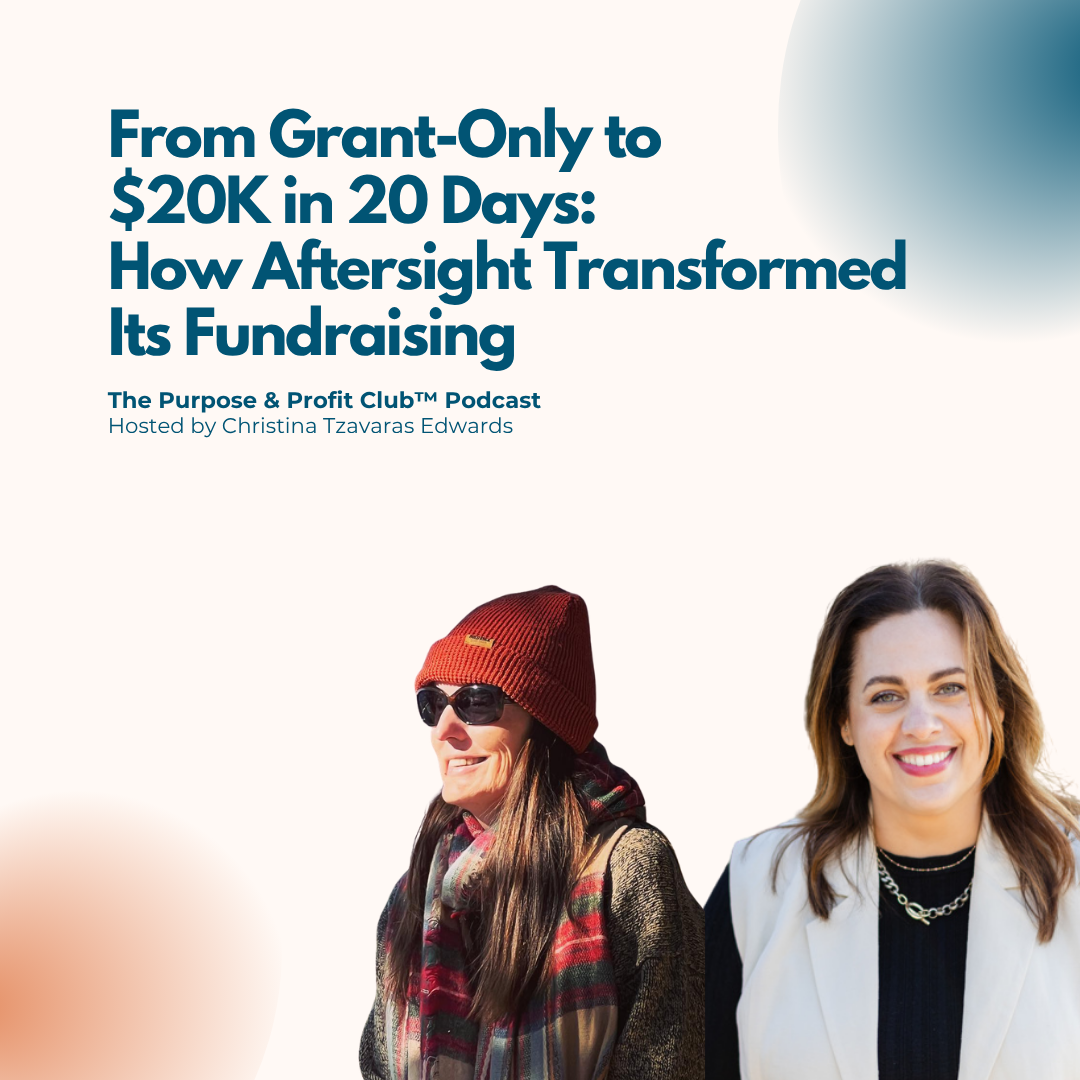
From Grant-Only to $20K in 20 Days: How Aftersight Transformed Its Fundraising
About the Episode:
What does it look like when a 35-year-old organization that has never fundraised decides to go all in on individual donors?
In this special episode recorded live at GiveCon, I sit down with Penn Street, returning podcast guest, Development & Outreach Director at Aftersight, and host of The Blind Chick podcast. Penn walks us through Aftersight's transformation from a grant-only model to running successful sprint campaigns, including a $20K in 20 Days campaign that exceeded its goal and changed how the entire organization thinks about fundraising. We also dig into something most nonprofits completely overlook: accessibility as a revenue strategy. Penn makes the case that blind and low vision donors have money and want to give it to you, but your fundraising materials, events, and technology are making it impossible. Plus we talk about turning podcast audiences into email subscribers, using past guests as Social Street Team® members, and why your volunteer list might be the most underused donor pipeline in your organization.
Topics:
How Aftersight went from zero individual fundraising to exceeding its first $20K in 20 Days campaign goal
Why your podcast guests, volunteers, and past event attendees are untapped donor pipelines
Using lead magnets to move podcast listeners into your email list, and why that matters for campaigns
Accessibility as a revenue strategy: what nonprofit events and emails are missing and what it's costing them
The Social Street Team® method is applied to an organization with a national and international audience
Live Q&A: lapsed donor strategy, CRM migration, and alt text for inclusive email storytelling
It’s not your stories—it’s how you’re telling them. If your amazing work isn’t getting the attention (and donations) it deserves, it’s time for a messaging shift. The Brave Fundraiser’s Guide guide gives you 10 done-for-you donor prompts to make your message impossible to ignore. Get it for free here! https://christinaedwards.krtra.com/t/xKuLs6tOiPZa
Christina’s Favorite Takeaways:

“The unemployment rate and underemployment rate for the blind community in a good economy is over 70%.” Penn
“Keep asking; you can't ask too much.” Penn
“Blind people have money, and we want to give it to you, but you need to give us a way to give it to you.” Penn
“Our podcast is an asset, and we never looked at it that way until you and I started talking.” Penn
“If you don't evolve, you're not going to make it. The average nonprofit lasts seven years; for Aftersight to have made it through 35, it's because they're willing to be innovative.” Penn
“Accessibility is foundationally important for everyone; if I want to pinch to zoom in, those are all friction points, and I'm not reading your appeal.” Christina
“A campaign isn't just a revenue event; it's a pipeline-building event.” Christina
ABOUT penn:
Penn Street has dedicated decades to advocating for people who are blind or have low vision, drawing from her lived experience and strong ties to the disability community. She has led initiatives with Aftersight and No Barriers USA and serves on multiple local boards and commissions to advance inclusion and accessibility. Penn is also the host of The Blind Chick podcast, where she amplifies stories and conversations that inspire and inform. Her work empowers individuals to live independently and thrive while inspiring communities to embrace equity for all.
Connect with penn:
Connect with Aftersight:
Episode Resources:
FREE Resources from Splendid Consulting:
How to Work with Christina and Splendid Consulting:
Connect with Christina and Splendid Consulting:
-
*Links may be affiliate links which means I may earn a commission at no cost to you.
Christina Edwards 5:50
All right, friends, we are here recording live at GiveCon for the Purpose and Profit Club podcast, and I'm so excited to welcome back to the podcast my client, my friend Penn Street, Penn. Welcome.
Penn Street 6:03
Thank you. Thanks for having me. This is exciting.
Christina Edwards 6:06
I know we're like on the stage right now. We are just ready to dig in. First, I think let's just start for our listeners. Tell us about your work at Aftersight.
Penn Street 6:16
Absolutely, I'm the Development and Outreach Director for a nonprofit. We cover all of Colorado, and we bring print to life for people who are blind or low vision that they don't have access to if it wasn't for what we do. And we've been around for 35 years, and I was actually a listener. We don't call our listeners clients, we call them listeners, and for decades, and it really impacted my life, especially when I ran for city council, and I needed to have access to all of my local news and the surrounding towns, and there was, you know, I'm blind, low vision, and I didn't have access to newspapers, so I really leaned into Aftersight to educate me and know what was going on, and then COVID hit. Like a lot of us, I was out of a job, and this was another blind friend told me about this position, and I was like, oh man, going full circle, right. And so they.. it was pretty brutal process of getting hired. There was a lot of competition, as you can imagine, during Covid, but they chose me, which I'm excited. So I just had my fifth anniversary two days ago. So yeah,
Christina Edwards 7:41
and you're also a podcaster yourself.
Penn Street 7:43
I am. We're
Christina Edwards 7:44
sitting here with the Blind Chick, find her on the podcast. I was telling her I was listening to it this morning, and it's her and her husband. It's such a good podcast. So, tell us about The Blind Chick.
Penn Street 7:55
Thank you. And, like,
Christina Edwards 7:56
200 plus episodes in, like, you've been doing
Penn Street 7:59
it. We have, and it's I never thought I would be a podcaster, if somebody had told me that was in my future, I would have laughed, my no way, but when I started at After Site, they had had a fledgling, struggling podcast in the past, and they wanted to bring it back, it was called Community conversations, which is not a sexy name at all for podcasts, but I started. I just started interviewing basically my blind friends, and but I ran out of friends, so we luckily were able to hire a podcast producer, but I really, from almost day one, I wanted it to be a platform for blind and low vision people to have a place they could tell their stories, their struggles, what they've overcome, their celebrations, resources, and services that that worked didn't work, technology, and it really, and I, we were looking for a new name, and because I really didn't like community conversations, and on social media I've been known as the blind chick for quite a while, and I know some people don't like the word chick, but I,
Christina Edwards 9:17
you get to decide,
Penn Street 9:18
I own it, I am a chick, but yeah, I've just.. I've interviewed so many amazing, beautiful humans all over the world, and it's.. I learned so much from them. We, well, you know, doing a podcast, you get way more out of it than you put in.
Christina Edwards 9:37
It's such a gift.
Penn Street 9:38
It is.. it's.. I just. I love all of them. They feel like family. I've become very good friends with some of them, so I love it.
Christina Edwards 9:47
One of the things that separates your organization from a lot of other nonprofits, but what's also interesting is I can think of several organizations I work with that have podcasts, like it's happened. Thing, it is. It's happening. It's a
Penn Street 10:02
thing.
Christina Edwards 10:02
It's a thing nonprofits are having podcasts, and your podcast is one, sort of under the Aftersight umbrella, and there's many more. There's
Penn Street 10:11
bowing.
Christina Edwards 10:12
About how many would you
Penn Street 10:14
right now? We have five. We're gonna.. we just launched the sixth one, like literally last week,
Christina Edwards 10:21
and it's such an awareness and visibility tool. We're going to talk about how that relates to fundraising today. We're going to talk about just kind of overall that brand strategy. I think it's so, so smart. So, I love the way that Aftersight, being a 3030 plus year old organization, 35 has like evolved and iterated.
Penn Street 10:42
Yes, you have to. If you don't, you're gonna die. I heard a fact over this last couple of days at the GIF con is that the average nonprofit lasts seven years, so for Aftersight to have made it through 35 plus, it's because they're willing to be innovative, they're willing to change, they're to pivot when needed, and if you're not, you're not going to make
Christina Edwards 11:10
it. You have willing to use technology, yes, and willing to go, okay, the thing that we used to do that was essential has shifted, or has changed, or our audience needs something different, or versus saying, like, we know nothing about podcasting. Podcasting is for, I don't know, celebrities or whatever.
Penn Street 11:26
When Aftersight started, they were literally created like cassette tapes, and we would mail - I wasn't there at the time - but they would literally mail them out, and if they were lucky, people would mail them back, and we would fill them up again and send them out, so to go from that to every single one of our platforms now is on Spotify and Amazon, and anywhere you can get podcasts, so and then even what you're listening to, you know, you know you can get it, you know, on your smart speaker now, versus you know these kind of old timey machines.
Christina Edwards 12:05
Yes, yes. So let's dig into with aftersight.
Penn Street 12:09
Yeah,
Christina Edwards 12:10
what's changed in the past year? Like I've seen a lot of growth, thanks
Penn Street 12:15
to you. What's working well? When my executive director had heard about your, your program. I will be honest, I was like, hell, I don't know if I can cuss, but hell no, hell no, we're not spending that kind of money, we don't have that kind of money, and but when Kim described it, and then I got to meet you, and I said we have to do something different. This was an org before I came on that had never ever fund raised, it
Penn Street 12:49
was all grants, and the new executive director, Kim, knew, you know, she saw the writing on the wall, we need to diversify, and that's why they hired me, and so I met you, and you know, looked you up, I did, did my research, you know, I stopped you for a little while, and then realized, like, okay, it's, it's an investment, and I also loved how it wasn't just me, my, you, you got three seats, so my coworker and my executive director could be part of this journey, and the very first campaign I did was 20k in 20 days. Our board was like, no, we cannot do this, you know. We, we've really had to change not only our org in the way we looked at fundraising, we had to change our community
Christina Edwards 13:45
and how they be
Penn Street 13:46
donors, because they had never donated, and so for you, when you ask me, you have to email everybody, you have to email them over and over and over in this 20 day period, I mean, I did. I just.. I gave up. I was like, it's in the hands of Christina, like it's.. you're very
Christina Edwards 14:08
coachable in that way, which is like it's key, versus like resisting it, right? Of just being like, I'm gonna follow the course, right? I'm gonna figure.. yes.
Penn Street 14:17
Well, and I'm a very big believer. If I hire somebody, I trust them. You know more about this than I do. That's why I'm paying you, right? I'm a big believer in that. And so I trusted your process, and we exceeded the goal. Yeah, and that was it. Just everything exploded after that, you know. Now we're looking at other ways. I learned it just being here. I've learned at some, some different ways of looking at campaigns and what's possible, and it, and it's also, it's making my job so much more exciting.
Christina Edwards 14:54
I'm
Penn Street 14:55
sorry, I mean, I like writing grants, but it is lonely, it. It's boring. Occasionally you'll get one that's innovative, but not, not very often. But fundraising can actually be fun. Yep, and it can
Christina Edwards 15:08
be connecting.
Penn Street 15:09
It is. I know so much more about my, the people in our database than I ever knew before. Am trusting the technology, because you, you mentioned that, because again, when I came on, we, we had a database, but it wasn't usable.
Christina Edwards 15:26
Let's talk about that.
Penn Street 15:27
Yeah,
Christina Edwards 15:27
so you had a database, wasn't usable, you were using it as best you could, as
Penn Street 15:33
best I barely..
Christina Edwards 15:35
what wasn't usable about it? Like
Penn Street 15:37
it was, it was pretty much a glorified Excel sheet,
Christina Edwards 15:41
got it. Okay,
Penn Street 15:42
and so to or keep any type of organization with it and make it fluid was almost impossible. So I was really familiar with Salesforce.
Christina Edwards 15:54
Yep,
Penn Street 15:54
in my last nonprofit I was the Salesforce guru. Yeah, and but nobody on my team liked it. They didn't even really want to learn how to use
Christina Edwards 16:05
it.
Penn Street 16:05
It's a beast if you've ever used it, and it is a great platform if you use it and know how to use it. But I was fighting with them all the time, and so the data wasn't getting put in, the data wasn't being followed, and, and so it was almost like, well, here we now have another useless
Christina Edwards 16:25
tool. No one wants to log into it's one of those, I call it like you log in and all you want to do is log back out, exactly. Tension and overwhelm, where you're like, yeah,
Penn Street 16:35
and so you told us about Bloomerang, yeah, and you know, eyes rolled, and it's like, oh, Penn's gonna introduce us to yet another CRM, and, but I really looked into it, and they were great. Their staff was wonderful customer service, and I love how it's segmented, and when the minute you get on, it seems intuitive and friendly, and unlike Salesforce, you open it up and you look like you need a degree to come move forward, and so we, I'm getting, you know, our volunteer coordinator, actually she's a volunteer manager now,
Christina Edwards 17:18
nice,
Penn Street 17:19
she loves it, the rest of the staff, and it's completely ADA compliant. So, with my low vision, I use a mixture of voice over as well as magnification. One of my co-workers, he's 100% blind, so he uses voice over on everything. Nice, and Evan said it was the first time ever we've had a CRM that he could actually get into and not only look at data but also add data and use the data that's in there,
Christina Edwards 17:52
yes, so that we can all work towards this goal together versus just it's all on you in this other database.
Penn Street 17:59
Exactly,
Christina Edwards 18:00
I think one of the challenges I hear sometimes when you look at your tech stack is like, but we're on this tech tool, and the like, the dread of the migration, the dread of the change, the dread of the whatever. It sounds to me that you were at a point where it was like, I can't be the only one, Salesforce,
Penn Street 18:18
exhausting. It was, I mean, I was doing other people's jobs because they were overwhelmed with it. It was honestly faster for me to go in and do it versus continue to teach them again, right? How to
Christina Edwards 18:31
do it? So, what was that like migration process like? I think you just finished it, or we just like
Penn Street 18:36
literally within the last few days they. that was again Bloomerang, really stepped up. We explained our situation, and yes, I could have done the migration, but it would have taken me away.
Christina Edwards 18:50
So I was talking to somebody yesterday, and she was talking about her constituents, her email subscribers, it's sort of mixed donors on donors, they'll live in three different places, depending on three different reasons she inherited, right?
Penn Street 19:05
Yes,
Christina Edwards 19:06
and so I'm like, you know, they don't have to. She's like, yeah. And then I would have to, like, clean them up. Some of them don't have phone numbers, some of them have, you know, you know, all things. And then I'll have to figure out how to, and I was like, you don't, you can hire somebody, exactly,
Christina Edwards 19:19
that's their favorite thing to do.
Penn Street 19:21
Yes,
Christina Edwards 19:22
don't learn how, like that's not a skill that's you should go meet with the donor, you should go like that's a skill to hire out. But I think there's this tension sometimes in the, like, well, if I technically could, I should,
Penn Street 19:36
but it takes you away from why they hired you in the first place,
Christina Edwards 19:41
right?
Penn Street 19:41
Like I'm supposed to raise money for this incredible organization, so that we can feel connected with our community and fill gaps that that would really impact negatively our community if we weren't there doing that, and that's my job. And that's what I'm really good at, it, and yes, I'm good at, you know, migrating data from one CRM to another. I've done it many times, but Bloomerang was like, gave us a deal we couldn't refuse, do this, and I'm like, you're hired, I feel like there's something
Christina Edwards 20:17
to be said for, like, speed,
Penn Street 20:19
yeah,
Christina Edwards 20:19
and that it's a worthy investment, whether it's this or something else, for that speed, so that you and I can hop on a coaching call.
Penn Street 20:27
Yes,
Christina Edwards 20:28
and I can ask you to pull something that you now can pull very quickly that you couldn't before,
Penn Street 20:34
exactly.
Christina Edwards 20:34
It would have taken you months, because it's not easily available, it's not accessible, and it's not just like the cost of hiring the person to migrate you, it's the speed, like the value in that, of like now we can just run with it.
Penn Street 20:46
Exactly, you don't have to wait,
Christina Edwards 20:48
because
Penn Street 20:48
the waiting costs money, which I need to make.
Christina Edwards 20:51
I always tell my clients, like I am impatient, like I'm an impatient person, and I think that that's a superpower, like be impatient, like it shouldn't what we do, the people we serve. I want to be impatient about, like, helping them sooner, impacting them sooner, not like we'll figure it out in, like, hundreds and hundreds. I agree. Let's go.
Penn Street 21:15
Yeah. Aftersight, we started a white cane project.
Christina Edwards 21:19
Yes,
Penn Street 21:19
white cane is extremely important in our community, and I'm that way, and I, the whole Bloomerang transition is going to help with that. Yeah, speeding that up is when somebody orders a white cane, they don't wait until, you know, it's not like, well, next Christmas I hope Sienna brings me a white cane, they need
Christina Edwards 21:41
it
Penn Street 21:41
today, and it's a tool that, if you're totally, especially if you're totally blind, or it's a tool you rely on, you need it immediately. And so, when people order a white cane, they need it then. And so, I don't want it to take weeks to go through a system, weeks to get ordered, and I want it. I want that cane in their hands within a day or two. I know
Christina Edwards 22:05
that, like, fire is what makes fundraising easier, right? When you have, like, that fire, right? Yeah, let's, because you touched on the white cane, let's talk a little bit about the blind and low vision community.
Penn Street 22:20
Yeah,
Christina Edwards 22:21
I think that we have a lot of listeners who may not be that familiar.
Penn Street 22:25
Yeah,
Christina Edwards 22:26
talk about some of the things you wish we knew. Tell us every - are
Penn Street 22:31
freaking amazing, that's what you need to know, that's
Christina Edwards 22:34
right.
Penn Street 22:35
And we, the Blind and Lovision community, we are kind of sort of this anomaly. There's been studies that showed that surveys that have been taken that people would rather die, have cancer, all these other horrific end of life things happen to them versus losing their vision, and which is surprising to me, because I've been low vision since I was nine. It's like, what are they talking about? Like,
Christina Edwards 23:06
it's in my throat to hear you say that. Do you know what I mean? Like, it's like
Penn Street 23:10
true, like the unemployment rate and underemployment rate for the blind community in a good economy is over 70% 70% and it's we are the most educated community in the United States, and it's because we stay in school absolutely as long as possible, because we know that getting hired is it's going to be tough.
Christina Edwards 23:36
Yeah,
Penn Street 23:36
and I have been somebody that has been working pretty much full time since I was like 12 when I babysat. Yes, sighted people trusted me with their children to babysit them, and they came out okay. But I've, I, but I knew as a kid that I wanted to work in a nonprofit environment, because when I lost my vision, there were incredible organizations that came out of the woodwork that I didn't even know were existed that that guided my parents, you know, they helped my parents, they helped my teachers, and so growing up I saw this, and so I wanted, I wanted to be on that other side, I wanted to be the mentor, I wanted to be the person that helped that next generation, and it's we can do absolutely anything, and we can literally say that now, because there's, you know, the car, we can drive our own cars now, it's it's not on the cusp anymore, it's actually happening. I just met a young woman who is a blind pilot. Yeah, so they used to say you can do anything when you're blind, except drive a car or fly plane. That's off now. You know, my one of my really good friends was the first person who summited Mount Everest, so it's we. Can do absolutely anything. We just need the opportunity, and we need the tools, and especially today, the tools now are actually not any more expensive than getting the tools for you, Christina, to do your job. You know, the phones now out of the box, you go to Apple, they talk because sighted people love talking things now, which you guys keep doing now, because you make the price come down for us. I was
Christina Edwards 25:25
about to say we probably have a lot of overlap in the tools we use. Absolutely, you know, I talk a lot about how, when I'm using Chat GPT or Claude, I love to voice,
Penn Street 25:36
yes.
Christina Edwards 25:36
So I'm just, it's talking to me, I'm talking back, it's faster than I can type a lot of the times, and so, yeah,
Penn Street 25:44
yeah, and it's, it's scientifically been proven that blind people, we use more of our brain than sighted people. It's because we have to, yep, and you know, we show up early, we stay late, because we, we know that job that we have is a gift, and we have to do it better, and we have to do it, be more successful than our other co-workers, and, and we are, we, you know, I love my job, I love all the jobs I've ever had, they've all been stepping stones to get me to where I am today. Yeah, so,
Christina Edwards 26:21
so let's transition, and we're going to talk a little bit about you have this listenership across your podcasts, your podcasts, and five or six others.
Penn Street 26:31
Yeah,
Christina Edwards 26:31
you've had a lot of, a lot of high-profile guests, amazing guests, and one of the things we're working on this year that I think we're both, both like mutually very excited about is this idea of email lead magnets, so bringing people over from a listener, from a subscriber, over to their email list, and the reason why we want to do that is we want to bring them over to your email list, so you can nurture them, and then we can run a campaign, yeah, yeah,
Penn Street 26:58
exactly,
Christina Edwards 26:59
so talk to me about what we're working on,
Penn Street 27:02
so Christina said, "Well, so Penn the Blind Chick could be like Oprah, like your top 10, you know, some favorite things. Yes, yes, I was like,
Christina Edwards 27:14
we were talking about a series that she could do, yeah,
Penn Street 27:16
and again, we never looked at our podcast as assets. It is
Christina Edwards 27:23
an asset,
Penn Street 27:24
and we never looked at it that way until we, you and I, started talking, and, and it's true, you know. We is
Christina Edwards 27:32
an asset, we could do, we do shops for
Penn Street 27:35
exactly. It's, it's fundraising platform in itself, and so we got together as a team and talked about this and I think my podcast producer thought we were crazy, but he's on board now, and but we're going to do, we picked out the top five podcasts of all of our podcasts, and so we're going to start pushing it out and advertising it wherever we possibly can on social media, emails, of course, on the podcast themselves, and say go here
Christina Edwards 28:09
if
Penn Street 28:09
you would like to receive the list,
Christina Edwards 28:11
that's right, and it's like the curated list of the best episodes,
Penn Street 28:16
yes, and then all, and it's going to be simple, we just need their first name, last name, email. Period. Because we want it quick and easy, and then, of course, there'll be an opt-in that they will, you know, get more information from us, because after Sunday's been around for so long that a lot of our people in our database have been in there a long time, that's right, and so we're going through that process of cleaning up our database. Yep, well, we got, we need, we need fresh meat, right? We need
Christina Edwards 28:50
top of funnel, we do prospects, right?
Penn Street 28:54
And even our podcast guests,
Christina Edwards 28:57
yes,
Penn Street 28:57
again, we never looked at them as an asset, and but they are, because a lot of them are really well known, they have deep pockets, and they were willing, or even asked to come on our podcast, so they're already invested, or else they wouldn't have been,
Christina Edwards 29:18
yes, I wouldn't have associated their brand with your brand, unless there was like that connection and alignment, exactly.
Penn Street 29:24
And we've seen with our podcasts, and particularly The Blind Chick, is several of our guests have gone on to do these amazing, you know, they finished their book and now they're doing really well as an author. Yeah, and so we're going to be circling back around to them too during this campaign, so that you know, come back on, tell us where you know what you're doing now. How's the book going? Are you writing a new one or an album? We have lots of musicians that come on, and yeah, so it's really, it's, it's just so exciting, yeah.
Christina Edwards 30:00
Yeah, I think when you have, whether it's an engaged group of people, whether they're podcast listeners, whether they're volunteers, whether they just live somewhere else, but they don't live in your database yet, they're not yet donors, and they don't live in your email list, because they're not yet subscribers, that's the link that a lead magnet fills is what is something I can offer.
Penn Street 30:23
Yes,
Christina Edwards 30:25
that they will put in their email in exchange for, and I know that there are a lot of organizations listening that are like, okay, but we don't have a podcast. I'm like, okay, but you definitely have some sort of lead limit, 100%
Penn Street 30:36
Yeah, and it can be anything that relates to,
Christina Edwards 30:40
could be a caregivers guide to something.
Penn Street 30:43
It could be a joke of the day. I mean, it doesn't matter what it is,
Christina Edwards 30:46
that's good. Yeah, you have to be serious. Yeah,
Penn Street 30:49
it can be. It can be fun. Like our Blind Level Tech is one of our podcasts, which is exactly what it sounds like. It's technology for the blind, and he has a lot of big corporate people that he has beta tested their products and things, and people ask him all the time. Well, what phone do you prefer, or what, you know, AI, you know, platform? Do you know these different things? What is most accessible? Voiceovers, yes,
Christina Edwards 31:19
to like in this economy we're in, where it's like information is at your fingertips. I can get it anywhere. Sometimes I just want a curated list from somebody who's like, this is the one to get absolutely. I remember when I was looking at like microphones for my podcast, like, yeah, I could.. there's pages and pages and pages on Amazon.
Penn Street 31:36
Yes, like,
Christina Edwards 31:37
okay. Well, what is a podcaster I trust? What does she use?
Penn Street 31:39
Yes, like I just
Christina Edwards 31:40
want that, so there is the equivalent of that for your organization to do a lead magnet, so that's like part one part of our big strategy this year. I'm very excited about,
Penn Street 31:50
yes,
Christina Edwards 31:51
another opportunity for you, I think, after like another phase of this. Let's talk a little bit about the social street team, because this is something given your cause area, you know you have a local element, right, but you also have a national and international element, in the sense that your audience is all over, they are, your donors are all over.
Penn Street 32:13
Yeah,
Christina Edwards 32:13
so street teamers could, is it, is a huge opportunity for you. Talk to me about what you're thinking.
Penn Street 32:19
Yeah, so we, we actually looked back through again, because now we can look at our data. Yeah, and we looked at our podcast guests, and some of them actually are doing really well on social media, they're influencers already, you know. And so they already have this huge following, they're already connected to us, and it's just asking them, you know, and it can be we like we had one that she wants us to create the things, and then she'll push it out, but then there was somebody else that said, "No, no, no, I got this. Yeah,
Christina Edwards 32:58
okay, so to give everyone a little bit of an overview. It's where we're borrowing audiences, so you're getting in front of the established audience of a thought leader, influencer, content creator, and they would be the person talking about Aftersight. They would be, and so, yes, there are some influencers that are like, "Sure, give me the blah blah blah to share, share me, give me some graphics, and then there are creators who are like that, is my world, and it's like, let them fly, let them do whatever they want.
Penn Street 33:26
Absolutely, yeah. We had one amazing woman that we have interviewed her, actually a couple of times, and she's an influencer, and she has a lot of connections to other influencers, and she was one of the people that said no, I got this, you know, I met her in Austin at the Blind Travel Summit, and we just hit it off, and so we're going to be doing a lot with her, but she wants to do it, like she's excited about what we're doing. I'm glad you said that. Yeah,
Christina Edwards 33:58
so a true social street team is not like I asked this influencer to post about my fundraiser, like it's a sort of like graspy, tight energy. It is a partnership that is mutually beneficial, not because you pay them, but because they're so excited to be affiliated with you, because they're so excited to be part of your movement, part of the mission, and so it should have that, that feeling to it. So it sounds like
Penn Street 34:25
exactly you're
Christina Edwards 34:25
right on track.
Penn Street 34:26
Yes, we're.. I'm really excited for the next few months. We have a lot of things that we're going to be rolling out, and and then coming out of this conference. Yeah, I was.. I haven't have more. I'm.. I can't wait to get back to my team and get them motivated and share
Christina Edwards 34:41
what has resonated most with you from the conference so far, like, is there anything that you're like, okay, light bulb moment, or at least it's going on the ideas list, is
Penn Street 34:52
keep asking, you can't ask too much, and and I've been to several breakout sessions that. Have kind of said the same thing, is ask minimal 15 times, and which to me sounds crazy,
Christina Edwards 35:11
sweaty and nervous. Yeah,
Penn Street 35:13
but it's like, how many times do I get asked way more than 15 times before I subscribe, or I donate, or I volunteer, or you know, and, and it's like, wait a minute, if it's okay for people to do it to me, then it's okay, and then it's okay if they unsubscribe. Yeah, that, that part is, is has been hard for my team, because we consider all of our listeners like our family, you don't want Uncle Joe not to ever see you again, you know,
Christina Edwards 35:47
but Uncle Joe might resubscribe in the future, exactly, and that's what's really interesting, is sometimes people just like take a pause and they come back,
Penn Street 35:55
yeah, and don't take it personal,
Christina Edwards 35:57
yeah,
Penn Street 35:57
they might be going through something like, you don't know why they're unsubscribing, you know, and, and it's okay, because if they unsubscribe, you don't want them on the list anyway, and I think that that is a really huge takeaway, is be more courageous,
Christina Edwards 36:14
yeah,
Penn Street 36:15
with, with the ask, ask more, ask more frequently,
Christina Edwards 36:19
yeah,
Penn Street 36:19
you know,
Christina Edwards 36:20
anything else jumping out.
Penn Street 36:22
Oh my god, just all the amazing people I've met here. I shared with Christina earlier that I have never in my life. I've been to a lot of conferences, I have put on conferences, I've been behind the scenes, and this one has been the absolute best in accessibility for the blind and low vision, and there's just little things that I've noticed that I'm like, did they do that just for me, or is it just no, they did it because it was the right thing to do, and it helps everybody.
Christina Edwards 36:53
Okay, for our event people listening, our people who have the annual gala, who have the auction, and they're bread and butter. Yes, what are they missing that are in those details? Oh
Penn Street 37:04
my god, one blind people have money, and we want to give it to you, but you need to give us the way to give it to you. Yes, so it's.. it is all the little details, like make sure your app, if you have an app, make sure it's ADA compliant, because guaranteed it will make it more accessible to everybody. So, as an example, every breakout session that the deck, their slides are in the app, and so, and I knew that, because they told me that, because I asked them to. Do you know, I said I need access to the decks before I show up, because I'm not going to be able to see the screen. Oh, okay. So they built it into the app, but you can also magnify it in there, which normally you can't. And I cannot tell you how many times I've been sitting in sessions where the person next to me is taking pictures of the screen, and I lean over and I'm like, you know, that's in the app, and they're like, what, and I tell them, and they're like, oh my gosh, where were you, you know, a day and a half ago when I started taking pictures, and but so it helps accessibility everybody,
Christina Edwards 38:12
and this is
Penn Street 38:12
everybody
Christina Edwards 38:13
I give feedback a lot in the club on this, is sometimes I'll be looking at an email or a direct mail piece and I'm like, this looks like 12 point font, this looks like 14 point guys. I have 2020 vision still, ish, and I'm like, this is uncomfortable for me. 16 point should be your baseline minimum for everyone on anything, and so it's like accessibility is foundationally important for everyone, and that looks like I need to. I want to pinch to zoom in. I want to make sure I'm not having, because if I am, those are all friction points, and I'm not reading your appeal, I'm not opening the email, or I'm just scrolling past. Or sometimes the other thing I see are the content blocks that there's no spacing, breathing room in paragraphs. We want that in emails, we want that in direct, we want things bolded, like those are the points that seem like, do I really need to do this, is this really necessary? Yes,
Penn Street 39:14
and I guarantee you, if, if I'm, if I want to donate money, or like, if I'm at a silent auction, or, or even a live auction, I cannot tell you how many live auctions I've been to, and it's like they're not, they don't audio describe what they're auctioning off, and I'm like, and I can kind of tell, maybe it's something I might want, I don't fit on it, I don't know what it is, but if there's somebody up there and says, oh, we have a, you know, a six night stay in Vail, Colorado, and you get to in their audio describing it. My paddle is in the air if it's something I want, so you're missing out on revenue, and when you're doing your campaigns, you don't know if that campaign is going to. Somebody who's blind or low vision or deaf or hard of hearing, just be aware, and the more you're
Christina Edwards 40:05
describing it, the more depth you're giving to the story. Anyway,
Penn Street 40:11
yeah,
Christina Edwards 40:11
you're making me think. So, my dad is an antique dealer, like I grew up in the auction
Penn Street 40:15
world. Oh, fun. And
Christina Edwards 40:15
so there were these live kind of like, like he would do them, like quarterly, like live auction,
Penn Street 40:21
yes,
Christina Edwards 40:21
and they would bring out like a huge piece of furniture, and the level of description, carved mahogany, gold gilded, I mean, it was like so detailed, and if he hadn't done that, people wouldn't have seen the value, it would end like he's like 17th century, he'd tell a story, just got this off the container, it's sad, and customs, as he's just riffing, people are getting more and more and more in love with this rent. Well, and people learn
Penn Street 40:48
differently, right? Yes, there might have been a lot of people in the audience that learn audibly, they might have 2020 vision,
Christina Edwards 40:54
that's right,
Penn Street 40:55
but it's in, it's you're putting a story to it, and even by describing something, you can put us, it, people can see it, that's why sighted people listen to audio books now. Can you thank you all for doing that.
Christina Edwards 41:10
You're welcome,
Penn Street 41:10
but it's that same thing, right? It's it's being aware of your audience and being inclusive with your audience.
Christina Edwards 41:18
Yes, yes, yes, yes. So, as we look into the next year, maybe let's touch a tiny bit on because we've touched on some of the strategies we're trying. Let's talk a tiny bit. You do some cool events. Yeah, can we talk about those events?
Penn Street 41:36
Absolutely. I love.. I live in Colorado. I love hiking and being outside, and the blind and low, and I learned this even as a kid. The blind and low vision community don't get a lot of opportunities because we don't drive, and so if you can't get there with Lyft or Uber or the bus, you don't get those opportunities, and most trail heads are not an intersection you can take, take a taxi or whatever, and so when I came to know to after site, I had, I have a long history of using outdoor recreation as fundraisers, and it's good for everybody. Yeah, absolutely everybody. And so I was there three, my within my first three months, we did our first fundraiser, and it was hiking a fourteener, which is 14,000 feet, that's a term, Colorado term,
Christina Edwards 42:32
oh yeah, yeah, 14, or yeah, a lot of fourteener
Penn Street 42:38
getting you flat landers here, but we, and again, when I first brought it up to my board, they're like, oh, I don't know, blind people can't hike, you know, it's like I was like, oh yes, we can, and I had three months, and I did collaborate with another nonprofit that I had history with, and that I absolutely recommend, if you can.
Christina Edwards 43:06
Yeah,
Penn Street 43:07
it's a lot less work, but it was huge success. Our community loved it, because we, you know, we provided the guides and transportation, everything, so that it was completely accessible. Our volunteers loved it. Everybody building
Christina Edwards 43:25
connection to the cause way more than the chicken gala dinner. Absolutely, yeah, like everyone being out outside together. And my favorite is that the board said blind people can't hike. That's my favorite, because you're like, now I'm really doing it. I know,
Penn Street 43:40
so we've done it every year since, and our it just keeps growing, growing, growing, growing, because it's, it's getting known in the blind community that it's the one accessible hike out of the year, and it's completely supported, and our donors love it, because they get to come, and I, and if they want, it's not mandatory, but I teach them how to be a sighted guide on the trail, and so not only have they donated money to support after sight in the work we do, but they get to actually meet somebody that's being impacted and spend the day with them. Yeah, and like I said, blind people are awesome.
Christina Edwards 44:20
Oh, that's so good. Well, we have some time. I think we can open it up to some questions. We've got an audience here. If anyone has questions for us, you can just hop up to the microphone, and I think we can talk about fundraising, we can talk about anything after site, we can talk about any questions, email, even that's coming up for anyone, we'll give you guys a second. Otherwise, we will keep riffing. Any questions from the crowd? Yeah,
Speaker 2 44:51
so my organization, I run a cancer research focused foundation, and what's unique about us is we're 100% volunteer.
Speaker 2 45:32
we're 100% volunteer-based organization. Nobody gets, nobody takes a salary, and so we're all working our day jobs, we all have our families and our personal lives. When we are looking at opportunities to best strategically place people in the organization, whether it's day to day tasks or other strategic objectives we have. How do you best place the talent where you make the biggest. How
Christina Edwards 46:02
old is your organization?
Speaker 2 46:03
We're 12 years old,
Christina Edwards 46:05
12 years old.
Speaker 2 46:06
So we got past the seven
Christina Edwards 46:08
raise, or what's your operating budget a year?
Speaker 2 46:11
100,000
Christina Edwards 46:12
100k of that 100k is most of it like unrestricted individuals grants, what is it
Speaker 2 46:22
all unrestricted from individual donors? Our average donation size is like $25 The
Christina Edwards 46:27
halfway,
Speaker 2 46:28
our average donation size is about 25 Okay, great. So that
Christina Edwards 46:31
makes me happy. All
Speaker 2 46:32
individuals
Christina Edwards 46:32
sometimes when I hear that, I hear it's more grant funded, and I hear a lot of time is being spent applying for the grants and things like that, so I think baseline, I like what what you're doing, so you probably have a higher volume of small donors, right? Do you have a sense people could give more than they're currently giving? Capacity is higher.
Speaker 2 46:54
Yeah, I think growth is growth goal,
Christina Edwards 46:57
but upgrading the donors you have.
Speaker 2 46:59
Yes, okay, that would be great.
Christina Edwards 47:01
My advice would be that is where I would spend like 80% of my time. Do you do it when you think about where you're, where your time, your you, the organization, where is a lot of your time being spent? Is there like a signature event? Is there like what's the time suck?
Speaker 2 47:19
They would do about one one event a year, I would say time suck is probably the administrative side, or the social media, the content creation. Great, I'm glad
Christina Edwards 47:28
you said that, and I would totally let you weigh in too. I wouldn't spend much time on social media unless it is literally fundraising for you. Okay, is it? Because what I tend to hear is our social media looks so cool. I really like it. It's we're putting time into it, and then I say, is it bringing in donations? Well, no. So, unless it's bringing in significant donations, I would go and spend more time cultivating the donors you have. And then let's.. I would do an online sprint campaign to.. that's that's, but I want to hear your response, Ben.
Penn Street 48:02
Well, we do, we do a volt, we do volunteer appreciation, and kind of, for the, you know, it's not just to get donations from them, even though it is a fundraising event, but we bring in, like, an ice cream truck, I mean, it's, it's a party, yep, but it's to, and we, and we also bring in some of our listeners, but it's more, it's for the volunteers, but we want some of our listeners there, so they get to meet them and interact with them, and I'll even invite a couple of our bigger sponsors, so that it's sort of like tiered, right, so you, we have our bigger sponsors, they get to actually meet and see all of our volunteers, or as many as possibly can come, and then those two tiers get to actually meet some of our listeners, and so the, and that has been successful, and we do that like we're actually having one coming up, it's coming up really quick, and we even get some community where the lions this year are coming, and they're going to barbecue for us at lunch, but it's just a relaxed, joyful afternoon, so that everybody can meet each other, because people give to who they know, they don't give to the org, and so if so, your volunteers will turn into donor, even higher donors, and they will tell their friends about you, like, 'Hey, I volunteer at this place, so you'll get donors, but also possibly your volunteer base will grow. The
Christina Edwards 49:37
other thing is, I want you to start buying your time back, so if admin is keeping you down, yeah, that's a 20 $25 an hour solution. The fact that it's like all volunteer, no one's taking even maybe a stipend, that's part of the problem, and it's reminding me of something your executive director said on a call. Recently, where, when the executive director doesn't take anything right, and this can happen in an organization like that, it's not actually setting the organization for long-term success, because there isn't any salary in the budget for when maybe an executive director wants to roll off, retire, et cetera, and so it actually is important that you start having stipends, paying yourselves something like that, so you can buy your time back to go fundraise, to go have some of these more community-based events. So that's where I would take you.
Penn Street 50:30
Exactly.
Christina Edwards 50:31
I love that question, though. Yeah. Thank you. Thank you.
Speaker 3 50:37
Hello.
Christina Edwards 50:38
Hi. Hi,
Speaker 3 50:38
my name is Paige Russell. I am from Cheyenne, Wyoming. I work at Black Dog Animal Rescue. And my question is a little bit about donor data. So, I was wondering, is it beneficial to remove constituents entirely if they've been inactive for a certain amount of time, or should I leave them in my donor CRM forever?
Christina Edwards 50:58
So, we're talking about lapsed donors. How lapsed?
Speaker 3 51:02
So we definitely have donors from when they first entered. So we've been an organization for 20 years. So if they've lapsed in that first three years, like they're still in our donor system, we're definitely keeping up to like the four year mark. We're still using four year lapse donors as like direct mail recipients, but after that, should I remove them? Should I keep them?
Christina Edwards 51:27
What is your process for that re-engagement from years one through three to four?
Speaker 3 51:34
Will you use direct mailers? So we'll do between three or four a year, we just moved to a new direct mail system, to where a company is helping us to create that direct mail and takes on like more of the process of it. We were doing it ourselves. We started out with four, whether we got to four within our time was just if we had time for it. So we've moved into a new system, and we just started with them. After that, it just becomes an issue of their emails, even if they're inactive, or even if they're a lab donor, they're still receiving emails from newsletters and from email blasts, and usually that can bring them back in. We've seen as new events happen with varying price points, we see them come back in that way,
Christina Edwards 52:24
so they get - do they get a specific email drip campaign for lapstoneers?
Speaker 3 52:32
No, they had previously, but we haven't done that in two years.
Christina Edwards 52:37
Okay, and then do they get a specific direct mail campaign for lap stoners.
Speaker 3 52:42
Yes, is
Christina Edwards 52:42
it how many mailers over what period of time?
Speaker 3 52:47
Two to three mailers within, I think, two weeks.
Christina Edwards 52:53
Okay. And then is there any one to one outreach?
Speaker 3 52:57
If, and like,
Christina Edwards 52:59
no one's in trouble.
Speaker 3 53:00
Yeah, I was thinking, if they donate back, yes, there will be one to one for each, but if they don't, then no.
Christina Edwards 53:10
I'm trying to think of, like, a metaphor, and it's not quite coming, but you really do want this. Is similar to email list cleaning in general. You want people, you want to add enough friction, so they take action, whether the action is I'm not this isn't it for this ain't for me anymore, and I'm unsubscribing, or I'm not going to re-engage, or the action is yes, I want to stay on, yes, I want to engage, and in order to do that in today's society, which is very distracted, I, you have to turn the volume way up on that. Okay, so to me it's like strategy first before getting rid of them and getting them out of your, your database. But I want to hear what you have. Yeah,
Penn Street 53:50
we're going through this exact thing right now. We have over 600 people that they're either laps, they're lap stoners, but they're also people who have not even opened like the last 12 emails, and it makes me terrified to just dump them, so we are doing like they're gonna get hit with three emails a week for a month, and if they don't, and they're pretty aggressive emails,
Christina Edwards 54:26
like we're trying to create some pressure, yeah, right,
Penn Street 54:29
and and but what's also is to have somebody in where Kit, my executive director, and I have sat down and looked through the list, and it's actually not as bad as we thought, because some of them were like, "Oh, that's not their email anymore.
Speaker 3 54:45
Yeah, some of it is definitely like bad, so clean donor, yeah, donor upkeep, yes, but
Penn Street 54:50
also the phone calls, so especially if they've been a significant donor, and whatever that level is for you, call them,
Speaker 3 54:59
okay.
Penn Street 55:00
And if the phone doesn't work and they're not opening the emails, then take them out of the data, but
Christina Edwards 55:07
I'm like phone call,
Penn Street 55:09
and also with that phone call, it's, it's a thank you, thank you for supporting us in the past, we would love to see you reengage, you want to stay on, like we don't want to bother you, you know.
Christina Edwards 55:24
Yes, and yeah, right. If something has changed, totally fine. It's that we want them to self select, right? I have a client who hopped on a call recently, and she said she had inherited a lot of lapsed donors from the previous executive director, and she was, and many of them are high capacity major donors, and she has been reaching out to one for over three years, you know, not all the time, but work in it. She got the meeting a few weeks ago, he finally responded, and it was like, I don't know, my point is, I don't know that you delete them until it's done, until you've really squeezed the juice, so for me it would be a three prong strategy. I'd probably go email first, because that's something with Penn, what she's doing once she writes a three part lapsed donor email series, that's an automation, that's a journey that just runs in the background. We just take people, we stick them in there.
Penn Street 56:18
Yeah,
Christina Edwards 56:19
direct mail three isn't bad over a short period, but direct mail is a, it's very similar to print advertising. So, if I run an ad in a magazine and I'm like, where are my clients? I ran one ad, no one really.. it didn't do anything yet, right? Like, a lot of publishers will tell you, you need to commit to at least a year of ads, and so it's sort of similar to that with direct mail, like you just need a lot more touch points, so that's why I'm glad that Penn mentioned the one to one, because nothing will beat that.
Speaker 3 56:50
Yeah,
Christina Edwards 56:51
yeah, so I would look at it that way, and then last but not least, when you get to the point and you're like, it's time to remove so and so, export it, back it up, make sure you have everything you want, we can run ads to that same person later.
Speaker 3 57:04
Okay,
Christina Edwards 57:05
so it's still juicy data in the future. Create a look-alike audience, something like that.
Speaker 3 57:09
Awesome. Thank you. Great
Christina Edwards 57:10
question. Hi, hi,
Speaker 4 57:15
my name is Cody Lawson. I'm with Bloomerang, and I've kind of technical question around alt text with emails, and I was wondering if you wouldn't mind kind of talking about what alt text is with email, and how that can enhance your the stories that nonprofits would tell to people with low vision,
Christina Edwards 57:40
and maybe to like when to put alt text right where
Speaker 4 57:46
you do put in an image, how much detail do you use? Yeah, really appreciate your opinions on that.
Penn Street 57:52
Yeah, that thank you so much for asking this question. If you put in any kind of image, in an image might even be a button or a check box. Make sure when it is a check box, make sure that the alt text says check box. If it's a, if it's a button, put that it's a button. You cannot put too much in on alt text, so and then, if you're putting in an image or a logo, what I say is close your eyes and picture what you're going to describe, and that's how you describe it,
Christina Edwards 58:34
nice,
Penn Street 58:35
because you're not looking at it and go, oh, like, you know, like, I do a lot of, I'm really doing a ton of hike photos right now. I don't go well. The sky is blue, and the mountain takes up three quarters of the background, blah blah blah. No, you, it's you want emotion with your text, so it's a child holding a white cane with pigtails with a mountain view in the background, you don't need to describe every single detail, but you need to give enough information, so just like when you look at an image, you're not esthetically looking at it, you're feeling the emotion of what that image is, and that's how you want to describe it, so like even like there's a man smiling, like that's that's fine, but you could, but what's better is they have a joyful expression on their face, and then but again, there is, you can't do too much alt text, because in and even with logos, a lot of people don't do alt text on logos. Well, you've probably paid a lot of money to brand. I want to know what that brand is, so that I can tell my friends what your brand is. How creative is it? You know. What are the colors? What are the designs? And again, some people may go start, you, you know, they'll go be going through with their screen reader, and they'll get to your logo. They, I don't want to know what their logo is, and they move on, but they'll tell you there's plenty of people out there that will stop and replay that alt text on your logo to make sure they got it in their head, because that's what it just like you when you're scanning a document or scanning an email or or even a newspaper ad or whatever, whatever is going to catch your eye, that that's what you want the most information on, but you don't know ahead of time what that's going to be. You can pick, you can look at a page and pick and choose what you see. Well, it's the same thing for somebody who's blind or low vision. We want to pick and choose what we, what we see, but if there's no alt text on there, we're going to move on to the next company, move on to the next org. It's,
Christina Edwards 1:01:03
can you use, could we use Chat GBT Claude, something like that? If you
Penn Street 1:01:09
can,
Christina Edwards 1:01:10
if we're like, I don't know what to put in this one. Yes, or..
Penn Street 1:01:13
and what would you have done? Some of them are better than others. Yeah, if you're not creative, or you know, if.. or you don't have the time, sure. Let it, let, let, whatever platforming you're doing, but please check
Christina Edwards 1:01:27
it,
Penn Street 1:01:27
just like anything else with AI. Check it,
Christina Edwards 1:01:30
that's right, check that it didn't hallucinate that they're exactly somebody playing a guitar in the picture, and there's
Penn Street 1:01:35
right, exactly. Make sure it's accurate.
Christina Edwards 1:01:38
I think you just gave everyone a good tip, though. In general, of how to tell stories, so instead of like a sterile story about some mountains, and you know, of like the little girl in pigtails, like very specific, those are your stories for your emails too.
Penn Street 1:01:52
They are, because when you see it visually, that's what's going, it's triggering, it's creating
Christina Edwards 1:01:58
a neural pathway,
Penn Street 1:01:59
it accepts creating
Christina Edwards 1:02:00
connection, and you're going to be more top of mind. Exactly,
Penn Street 1:02:05
exactly,
Christina Edwards 1:02:06
Pat. This has been so fun. Thank you, thank you, thank you. Where can everyone hang out with you, find you online?
Penn Street 1:02:12
Well, on social media, it's the blind chick. I'm on all the social media, and then you know, feel free to check me out at Aftersite, aftersight.org you can email me. I'm an open book, pretty much, pen p e n n at after site.org
Christina Edwards 1:02:28
Awesome. Thank you for today. Thank you, thank you all in the audience.