Ep. 208: The Fundraising Philosophy That Took Kids Hub from Grassroots to $149K
EPISODE 208
The Fundraising Philosophy That Took Kids Hub from Grassroots to $149K
About the Episode:
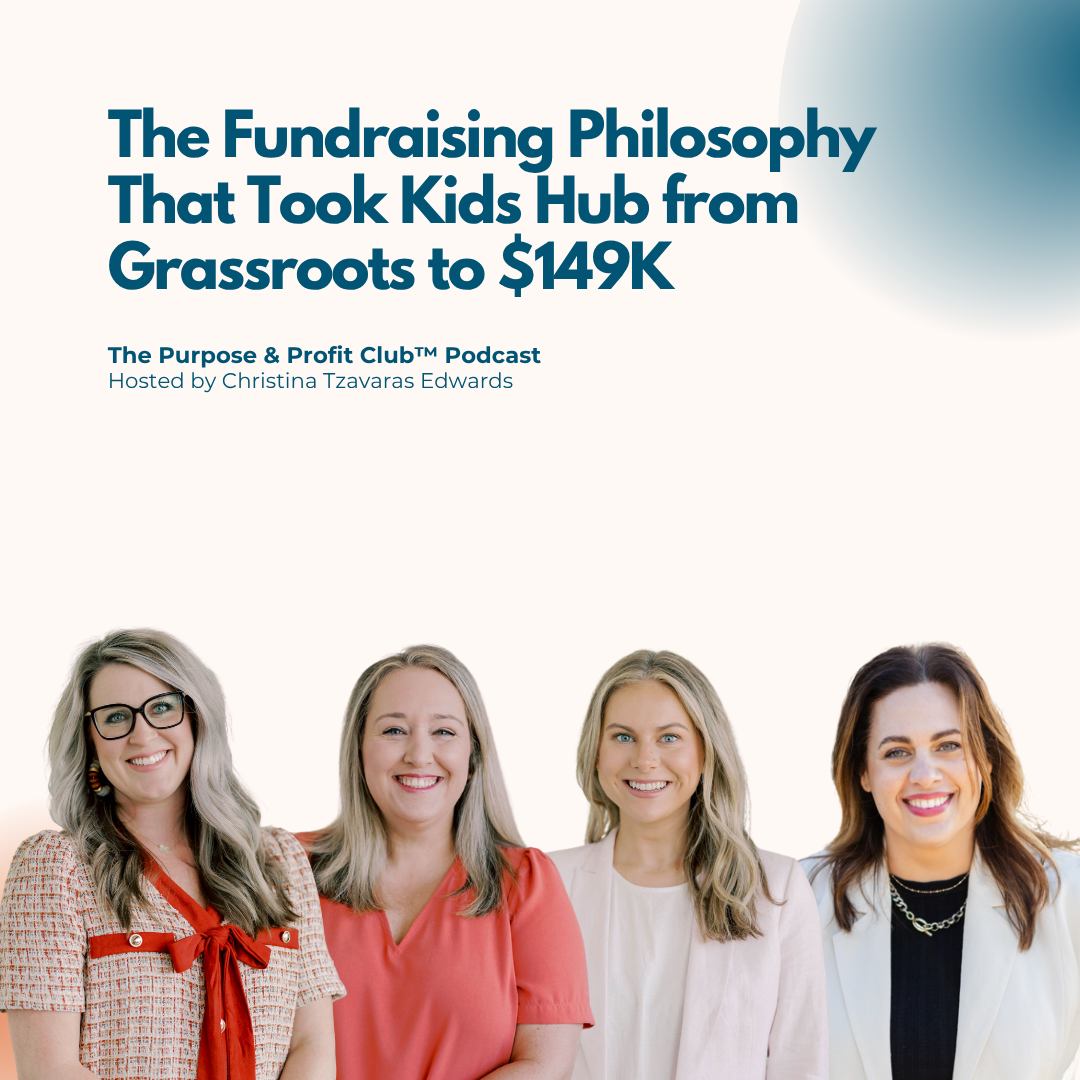
What does it look like when a nonprofit team thinks like a business, not a charity?
In this episode, I sit down with the powerhouse team behind Kids Hub Child Advocacy Center: founder and CEO DiDi Ellis, Director of Development Erica Smith, and Donor Relations Manager Paige Thames. In 11 years, Kids Hub has grown from 1 paid employee to 21, from 1,300 square feet to nearly 7,000, and from grant-dependent to running one of the most creative individual donor programs I've heard of, including a Power of 100 Women giving circle that raised $149,000 this year alone. We dig into how they think about donor acquisition in a rural southern community, why the chicken plant became one of their sponsors, how they tell emotionally compelling stories without ever showing a child's face, and why Paige says fundraisers have the cushiest job in the building and should act like it. This conversation will change how you think about the ask. All of it.
Topics:
The Power of 100 Women giving circle: from $0 to $149K and how peer-to-peer became their #1 donor acquisition pipeline
Why a chicken plant, a yeast company, and a paper mill are now sponsors, and the mindset that made the ask possible
How to tell emotionally compelling stories when you can never show a child's face or share specific details
Building donor relationships that go beyond the gift: volunteer days, feedback conversations, and year-round connection
The relay race model: splitting donor acquisition and donor retention between two people with different gifts
Why DiDi paid cash for a $680K renovation while still raising the money, and what that business mindset means for any nonprofit
It’s not your stories—it’s how you’re telling them. If your amazing work isn’t getting the attention (and donations) it deserves, it’s time for a messaging shift. The Brave Fundraiser’s Guide guide gives you 10 done-for-you donor prompts to make your message impossible to ignore. Get it for free here! https://christinaedwards.krtra.com/t/xKuLs6tOiPZa
Christina’s Favorite Takeaways:

“Growing through the imperfection is really where it's the most beautiful; you will respect the process so much more.” DiDi
“The kids that keep me up at night are not the ones walking through my doors. It's the kids that I know should be coming through my doors but aren't.” DiDi
“Your name is written on thousands of stories of hope and healing, and those children will never know who you are, but they see you everywhere.” Paige
“I don't think there's room for excuses. I don't think it would bode well with direct service staff if I'm going to complain that I didn't hit my goal when they're really doing the life-changing work.” Paige
“You're not asking the chicken plant; you're asking John Smith at the chicken plant, and John Smith probably cares about children in the community.” Paige
“People are giving, I promise; you just may have to keep trying things, and you'll have failures, and that's okay.” Erica
“Slow down to speed up.”
“Every nonprofit is serving some redemptive story. ”
“Don’t ‘should’ on yourself. ”
ABOUT Kids Hub Child Advocacy Center:
Founded by CEO Didi Ellis, Kids Hub Child Advocacy Center is led by a passionate team committed to serving children and families across the Pine Belt. Alongside Didi, Erica Smith, Director of Development, and Paige Street, Donor Relations Manager, work to build community support, strengthen donor relationships, and grow awareness for Kids Hub’s mission. Together, they help connect individuals, businesses, and partners to meaningful ways to support healing and hope for children. Their shared goal is to ensure every child who comes through Kids Hub feels heard, supported, protected, and comforted.
Connect with Kids Hub Child Advocacy Center:
DiDi Ellis - Founder/CEO at Kids Hub Child Advocacy Center
Erica Smith - Director of Development at Kids Hub Child Advocacy Center
Paige Thames - Donor Relations Manager at Kids Hub Child Advocacy Center
Episode Resources:
FREE Resources from Splendid Consulting:
How to Work with Christina and Splendid Consulting:
Connect with Christina and Splendid Consulting:
-
*Links may be affiliate links which means I may earn a commission at no cost to you.
Christina Edwards 0:00All right, y'all. I have a very special group of guests today from the Kids Hub Child Advocacy Center, and I'm so excited to welcome the three of you on. Before we say hello and do introductions, I'm going to set the stage for our listeners, which is I'm at GiveCon. We're on a break between our sessions, and all of a sudden I start chatting with Paige and Erica, and then as we're chatting, I'm like, I know you, we met last year at GiveCon, so it was like very much like a, oh yeah, and as they tell me about their fundraising success and about what they've been able to do in a short period of time. I was like, stop, you have to come on the podcast. So I am very excited for this juicy conversation today. With that, let's say hello, and a round of intros. DiDi, let's start with you.
DiDi Ellis 0:54
Hey, I'm DiDi Ellis, and I'm the founder and CEO of Kids Hub Child Advocacy Center,
Erica Smith 1:01
and I'm Erica Smith, and I'm the director of development.
Paige Thames 1:03
Then I'm Paige Thames, and I'm our donor relations manager.
Christina Edwards 1:07
And let's set the stage a little bit, just for folks, tell us about the work you do when you were founded. And it sounds like in the past two and a half, three years, there's been a big amount of growth. So let's do kind of an overview to start.
DiDi Ellis 1:20
So, yeah, so we've been in operation for about 11 years. We started very grassroots effort. We're a child advocacy center, so where we're located in the southern part of the state, our children were having to travel about two and a half to three hours, whether it was north, west, or south, for services, and I happened to get a degree in counseling, I have a psych degree, and then a counseling degree, and then I was traveling myself an hour and a half over to provide mental health services for kids that have been victims of abuse, and really fell in love with the child advocacy center model, the multidisciplinary team model, but driving five counties over to provide these services to communities that I didn't live in, that didn't play in, that didn't work in it. Really, just kind of said, so what are we gonna do about the kids in the community that I do live in, since there's not a child advocacy center. And so I had a really great just group of people around me at the time that said, hey, but if not you, then who? And so, like, any good glutton for punishment, I started a nonprofit, and so, like, this listening, that's been in that role of founder, is like, yeah, you were crazy, and so I get a lot of calls about, help me start a nonprofit, and I'm like, I'm sorry, PTSD, like, I've repressed that trauma, I can't hold the groundwork of a nonprofit, but we started with the intention of serving child abuse victims, and so we wanted to make sure that children had a place, a physical place, where they could come, where all of our partner agencies, law enforcement, child protective services, could meet, could listen to them share their experiences, and hopefully one video and audio recorded interview that could then be used as a part of evidence in the case, so that could go to trial, not necessarily on behalf of the child, but in addition to as supplemental information as to what the child would share during a trial testimony, ultimately making sure that these kids not only did they share their experiences, but that they had the resources that they needed to overcome and to heal after experiencing child abuse, and not just them, but their caregivers. We wanted to make sure that their caregivers had a path forward as well, and so fast forward 11 years later, and we are, you know, we started out as I, what I usually say, is we started out as a staff of one that was paid, we had a volunteer director, and then we had an intern, and like I said, I was the volunteer director, not the one getting paid, and so we've quickly morphed into, we have, I believe it's 21 employees now, tons of interns on the regulars, just lots of growth and expansion in 11 years. We're sitting in our fourth building since opening our doors, and we've grown from about our first office was about 1300 square feet, and now we're in just under 7000 square feet.
Christina Edwards 4:04
That's incredible. That's a short period of time to have that much growth, and so I know you're doing a lot of things right. I also know you're doing a lot of things differently, because you're not like inching along, you're not really trucking along, like you're having sweeping growth years to get to there, so maybe Erica, if you want to take this one, and page two, I'd love to hear about, like, how how the two of you work together, how you think about fundraising in your roles in the organization.
Erica Smith 4:31
Yeah, so actually, so I came along first, since we really didn't have it, was it was kind of okay. Where are we going? We're fixing to move into a new building. I come in. I came in with a background with marketing and advertising, but not from a nonprofit world. And I joined DDS team, and then we were able to bring Paige on as well. And so it was kind of that, like me being solo. What do we, what do we need to do as far as branding and awareness and. Fundraising, and 100 million things that I didn't have the time to do everything, and so we brought Paige on, and with bringing Paige on, we've actually, over the past year, really kind of fine-tuned, we brought our brought her on what we thought was her job was going to be, it's not really turned out that way, and so we've actually changed her, her role description twice that she's been here in a year because we feel like that we were really seeing where the value could be added is having some intentional focus on our donor relationships and that's kind of like where we're going to let her land and I'm going to live more an initial outreach and our fundraising events, and so that partnership with us, as far as you know, the person that I'm reaching, that's a first time connector coming in, yep, donor, you know, and then she's maintaining those relationships from from there on.
Christina Edwards 5:58
I'm picturing a relay race,
Erica Smith 5:59
yeah, so you're passing the baton to Paige,
Paige Thames 6:03
and I learned too over the last year is kind of like lean into those differences, and so instead of Erica and I trying to do all of it all the time with two different approaches, it's kind of like, okay, what are the things you're naturally really gifted at and really enjoy, and what are the things I'm naturally gifted at, and enjoy, and let's split that in half, and now I can focus 100% on this. She can focus 100% on this. Does that mean sometimes it's not all hands on deck? That's not in my job description. Absolutely, but I think it's okay to, and Di is a great example of less, like hire people who are different than you and think differently, and then when that tension comes, don't back up. Say, "Okay, what is this tension showing us? And how can do you always say more is more, instead of us trying to cut the cost of it? Let's see how we can both grow professionally, but also kind of in our respective strength,
Erica Smith 6:56
because it was really hard with an organization growing so fast to bring on all these different new positions without knowing what we need, and so we're really in the growing stages for development outreach. We also were able to bring on someone for education, and so we brought on that role at the same time we brought on Paige, and so we're still, we're learning through it, but yeah, we're really excited. Where we're headed,
Christina Edwards 7:22
DiDi, tell me about your more is more philosophy,
DiDi Ellis 7:28
and kind of like piggybacking on what they've said, it's definitely one of those things where, like, if you're going to be at kids, of you got to have a growth mindset. If you don't have a growth set, if you've got the fixed mindset, you won't make it here, you won't survive here, not because we don't want you here, but because you'll be so uncomfortable here, because everything's great. Like, even in our programs, we might have the max staff that we really need to manage the capacity, but we're not done growing in the way in which we provide those services, and so from that perspective, like with them, it was you could just see that naturally Erica has such a gift when it comes to initial acquisition, and then Paige has such a gift for all things relationship, and so, like, I despise writing thank you notes, and Paige, like, loves it, and she's so great at it, and Erica, she
Christina Edwards 8:18
just lit up,
DiDi Ellis 8:21
Erica is like she walks into a room and she sees someone she doesn't know, and we joke about it, because it's out of the room, she knows lots of things about them, but she knows their bank account number, and they've done that's right, yeah,
Paige Thames 8:34
random blue collar chicken poultry farm, they would never donate, getting the largest donation, where
Christina Edwards 8:42
we're gonna dig into that. There's already so much I want to talk about. So
DiDi Ellis 8:46
that's the more is more, though. More new, more old, more is more, and more is what's going to continue to keep us growing.
Christina Edwards 8:55
Do you naturally, DiDi, have an abundant mindset? I wrote down that you then you immediately said growth mindset. I was like, that's it, because you're you, do I can tell your team does in just talking to them now over the course of two conferences, I'm like, there's some magic here.
Speaker 1 9:10
Is
Christina Edwards 9:11
that something you have cultivated and worked on throughout the years? Is that something that you brought to the organization when you founded it?
DiDi Ellis 9:18
So, I would definitely say it's something that I've brought to the organization, it is who I am, just very naturally, but what I have really had to identify is, while it's a great strength when it comes to a growing organization, it's really important to put people around me that can challenge my growth mindset, not that they have a fixed mindset, but they have growth, but maybe they're not ready to do it quite as fast as I am, and maybe they want to have all the parts and pieces figured out before we move ahead, whereas I'm like, hey, you know what's, you know, it's great taking risks strategically, that's what he says, I'm a super risk taker, but like I want to take the risk, and if we don't, if we fail, like we just learned a lot, you know, and so I'm open to lots of opportunity, but it's really. Important to put people around me that don't necessarily share the same level of vision and growth that I do, but that have like a version of it. We've been doing a lot of just kind of internal looking, and just the importance of our entire leadership team having that visionary capacity. Yeah, it's the only way that that you'll survive here, because otherwise I feel like we move at lightning speed, and you may not be ready for, for what's coming.
Christina Edwards 10:27
Yeah, if you want to like tinker and think about it, and leave things in draft mode, and kick the can, like you're, you're not gonna
Erica Smith 10:36
pretty fast, right? But I am that human, so but that's the thing, is like I
Paige Thames 10:42
think it's a spectrum, and so I think there's like it's a spectrum that we're all on, but if you are willing to move faster, it sounds like you're going to thrive in your organization. I want to talk. Yeah, go ahead. Did he mention this to a donor the other day? Like, the need is still there. Like, what service are we doing if we can provide these amazing services, but we can't scale it to meet more children. Like, the reality is we're serving 3% of the population when we should be serving 10% of it, and like any cause you're behind, like there's more need out there than you have staff for. Like, what service am I to this organization if I'm going to shut the door because I can't go in here and that, or I can't go and fundraise like that. Need is there, the kids are still coming regardless of whether or not you donate or not. So that's on us to make sure we're ready when the need is ready, and like you can't wait around because you never know when that next case is going to come in or when the next opportunity for expansion is, and so, like, that's the abundance mindset of, like, there's no abundance of a need, so I better get forward with an abundance of resources and crazy ways to get money, or like, whatever I can do, because I know for a matter of fact, tomorrow it's going to come, and there's going to be another 10 kids here who's going to pay the staff, who's going to keep the lights on, who's going to open the door for them, I'm going to, I have fun, away, you know.
Christina Edwards 12:02
Yep. So, let's talk about some of those crazy ways. What, what are some ways that you feel like are outside the box, that or I had an idea, I ran with it, or I was in a room and before we know it, we got the chicken poultry farmer sponsor. Like,
Speaker 1 12:19
yes,
Christina Edwards 12:20
what's working?
Erica Smith 12:21
Wait, have you done goat yoga to raise money? Because goat yoga, yeah. Let's just say it's not a clean fundraising event. It's really messy. Is it
Christina Edwards 12:35
loud? Because they yell into.. they
Erica Smith 12:37
do. It's stinky, and they don't even notice
DiDi Ellis 12:39
the noise over the smell,
Erica Smith 12:40
the smell you're
Christina Edwards 12:43
like, the noise is fine, it's the smell, got it. I
Erica Smith 12:45
will say, I'll let Dee Dee kind of start a little bit, I will say, like one of our really large, and then we'll get into some of the other different fundraisers, but like one, and some of our different fundraisers actually stem from this, but I'll let her kind of tell you a little bit about our Power of On Heart Woman, or either one of them, and kind of, yes, I would love to
Christina Edwards 13:01
hear about that,
Erica Smith 13:02
because that, that is, you know, it's working for us right now, and, um, I think we'll start
Speaker 2 13:07
there.
DiDi Ellis 13:08
Yeah, I'll let Paige talk more about it, but I'll tell you where it came from. So, back, oh gosh, probably 12 years ago, I'm at a training that I have to be at to start a CAC, and I run into this guy from Kentucky, no, I'm sorry. Kansas City, that tells me, 'Hey, we do this event where we look for 100 women to raise $100,000, and I'm like, 'Oh, note to self, and I write that down, and we found some historical content, which is really beautiful, because we tried to do this, like, the first year, trying to get off the ground, but funny, funny story, I didn't think it would be possible to get 100 women to give $1,000 so we changed it to, for whatever reason, I thought it would be easier to get 1000 women to give $100
Christina Edwards 13:50
Spoiler alert, tell everybody,
DiDi Ellis 13:53
so we kind of to it, and comment, like, yeah,
Christina Edwards 13:59
I'm like, oh, I'll ask more women, more people, or in this woman to give less. That's actually, that's a volume game, and that is harder. So, you did instead,
DiDi Ellis 14:09
and we said never again. And so, but we held on to the power of 100 women. And so, four years ago, I, you know, said we ought to do it. It's time. We've got the women. I think we can get a good base there to get it started, and so we've been doing it now for four years, and truth, first three years we did not hit 100 women, but in year three we exceeded $100,000 and so year four we exceeded 100 women and $100,000 Wow, and Paige has really taken just what she's really skilled at, and I'll let her talk about that, but how she has taken it to say, okay, we're not going to change the name from Power of 100 so now what are we going to do with the 100 women, and now what are we going to do with more money than $100,000 and how are we going to scale it? So you share your,
Christina Edwards 14:55
what have we come up with? Yes, okay,
Paige Thames 14:57
um, so. Background, I have a background in sales, and I really think if everyone in a development department had a commission structure, you would get a lot more creative, because I know what it's like at the end of your quarter to try to get your bonus to pay your house payment, and you're like, I gotta get away, and so I think it's all about getting creative and knowing those donors. So this year we were at 106 women and $149,000 and so that's really a mix of peer to peer fundraising, and at front, you know, we would look at the data and say, okay, only 17% is coming from peer to peer, and this is so much work internally, but then when we drop back new acquisition to that giving circle, they're coming from those peer to peers, and so you kind of learn what works in network marketing is people give to people.
Christina Edwards 15:45
So let's slow that down for the listeners. So you're saying the peer to peer from a revenue level was like 17% which would have been easy to say maybe, maybe we do it, maybe we don't do it anymore, but what you saw was it's a pipeline, more people today, so it's a lead generator. Yes, and
Paige Thames 16:05
so now it's identifying women in different counties, in different social circles, in different groups, in approaching them to say, "Hey, Christina, would you be interested in hosting an event? Say you love mahjong, that's the big hit here in the South Mahjong. Yep. Hey, would you be willing to host a mahjong social now? Christina is going to invite 50 of her friends to this. Are we going to raise a ton of money? Probably not. But now we have access to 50 women who are bought into our mission because their friend Christina's bought into our mission. Now Christina is doing all the work for me on the advocacy side and putting me in a position where I can use Christina as a great word of mouth tool to say, hey, this is why Christina cares about this, can you come alongside, you know, you seem like a woman who's really invested in our community too, and so it's a great acquisition, and then we're making up the difference in one time gifts, upgrading those as we continue to expand, and then building out a really solid recurring pipeline. We find most people are going to be really uncomfortable to pick up the phone and have to talk to someone at their local nonprofit to cancel their card. We do make it as painless as possible. We'll send you two, but now we're on a recurring schedule, and they don't cancel it. I mean, we have limited been with us for four years, and so now instead of the metrics being 100 women, 100,000 hours, we're looking at how many women are joining from member referrals. We're tracking why women aren't renewing and what their next landing place will be working. What's our retention rate? Then we're saying, hey, Dee Dee, I had a goal of 135 and my next goal is 150 but I came in at 149 so now it's like, what about 175 And I'm like, yep, go puke really quick, let's get back on the horse and do it, you know, we'll find
DiDi Ellis 17:59
a way,
Paige Thames 18:00
and so it's just about leveraging other people's access, and so that was the whole charge, was Heidi. In addition to your gift, what does your influence look like? What are your professional skills look like? What in what ways can you be advocates for us in the community where Depth Three can't get to all those places all the time to build up kind of those volunteers, those peer to peer, that's right, peers to do the work for you, as you can focus more your energy on keeping those few connected, and I think where Eric and I both struggle in this is releasing control a little bit, because, oh,
Christina Edwards 18:35
say more,
Paige Thames 18:37
come with a great idea, and maybe not the greatest graphic, or an idea that you're like, "Wow, you seem really passionate about that, and they will blow our minds. I think of a donor that just.. I kind of struggle with the ideal donor profile, because you think of it, and someone will come out of left field that you would have overlooked, and does things I would never think about doing, and I would never really want to do, and has generated an astronomical amount of revenue, but also just will go and go and go and speak about us to anyone, and it's like, well, if I would have done that, I would have never done it, and I would have tried to control all of that, it would have never been successful, because it's not authentic to them. So I try to remind myself, okay. Let the donor lead, yeah, which
Erica Smith 19:23
is where some of these fun events come from. The goat yoga, it was one of our power of 100 women, and one, it was she had committed to be a power of 100 and she said, oh, I have goats in my backyard, like, what do y'all think about goat yoga? And we're like, okay, great. And so there's just all kinds of, and not everyone hosts events, but we have a lot of women that want to host events, and so they're creative for their own interest, and so that's where you know different events appear, raffles certain things that they want to raffle off. One lady owned a seafood store, and so she wanted to raffle off an entire crawfish. Oil with all the fake tongues and just everything, and so that was not something patient I typically would think about, like, oh, let's get a seafood store to provide catering for a party at someone's house, like that just wouldn't come first to mind to us, but like that's how we were tied into that, and now everyone that purchased seafood, that purchase purchases seafood at that store, she's got all our flyers up and our sign in a donation box, and so it's really, it's really neat how it has been able for us to expand so widely without the two of us physically having to walk in in businesses.
Christina Edwards 20:35
Okay, so maybe let's say a little bit more on that point. So you've been able to expand without having to hit the pavement, so to speak, so you're doing this digitally, through email, through phone calls, through,
Erica Smith 20:48
yeah, actually, and I know you and I spoke about it, yeah, we, we encourage anyone to be members of their local ADP, their Chamber of Commerce, any type of network, business networking organizations in your community, it's really so impactful of the networking that can happen. And recently we're actually fundraising right now, we're seeking sponsors for an event we have coming up in July, and I went through our area development partnership list of every single person on there, and sent them an email, and talked about how that we're also members of the ADP, and we want to network and get to know your business, and see how you're like, how we can support each other, and here's what we do, and that's how the chicken plant is now a sponsor for our event in July, and I have a yeast company, and I have a
Speaker 2 21:40
cellulose. I have a cell.
Erica Smith 21:42
I have a paper company. Things that we would have never originally, you know, a lot of these places are just warehouses. They're not, you know, your typical furniture store or places that you would go to ask for sponsorships. And so,
Christina Edwards 21:55
why do you think they said yes?
Erica Smith 21:58
Because no one else is asking, I guarantee it. I guess. No, that, and that's one thing I will say about our culture here is, and something that we would advise everyone, like, do not be afraid to make the ask. The worst thing that they can say is no, and that's okay,
Paige Thames 22:16
because you're not asking the chicken plant, you're asking John Smith at the chicken plant, and John Smith probably cares about children in the community, and so it's like even if that company, their logo is not going to be the most glamorous on all your social media sponsors, shout outs, they're probably not getting asked, they still have that budget set aside, and they still really care about the community, who's asking them.
Erica Smith 22:39
Yeah, and I think that's, and that was just through email, like I have not personally gone to any of these warehouses or factories, and but it was connecting that, like you're a member of this organization, and like I would like to introduce ourselves, and I'm by inviting them all to come for a tour, and we do the same thing, we had gone to a United Way banquet, and after the banquet I had the list of all of the board members, and where they work, and so I reached out to them, and I, and I led it with, like, thank you for putting your time into supporting United Way, because we are recipient, we're a partner of United Way, and we receive funds from United Way, and so it was more so of, like, thank you so much for serving on the board for them, yeah, because that supports us, but now let me also share with you exactly what we do here, and like, if you want to learn more, we want you to come tour, we want you, and that also led to immediate sponsorships, and so it's just like you know people that you're interacting with in different ways, whether it's a banquet you attend or someone, maybe that sits on your board, maybe they attend a different event, and just using that, but I mean, like I said, a majority of that has been phone call or email, it's not even us physically going there, it's incredible, just because we're making the ask.
DiDi Ellis 23:55
Imagine how dangerous we are when we all show up in a room together. Yeah, yeah. Well,
Erica Smith 24:02
when we do physically go, it's like, okay, we're on a mission. It's game on. Everyone to understand our mission in our hearts and our passion in life. We have like a two-second moment where we're like, okay, did you see that divide and conquer, and like it pulled me back in April.
Christina Edwards 24:17
So, I think a couple things I want to underscore here, if not for the growth mindset of your organization culturally, you wouldn't be reaching out to those sponsors, because you would decide there's no alignment, they're going to say no, it's not a fit, like you would have, like I can think of so many other fundraisers who would never send the email because they'd be like, nevermind, so I want to highlight that for other things, the other thing is, it sounds to me, based on what you're saying, that you're in a slightly more rural community, not a major city, is that right?
Paige Thames 24:49
Yes, yes, we have two colleges here, and so we do, okay, we have nine different counties, and so, while we're located in
Speaker 2 24:59
you. Yes,
Paige Thames 25:00
I mean, we call it a big city of Hattiesburg, but it's a small southern town, but like the majority of the counties are very rural, very rural, very. So
Christina Edwards 25:09
it would be easy again for somebody in your shoes to be like, it's just so hard right now. Our community is small or rural, or you know, we're not a big city, no one knows about us, all these thoughts, right? And I'm like, that's why I wanted to have you on, is because you're thinking about the same set of circumstances that 1000s of organizations have so differently. You're like, I'll go than the United Way thing, everybody, okay, sure, I'll go there too, but you're thinking about it differently, you're thinking about it strategically, and you're thinking about it in a way where people, there's natural alignment, the way you walk through that process, I'm like, it makes so much sense, but really, like, kudos to how you're thinking about it, because I think that's it's very different, and that's really awesome that you
Paige Thames 25:55
says we're not a charity, we're a business, and we want to be a community partner with you. We don't need your workers, we don't need your second hand, you know, and we're kind of constrained to that. We don't take, we take snack donations, and that's about it. But, like, finances is what runs the service, and so, how can we create something sustainable? And I think leading with that builds a lot of respect, especially with business owners, say, 'Hey, we're going to be a good steward of your finance, but, like, the way we serve children in our community, it doesn't discriminate who's being served. So, why should I not discriminate who I'm going to ask? That's everyone, because it's affecting everyone, and if I can have that confidence that, like, I'm a sustainable business and I am offering a service that is essential to our community well-being, and it's essential to everyone. Yes, not going to come with my tail tucked, you know. Miss Dorothy, our 980 something year old volunteer, says I don't ask, I tell, and they decide how she does. She gets
Erica Smith 26:56
the most. We have a bingo event in one of our smaller communities, and she gets the most sponsors because she says, like, I don't ask, I tell, I go in and say, this is the organization, this is what we do, this is what you know, do you want to join us, do you want, do you want to work alongside us, do you want to, you know, and
Christina Edwards 27:14
yes, and that's magnetic, I think you're drawing people in, yeah, go ahead, Erica.
Erica Smith 27:20
We also create opportunities, though, because with each one we want to find what's best for them. So, there's an energy company, and each year they really want a way for their team to come into the building to do something. So, the year before last, they striped our parking lot, and then this year I had a ton of things. We moved into a new building not too long after their volunteer day, and so I had a ton of things that needed to be hung on the wall, and so all these came in from the energy company and hung things on the wall for me, but it, but it's having those conversations of like that was really meaningful to them. So within that partnership, it's not just about, oh, you're a sponsor, we say hello to you that day, it's, do you want, you know, would you like to make friendship bracelets? Would you like for us to come? Would you like to host a teddy bear drive? Now, we practice our bears new, but we still do fundraising for the money to purchase those build-a-bears, and so it's really kind of finding what connects with them and their organization. Some of them are really flashy, they want everything to be done, they want the whole company to come here, take a big picture with a big fancy check. Other people, you know, are just like, no, I'll just sign this, you don't even have to tell anybody I donated. So we really work on those relationships and kind of figuring out a way to keep them connected to us, and not just that one time a year, but throughout the year, if we're having other opportunities for them of service or ways that they can be involved or volunteering, and so forth. We're continuing that conversation, and not just they asking once, thanking them once, and we're checking
Christina Edwards 28:53
a box. Yeah, that's what I'm hearing. I want to talk a bit about storytelling, privacy, given the nature of your work, again, I could think of many other organizations with the same circumstances that would, yeah, but me, yeah, but I can't tell a story because it's children, yeah, but it's really hard to get, you know, any good impact stories, spotlights to get donors to understand because of privacy. How do you think about storytelling, impact reporting, just in general? What is.. how do you think about that?
DiDi Ellis 29:28
So, I'll take a stab at this one. So, one of the things that we've gotten really creative with and very thankful for is AI, and so we're honest about it, we're transparent about the AI, because we cannot tell you, know one kid's story very specifically, you know, sometimes our stories make it into the news arrests and trials and things like that, instead of going out and told you a little beast of that story, if we're, if we're too truthful about it, you could connect the dots, and so instead what we do is we utilize AI. And we kind of, we kind of meld several kids' stories together to kind of give you a scenario of a child. Again, we're very honest that that's what we've done in our story, but what we always link it back to is like the hope that the donor can give, because again, like one of the hardest things that I feel like, you know, what we're selling is, we're selling that hope, we're not selling, you know, it, Lord willing, it'll never be a service that the person donating to us will ever need, right? We hope that they never need our service, we hope that they never have someone that they know personally walk through our doors. Reality is not necessarily the case. So, in that regard, even if you do have to use our services, you don't really want people to know about it, so you're never going to say that you're giving because of what was given to you and what you received when you were here. It's not anything anyone wants to truly acknowledge. And so no one's talked about a forensic interview when we say, hey, you're giving to provide a forensic interview, no one knows what that means. It's too, it's too semantic, you know, coordinated case management. No one knows what that means, and so we talk about the hope. We talk about the hope that when the children walk through our doors, there's a brighter future that awaits them because of the resources we've been able to provide, because of the information that that we've been able to get to families. It's the hope for tomorrow. I think one of the taglines we've used before is that we want to create an opportunity where children feel hope for tomorrow, compared like more hope for tomorrow than they did for today, and so it's that notion of like that's what you're contributing to, you're contributing to communities for children. We can't write their story, we can't dictate that even if we do everything well and right, that they won't still end up being a negative statistic, we can't, we can't write that story, but what we can tell you is, without the services, they're less likely to have that opportunity, and so they're not providing and helping us sustain what we do, like that's the, that's the gift they get, the gift of hope, and so we do have to get creative, and now it's not. Don't, don't get it wrong. We were sitting at Gift Con page, and I elbowing each other, going, 'Oh, we just wish sometimes we can share a picture too. Like, yeah, you know, because it is, yes, easy to say, not me, but it's the notion of like, like, can't do it that way, but I can do it some way. And so I've got to get creative, I've got to share a version of this story, and then a lot of times we'll even use a very edited type quote that we've heard, like a child has said, like we're listening to me, no one's ever listened to me before. It's very generic, but it's a true, it's a true quote that we've heard a child say. We don't tell you their age, we don't tell you their gender, but it's a true statement, or we hear a caregiver say, like, I didn't feel like we knew where we were going to go from here, and now, like, still maybe I don't know completely, but today I feel like I have a little more hope for what the outcome for our family is going to look like, and being able to share that kind of testimony work that we do is is the way we have to tell the story.
DiDi Ellis 32:58
Also, add this new building changed the game for us in being able to tell the story. When we built out, when we designed this, this building, it was, we took it down to the studs, I had four walls, we built everything back so intentionally, and the layout mattered, so that we could get donors in the building, and we could tell this story about the work that we do when we walked through the building, and so I say it to donors all the time, and they come through. Yes, we built this place for kids and families, but we built it for YouTube, because, oh, wow, walk through the doors until you see where the children are sitting, until you hear and feel about that experience in the space, you don't really completely get it, and that has, in my opinion, has changed the game on the connection. They feel,
Christina Edwards 33:48
what was the building like before? Did it prevent you from giving tours before? Like, and how? So,
DiDi Ellis 33:54
yeah, so we would give tours in our old building, but like it was hard to tell the story of the work we did, so like we had one big giant room where we had seven different employees sitting, and so got it. We had a hard time telling the story of, like, hey, this employee does that, and this employee does that, whereas now we host them throughout the day, even when things are going on, and we have the ability to prevent ourselves from walking down certain hallways, and but still kind of get the feel, but one thing that we've really done that Paige and Eric have done a great job of is integrating staff into the conversation and giving them a place with donors where it's historically we really haven't, and actually setting aside time to say, like, hey, we want you to talk about the impact of forensic interviewing when the donor walks through the door, we want you to talk about the impact of mental health and the services that we offer, and so it's you're on a 30 minute tour, but you're not listening to me talk the whole time, I'm just filling in the gaps until you get to the next staff person. Yeah, I love that. Heard time and time again from donors that hearing how. Passionate, our people are about the work that they do, like I'm passionate too, but they get to be like a different kind of passion. Yes, we even talk about that when we walk through the building, when we get down the leadership hallway, we're like, hey, like this is like the brains that keeps it all up and up and running, but everywhere else is where the heart lies, and so it's these passionate staff that keep the heartbeat of what it is that we do at lab. This is just the brains that make sure the money is in order, that the lights are on the door open, and you know that kind of thing.
Christina Edwards 35:34
Oh my gosh, I love that. I also,
Erica Smith 35:35
too, like with that, not only like through using AI and the stories and so forth. One thing that's really impactful for us is using our teddy bears, so we do have bears, and like I know I mentioned with you, Christina, when we were at Give Con about our Giving Tuesday, and we really, we did a Giving Tuesday campaign, and that campaign we were asking for people to provide a bear to a child, and so having images of the bears when we can't use the image of the child, we also have a teddy bear closet that has little outfits and sunglasses and accessories and a birth certificate, and so the child gets to go and select an outfit and dress their bear, and so having images, you know, displayed of the closet and you know someone holding a bear, and because that's something that someone that's donating can picture, not the child's face, but they can picture a child receiving a stuffed animal, and how they would feel comfort and joy. Yeah, everybody can understand that feeling, and so that's another way to spark that feeling without actually using images or the exact stories, like we find it just so meaningful, and we have a lot of people that really want to get behind the bears, like they'll call and say every year I give because I want to provide bears to the children, and you know, and so it's funny because we kind of say, like, oh, we really need to find something, like, additionally, besides the bears, because every what's the other bear, what's something else we can do, so we, you know, we try to get creative with finding those other opportunities as well, but we get a really good response from from displaying, which is really just like a step that the child's going through when they're in our building, so there could be creative ways of like whatever your nonprofit is something that you do on the daily, but using an image of that could just be impactful of somebody seeing that if they're not able to be in your building, but using those real life, we did a rebrand last summer, and one thing that they told us is, you know, you don't really need stock images on your website, you need to have a photographer come into the building, have actual pictures of the building, and get people familiar. No, no matter if it's a cardboard box, and like you have the smallest nonprofit, and no money, like that's what needs to be displayed, is like making sure that you're spending to like put in from the branding side in the marketing of of where you're actually working and where these families are coming
Christina Edwards 38:01
with the bears, I have a question, which is, I understand psychologically that donors would connect with that, because if it's, it's in the sort of toy drive space, where you're like toys, you know, I get to purchase it, goes to a child, are you doing it so that their donation goes x goes towards a bear, is it like by tears, like donate x for one bear campaign, or the campaign, so
Paige Thames 38:27
like the Giving Tuesday campaign. We broke down what does it cost to provide a child with a bear, how many bears are we giving out, and utilized again that same staff mentality of like every we had like a competition. There was no reward, friendly competition, like we made graphics of every staff member in front of the bear closet. My goal is to raise to fund 26 bears for 2020 Okay, and so we tied that exactly. Now, what we learned from that is we were able to raise a lot of money, but it's very restrictive to that beer program. Okay, so now we have the year funded for bears. How can we change that wording a little bit to say, hey, let's give hope for children, and it's an image with a bear or something. But the only way that child gets a bear is they've gone through the advocacy, they've gone through the interview, the courts, yes. And so, even though the bear feels good, and it's a great story to tell, if we can change that wording to make it a little unrestrictive, we can get that money, and the donors are fine with that. I highly,
Christina Edwards 39:32
yeah, I love that. I highly recommend that.
Erica Smith 39:35
So, like, for our gala last year, we actually did it, was a casino theme, and we did bid on bears, and so people would, would, would place bids to cover bears for us, and so, because we specifically were marketing that, then we were like, okay, we need this money to go to that. Yeah, so while you can do it a couple of times a year, you don't need an endless supply of money that's just restricted for 10 years only, so we have to we. Using, you know, wording of marking other things, there's not.. I mean, now sometimes there is a donor that will say, I want to give you $500 and I want my money to go to bears, and sure, we just, you know, so we have to be like careful with how I want.. we can't use the bears every single day, or then we would just, yes, like a million dollars for bears and nothing else in the building, I wanted
Christina Edwards 40:21
to flag that, because I think some people get stuck in what is more of an old school fundraising model, with like some sort of Amazon wish list for bears, and people are never actually making a donation, they're like buying a bear and it gets sent to you. So I want to flag that for everybody. This is a fundraiser with a financial goal, and the theme is the bears, and now you're going to kind of widen it a little bit, because it will be the bears don't really exist without the program existing in these touch points, so really, really smart, and I love, like, the iteration on that. I'm curious, what you would tell a nonprofit leader or fundraiser who is trying to grow right now, but maybe is struggling, isn't sure what to try next, is feeling a little depleted. What advice would you give them?
DiDi Ellis 41:10
I think the one that that I would probably give them, we've had this conversation, it literally with a donor on Friday, is I think that sometimes we want to get, and I struggled with this with my board too, right, but sometimes we want to get into the mindset that all the money has to be there, all the plans have to be perfect before we can take the next step. In my experience, having the faith to take the next step before all the details, before all the money is fleshed out, is oftentimes the best opportunity to get people to buy into what you're doing, and just that's right. And I will say that this build out that we did, I mean, we did a $680,000 renovation that we paid cash for, and we built the revenue as we did it. It wasn't like we raised $680,000 and said, so hang
Christina Edwards 42:01
on. Yeah, that is business mindset. I want to underscore that the three of you are so smart. You're thinking like business owners, you're thinking like sales professionals, which is, we got enough money to get going. Let's get going, and then we're gonna go. We're gonna keep raising as we go, and it's a leap, it's a leap, it
DiDi Ellis 42:21
is, that's amazing, and again, like, I think that nonprofits in general, like, whether you had Rocky Times or whether you haven't, I think nonprofits in general are like absolutely the stone that you need, like the Ebenezer stone to say, like, hey, the Lords been providential always, like, you wouldn't still be here if he hadn't, because people buy into what it is that we're doing to support the community, and so a lot of people are happy to support something because they weren't the ones called to get their hands in, you know, hands dirty. Yes, doing the work, and I say to people all the time, and we get this comment, I don't know how you guys do what you do, and I'm like, no, like, I'm so thankful to do what I do, and they're like, how does this work not keep you up at night? I'm like, I promise you, the kids that walk through our doors, no matter how hard the stories may be from time to time, those are not the kids that keep me up at night, it's the kids that I know should be coming through my doors, but aren't. Those are the ones that keep me up at night. And to what Paige said, I got a plan for those kids to come through my doors, I got to be thinking about what I'm going to do to educate the community, what I'm going to do to build up the financial support to prepare for when those kids come, not if but when for me, like that would probably be what I would say to the leader who's just wanting to grow, but you don't have to wait till it's all perfect to do it. In fact, growing through the imperfection is really where it's the most beautiful. You will respect the process so much more. Everyone will get so much more out of it, and you'll go to
Paige Thames 43:53
goat yoga, you'll go to creative fuel. That's right,
DiDi Ellis 43:57
you'll bond differently over the process, and not just with your staff, not just with your board, but with your donors too. Yep, they feel so incredibly appreciative to be part of what we are doing here. They can't do it because they have day jobs, and this isn't what they were called to do, but they love knowing the impact that they're having by whatever new growth thing they're having, I mean, don't don't worry, like every day I'm like, oh dude, what can you do to not grow
Erica Smith 44:30
today,
DiDi Ellis 44:31
you can't do nothing, and we tell her
Erica Smith 44:34
projects, no more projects, she reminds us, like wait, what is our purpose,
Christina Edwards 44:38
that's right, but I would say, too,
Erica Smith 44:40
like people are giving, like, as far as advice to people that are struggling, or maybe gone through, don't really know what to next, to people are giving, I promise, like, it may, like, you just, you may have to keep trying things, and you'll have failures, and that's okay, like, that's one thing with us, is like, we're okay to accept that. Like, whatever we thought was a grand idea really didn't make us much money, and kind of was a waste of our time. So, like, maybe we should try something different. Um, yep, and we do try, try things different. And then, like, we tried lots of things before we got to Power of 100 Women, and like, now Power 100 Women's working, and it doesn't mean it will always work. It, we're probably have to, you know, change it to something else. Who knows? In 30 years we may have already reached all the women, and they're like, "I don't want to do this anymore. There we go,
DiDi Ellis 45:29
we got nothing but little.
Erica Smith 45:32
So, just like, keep the mindset of like people are out there that are willing to give, yeah. You know, and there there's.. I would say, too, like, if you don't have someone within your organization, find, like, find an intern that could, like, if you're not the best at social media, and you really need to create an awareness, then find a local university, or post online, find an intern, or find a network, go to some of these networking events, find someone that's interested in that may know someone that can help guide you for an area you're struggling with, because, like, having a whole bunch of different people in your, in your bubble is better than you just solely trying to control everything. Great, figure it out, create it yourself, like figure out what the organization is lacking, and go find it, and just make the ask.
Speaker 1 46:24
Yeah,
Christina Edwards 46:24
yeah, get out of your own way, right?
Paige Thames 46:27
To like, especially for I know a lot of fundraisers, it's kind of the one man show, too. But something that's helped me is, like, you know, I feel like I'm doing the easiest job in the building, and it's not worth it for me to go to our direct service staff, and they're like, I'm too nervous to email these people. I got told no, like they're doing the hardest work every single day. The children who are coming in are the bravest children, like they did not ask for what happened to happen to them. I can pick up the phone, and like, I think we get in such a defeated mentality, and we think we can settle for what we have, or what funding is available, or our donors. We get all these assumptions, and I think you said it like it's not a strategy, it's your strategy to keep yourself comfortable. And to be honest, I'm probably the most comfortable person in the building, because I'm not providing the direct service staffs. Like, I can do things to make me uncomfortable, to make everyone else comfortable, and I really have to give myself a reality check a lot, and a lot of that is speaking to people in our direct service staff and hearing stories that make me uncomfortable, and seeing results I don't love, because these children, again, are not asking to come through our doors, and so I'm okay asking all of these people, I'm asking them again, I'm asking them for more, we're asking the chicken plant, we're going to yoga, because at the end of the day we have the cushiest job here, and like I just don't think there's room for excuses. I don't think it would bode well with direct service staff if I'm going to complain that you know I didn't hit my goal when they're really doing the life changing work. So I to them
Christina Edwards 47:58
I just have to highlight that that is such a beautiful perspective that so many fundraisers don't have, like that really is remarkable. I see it in all of you, but I'm glad you said it out loud. Paige, is you have a perspective where you're like, I'm just the vessel. Sometimes I tell my clients, like, you're the conduit, like you're not asking for money, so you can go to Vegas, and but else so many people are just so scared. It just, that rumination cycle lasts for such a long time, but I think it's really helpful that you see it in real time, where you're like, I can call another human. Yeah, what this person over here is doing, that's hard. And, yeah, and so getting out of your own way, I think, is just.. it's a really smart way to look at it. I'm glad you shared that with everybody. It's a little
Paige Thames 48:46
tough sometimes, but it's
Christina Edwards 48:48
tough. Yeah,
Paige Thames 48:49
sometimes we create such a soft environment, and yeah, you know, Dee probably plays that out. Like, I don't feel like she's ever breathing down our backs, like she knows I'm gonna beat myself up more than anyone if I don't meet my goal. Yeah, but she's not gonna let me settle for the most comfortable goal either.
Christina Edwards 49:04
Yep,
Erica Smith 49:04
but it's like, get back involved in your mission, and like, utilize the people you're serving, like, there's a need out there, and, like, Erica said, people want to give, and if they say no, knock on the next door, call the next, yeah, then, like, people will come, and they will give, and they do care, but they can't do that if you're too scared, and also, too, like Paige, and I actually had this conversation this morning. She came in my office and was telling me something that she did, and she said, "You know, hey, I actually reached out to some of our donors that are a little bit more involved and asked their feedback about this event, because I'm paying an event for next year, and so, like, ask their event, like, not only ask for someone's donation or sponsorship, like the people that are donating, ask them feedback. Yes, yes, what, what do they think is going well? You know, what do they think, because just you making that ad. You may learn so much more that you really didn't even think about or realize maybe that the event or the fundraiser wasn't wasn't hitting just by asking those people as well,
Christina Edwards 50:11
so good. So we ask everybody on the podcast our final questions. We've gotten to that time now. It's just been such.. I could talk to you for four more hours, so I'll do this again, which is, would you share with us a mantra, a quote, an affirmation, just something that you find to be really helpful, a thought you like to think on purpose, that is helpful for this work, and you can share one as a group or one separately, whatever feels good for you.
Paige Thames 50:40
We all have a different why. I don't know.
Erica Smith 50:43
I'm trying to think of mine right now. I'm like, wait a minute, let me think about this. Y'all go ahead.
DiDi Ellis 50:48
Mine is one that that really came out of some executive coaching that I've done, and anybody that had gone through this particular leadership exchange group, we would always say, what would Martha do, because that was the executive coach, and she's still my executive coach, but one of the, one of the phrases that she used to use, like seeing it in practice, just practice is just so impactful, but slow down to speed up, and so it's one of the things that applies generically across the organization, but like to Erica's point, like slow down, identify what's missing, spend time there and figure it out. Add, add the team that's hard to manage because you don't even know what to tell them either, and spend the time in that because ultimately you will speed up in the end. Yep, it cost me as a CEO, right? It costs me a lot of time to invest in a development team. I went back and looked at what my development team has done over the last two years compared to what I was able to do by myself, essentially in the last nine. They far outpaced me, and they will continue to do that, but it's the, it's that living in the season where you, where you intentionally slow down with the goal of speeding up.
Christina Edwards 52:00
That's great. I call that planting seeds sometime, where you're like, I'm planting these seeds, and then they start blooming. You're like, there they are. And so, yeah, it's hard. It's hard when you're the visionary to slow down to speed up, but that's the work. So that's a great one. Paige,
Paige Thames 52:14
you know, I, if you were to ask me when I graduated college if I'd end up at a nonprofit, I would say no. You know, and I just never thought I would end up something like this. Like, nothing on my resume says you're gonna do great at a nonprofit. DiDi has this crazy thing of saying you just pray about it, and you know, like her and the Lord have always settled on it, and you've got the job the next day. And so sometimes I think, like people say, oh, it's so hard. Like, how do you do this? It's like there's so much darkness in the world. Like, what a joy it is to be a part of this story of redemption. And like, I tell donors all the time, like, your name is written on 1000s of stories of hope and healing, and like, those children are never going.. you'll never know who they are, but they see you, DiDi said this at the ball fields, they see you at church camp, they see you everywhere, like these are real children, just like yours and mine. And I remember the first week on the job thinking, you know, this doesn't happen to people like me, and every single child who walked in had like looked just like my son, acted like my son, and it was like, Thank you, Lord, for giving me this set of skills where I thought I could only use it in the business or something to use that, like I was created for a purpose for this very moment in time, for the 1000s of children we serve, one Canva at a time. Girl, like, again, I'm not doing the hard lifting, but I can use my sales acumen to go and rally a bunch of donors and college kids and frat boys and sorority girls and firefighters and old ladies sewing things to help sustain the work we're doing, and it's like, thank you for all the experience I had, and I think you've got to get on board with a leader who's not just looking at the perfect qualifications but sees that potential, and then learn on the job, and like every nonprofit is serving some redemptive story, like let's think of it that way, and let's pick up the phone and have a blessing to be able to make this world a better place, because we know, you know, there is so much darkness in
Christina Edwards 54:13
it. Oh, beautiful.
Erica Smith 54:15
Um, sometimes a little bit more blunt, but that just suits me perfect. So, um, so this actually came from a former executive coach that I have when I, when I was not in the nonprofit world, but now being in the nonprofit world it fits perfectly. And I do think about this all the time. I feel like what I've within the nonprofit, you don't, you never have enough staff that you need, so you feel like you're doing 100 million things, juggling 800 things, you never have enough time. There's always more money to raise, and so one thing that I was taught a little while back was don't should on yourself. So I should be doing this, I should, because all of those negative thoughts, like you need to take the moments to celebrate the small celebration. Like, even for something in your office that is just extremely small, celebrate it with your team, celebrate it with yourself, and not, don't tell yourself the end of the day, these are not all the things that I, I didn't get off my to-do list. Wow, you know what, I got all of these things off of my list. Don't, when you live in that I should, should, should, should mindset, it can just be very draining, and so can be like for mantra, it's more so of like, you know, I've got to, I've got to keep that positive, yeah, and not getting stuck, because once you go down, it's so easily to feel like you had just have the weight of your world on your shoulders, and so really just like thinking about your own mental health and thinking about, you know, yes, you want to do all the things, but give yourself some grace and take it day by day,
Christina Edwards 55:49
so good, no should on yourself. This has been such an amazing conversation, as good as I thought it would be. So happy our friends at Bloomerang brought us back together. Hopefully, you'll come in Atlanta.
Paige Thames 56:03
Rendition of the story, ours was like, we saw you, we bombarded you, we had an agenda in our heads, we've got to connect with her.
Christina Edwards 56:11
We, we talked about how handsome the Savannah Bananas players are, but I would love to see you guys in Atlanta. Hopefully, we'll give con, and maybe it'll live in
Paige Thames 56:23
the Savannah bananas. Oh my,
Christina Edwards 56:25
can you imagine that would be that would be my like super fun weekend. Yes. Where can everyone find you? Where's the place you like to hang out? Are you guys Instagram? Are you LinkedIn? We'll link to all of it in the show notes:
Paige Thames 56:38
your personal home address, your bank account meeting number, and your phone number, and you'll find you. Yeah,
Speaker 2 56:44
that's right. That's right.
Erica Smith 56:46
No, we, we do have Facebook, Facebook, Instagram, Kids Hub, well, kids hub, ms.com but also Facebook and Instagram. I think it's just listed as Kids Hub Child Advocacy Center, and then we have LinkedIn as well, and TikTok. TikTok is a little new. We're that's on our, that's on our grow list, our perfect, our grow list. So on the in progress,
Christina Edwards 57:14
awesome. Thank you all so, so much. This has been an honor.