
Ep. 211: She Doubled Her Fundraising While Her Son Was in Cancer Treatment — Inside The SPRINT Method™
EPISODE 211
She Doubled Her Fundraising While Her Son Was in Cancer Treatment — Inside The SPRINT Method™
About the Episode:
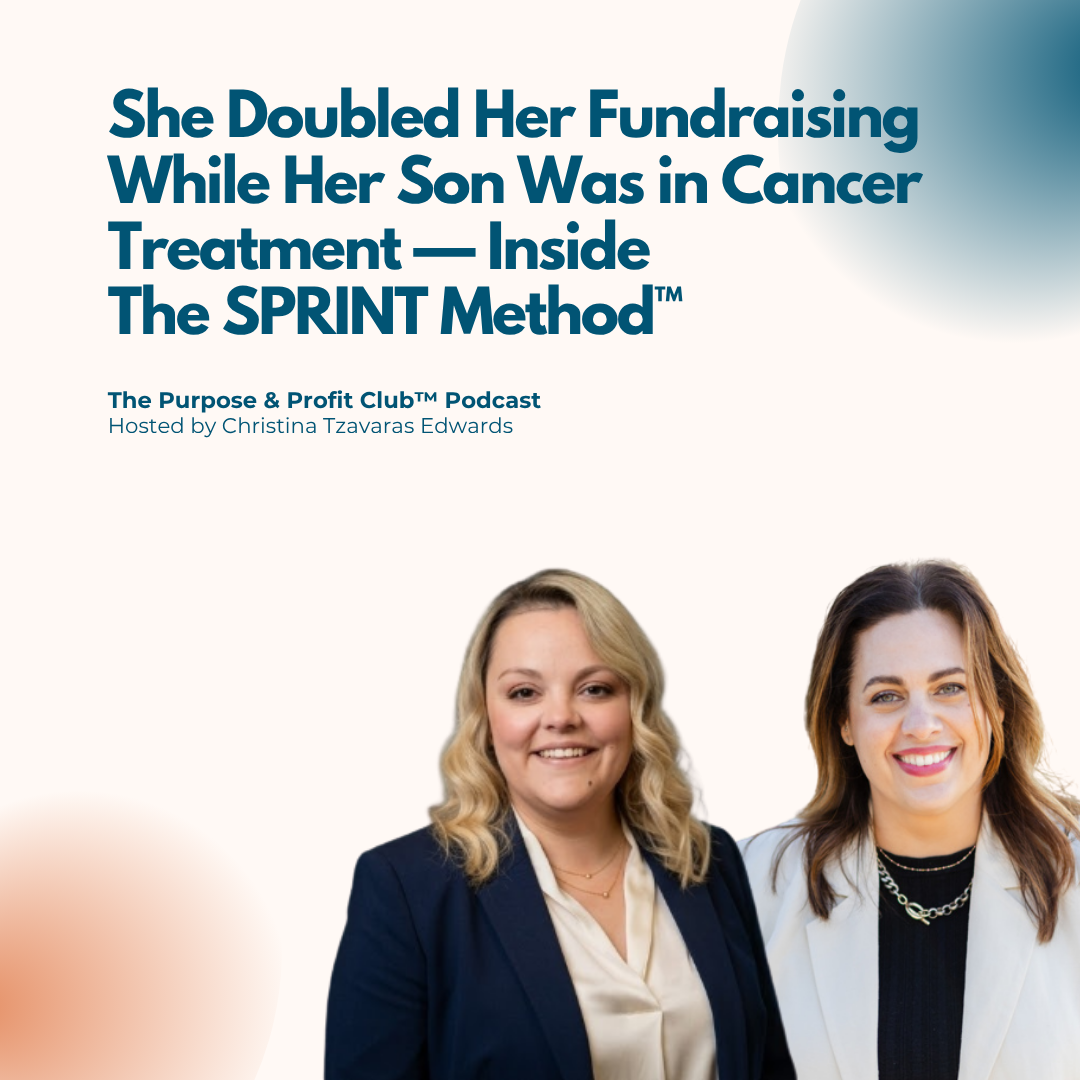
Dina Besic started Maxwell's Toy Box because her two-year-old son Max wanted a train table in his oncology playroom. Three years later, while working a demanding full-time corporate job, raising two kids, and navigating Max's cancer treatment, she built an organization that has supported over 5,000 children, donated $9,100 directly to families, delivered 8,500 toys, and created 4,064 joy packages for children receiving chemotherapy… and she doubled her fundraising year over year with the support of The SPRINT Method™.
In this episode, Dina shares how she got out of her own way, moved from begging friends and family to running peer-to-peer campaigns and securing corporate sponsorships, and shifted her donors from giving physical toys to unrestricted cash donations. We also talk about the identity shift that changed everything, and what she would tell the version of herself who was terrified to ask.
Topics:
How 108 donated toys grew into an organization serving thousands of children and families
Moving supporters from donating physical toys to giving dollars the organization can put to work
How peer-to-peer fundraising opened the door to corporate sponsorships and new donor acquisition
Getting out of draft mode when you’re the founder, fundraiser, marketer, and decision-maker
What doubling fundraising looks like when you have a full-time job, two kids, and a nonprofit to run
It’s not your stories—it’s how you’re telling them. If your amazing work isn’t getting the attention (and donations) it deserves, it’s time for a messaging shift. The Brave Fundraiser’s Guide guide gives you 10 done-for-you donor prompts to make your message impossible to ignore. Get it for free here! https://christinaedwards.krtra.com/t/xKuLs6tOiPZa
Christina’s Favorite Takeaways:

“It's not just more funding, it's more support for kids and families.” Dina
“You've got this TikTok audience, let's use them.” Christina
“It starts and ends with you.” Christina
“Just do it. Just post it, and stop editing.” Dina
“It is not about me. If someone says no, that's okay. Hopefully, move on to another donor or another opportunity.” Dina
“Join the program. Don't be afraid to get some help, especially if you're in your founding years.” Dina
“It is math, and it is mindset. How much do I want to ask for is the math. But the mindset is: Help me get out of my own way.” Christina
“A campaign isn't just a revenue event; it's a pipeline-building event.” Christina
“My kids are always watching me, so I gotta keep showing up.”
ABOUT Dina:
Dina Besic is the founder of Maxwell’s Toy Box, a 501(c)(3) nonprofit supporting children battling cancer and their families, year-round. Inspired by her son Max’s leukemia diagnosis, she created the organization to bring comfort to children during treatment and provide direct support to families facing financial strain. Under her leadership, Maxwell’s Toy Box has supported over 5,000 children across Chicagoland through hospital toy programs, Joy Packages, and family assistance. Max recently completed cancer treatment, and Dina continues to lead the organization while living the experience it was built from.
Connect with Dina:
Episode Resources:
FREE Resources from Splendid Consulting:
How to Work with Christina and Splendid Consulting:
Live Webinar: $10K in 10 Days: The Campaign Plan You Can Run From Your Laptop (Live Thursday, August 20th at 12 PM ET)
Connect with Christina and Splendid Consulting:
-
*Links may be affiliate links which means I may earn a commission at no cost to you.
Christina Edwards 0:01
We have a very special guest today. Now, I've been excited about this interview for some time. I'm so excited to welcome you and introduce everyone to your work. Dina Besic, she is the founder of Maxwell's Toy Box and an amazing client inside The SPRINT Method™. So, we're going to share your story today, Dina, but I think to set the stage, tell us about your work and how you start got started in the nonprofit sector. Welcome.
Dina Besic 0:27
Yeah, absolutely. Well, thank you so much for having me. I'm so excited to be here. Yeah, I am Dina Besic. I'm the founder of Maxwell's Toy Box, and it all started when our sweet boy Max was diagnosed with acute lymphoblastic leukemia at the age of two, and no surprise that our worlds just was turned completely upside down. What we thought was just a flu turned into us being into the emergency room and being diagnosed that same night, so Max is amazing. He had to endure a lot of hospital visits, had a really, really long journey, and just treatment, and just all that he's had to go through, and it all started with him and I being in the playroom of the oncology hospital where he's being treated and he was like, Mama, they don't have toys here, I mean, they don't have trains here, and he's like, obsessed, still is with trains, and he was like, can you buy a train table, and I was like, you know, I, that's a great question, Max, maybe, so I just kind of shared with my husband, like, hey, I think I want to do a toy drive for the oncology room, so we can get those train sets in there, and he wanted, like, a play kitchen in there, he has lots of toys that he wanted in there, and that's kind of how it started, it, you know, with just our family and friends, and just different co-workers and neighbors, and we ended up raising 108 toys, so we got the, we got the train, um, table in that oncology room was, which was amazing, and then he was hospitalized, and he was like, "Oh, mom, you, you, you got the train table, and that's, that's kind of how Maxwell's four bucks.
Christina Edwards 2:25
How old was he when that, when he first was diagnosed? And how old is he today?
Dina Besic 2:30
Yeah, he was two when he was diagnosed, and he is five now.
Christina Edwards 2:37
And tell everyone how he's doing.
Dina Besic 2:39
He's doing awesome. We are done with treatment, which is amazing. I know happy dances all around. No one
Christina Edwards 2:46
can see if you're, if you're listening, you can't see that I'm doing the happy dance, because I already knew this. But I think it's really important for everyone to hear where your family is and how Maxwell's doing. Yeah,
Dina Besic 2:57
thank you. It's been a really, really long journey. He's had so much happen, so to just be done with treatment, close that milestone, you know, it's not fully done until he is in full remission, and you know he'll be monitored the rest of his life, so you know I always keep, keep it real, and kind of, you know, what the childhood transfer looks like for a family, but this is such a big milestone for us.
Dina Besic 3:25
We've been out and about, which is so amazing.
Christina Edwards 3:35
I remember when you're like he rang the bell. I was like, yes, I feel also just really, really blessed that I have some family friends that their child went through cancer at a very young age, under three years old, and so it's, it's helped inform me on Maxwell's journey a bit, and then the challenges, and how you sort of have that village, and their child is now, gosh, like almost middle school age, and so, like, but the conversation, it's not like you're like done, we're never going, there's monitoring, there's visits, there's right, and so that has helped me kind of understand the trajectory of this isn't just like we're done, by right, that being said, their child is doing amazing, it's just part of, you know, their history, and it's something that they look at, and also I see the community, like they, they, they are part of the cancer community, and like proud members, proud supporters of it. If that makes sense. Yeah,
Dina Besic 4:39
absolutely, and that was one of the reasons why you know I went to my husband. I'm like, hey, after like our second toy drive, I'm like turning this into a 501 c3 nonprofit. It's
Christina Edwards 4:51
just about to say that, like, so this is happening, and we're like our listeners, you work full time, you have a. Child, you know, a toddler at this point, going through cancer treatments, all of the things, world upside down. You're like, so here's what we're doing. We're going to help other families, we're going to, we're going to do this. So, what did husband say when he said that?
Dina Besic 5:14
My husband is amazing. Also, he's probably like not surprised that I was like, yeah, by the way, we're doing this, and he was like, okay, what do we have to do, and it's been so fun to watch Max, like, just like interact, and whenever we do a toy drop, he's like, okay, Mom, like, let's go do this, so it's really kind of become like a, you know, a family affair, I guess you could say it's, it's really great to see him be so proud, and he's like, 'Oh, we're taking toys to the kids at the hospital. Yeah, yeah, so there's
Christina Edwards 5:50
let's walk people through the organization, so there's the toy drops, and then tell us a bit more about the other services or programming.
Dina Besic 5:58
Yeah, so the toy drops are really important because we fill a critical gap, so hospitals get toys during, like, the holiday season. They're nicely stocked up, but then usually around that May-June timeframe, they do tend to run out. Yeah, and we experienced that with our hospital, where Max wanted to have a twin, and they, they're like, we're sorry, you know, we just don't have anything right now. Yeah, that just broke my heart completely. And I mean, not just for Max, but like, you know, I'm like, oh gosh, I can imagine, you know, there's even when he was admitted on that floor. So we deliver toys during those gaps, so that every child can receive something that brings them joy, and then we have our joy packages, which are sensory tailored toys that are given to children as they are receiving chemo treatment. So imagine them sitting in the chair, it's just things to like touch and feel, and really kind of help them with the entire that they're in. So imagine you know, nurses coming in, and you know they got like two masks on, they got the whole, yeah, like the gosh PPE,
Christina Edwards 7:10
yeah, we only, I only know this term, you know, we were all the layman was taught this PPE,
Dina Besic 7:19
you have to forget, so, so, yeah, and just like, imagine a two year old, right, and he was like, Mama, let's like, why can't I see their face, just like all the questions, the two year old, yeah, so I would just like bring him sensory, like tailored, like toys to just kind of help him through that, and yeah, then there's a little boy who was having trouble, and I just had, I just happened to have like extra things with me during the time that he went, and I asked the mom, I'm like, "Hey, would you want this? and she said, "Oh my god, yes, and then I saw that it also helped him kind of in that like moment, and then like just that hospital environment, which the nurses and doctors do a wonderful job, so that is one of our programs, and we've gotten such wonderful feedback that it's really used as a tool to help children just navigate the stress and anxiety, and then last, and certainly not least, is we provide $100 grocery gift card through our family support program, a $50 gas card, and then we, we buy a toy for the child in treatment, but all the siblings in the house as well. I
Christina Edwards 8:34
love this,
Dina Besic 8:35
and the reason I love that is because we saw what our little girl Lena, she was six months old when Max was diagnosed, and just how much her life very different, and we've also just seen how incredible she is, and I'm telling you, there's no one that makes Max feel better, like after a long treatment day, or like whatever it was, like, she just brought so much joy that it was really important to me that we find ways to support the entire.. I
Christina Edwards 9:08
think your lived experience saw the gaps, right? Saw the gaps, and we have the best, most, most warm doctors and nervousness, and there's a gap, right? We have amazing, generous people who think December toy drive, and there's a gap the other months of the year. You see family, friends showing up and naturally probably doing everything they can, and look thinking max, max, max. You see the gap in the sibling. You see the gap in I live in a major city, so I'm very close to two great children's hospitals, I'm, I'm, that's not normal, right? And so a lot of people may be driving in to get their child treatment, you're seeing a gap again in access to, you know, they're using all their money to drive in, and by the way, we have to stay at a hotel, so you're seeing more gaps, so I just think your lived experience. Has found so many gaps, and you've found ways to support families through that entire process. It's really beautiful. We, you and I, have been working together for, I think, just over a year. So, I want to walk people through, like, where, like, what made you join Sprint™? Where were you? Like, what had you been trying, because we've basically outlined, like, this organization fulfills some incredible, important gaps, but we can only fulfill them to this certain point if you're not funded, right. Yeah,
Dina Besic 10:31
absolutely. And that was one of the important things when I started Maxwell's Toy Box, and I was telling my husband, I'm like, you know, it isn't just another toy drive, it really is what do families need? Yep, gaps are we truly filling, and even now, as we're in this like post-treatment era, it's like, okay, yeah, they're still like,
Christina Edwards 10:52
yeah,
Dina Besic 10:53
that's a whole nother maybe podcast, another day, but that's like a whole kind of different arena, so we really pride ourselves in, you know, whatever gap we see, if we can fill it, we want to, and yeah, we've been working together for a year, and I'm so grateful for the club, and I initially started because you had amazing webinars that just really helped me as a nonprofit leader, and I have to say I work a full corporate job. It's very demanding, it's more than 40 hours a week, and like you said earlier, I'm a very proud mom, I'm a wife, I'm a daughter, friend, all the things, right. So when I watched your webinars, I was like, oh my gosh, like, there's just so much like knowledge and expertise here, and I'm like, oh my god, if I'm getting this from a webinar, like, I can only imagine what I can get, like, working with you one on one, and I knew I needed help, and I'm never afraid to reach out, and yeah, I joined the club, and I have to say, like, one of the best parts about being in the club is one is obviously your support and your mentorship, but when we have the calls, is just to, like, even talk with your peers, right?
Christina Edwards 12:14
Yeah,
Dina Besic 12:15
and like, you all, like, we all learn from each other, and I think sometimes, as nonprofit leaders, you know, it's smaller teams, right? In the beginning, it was absolutely just me, and I would be like dropping the wall, like, "Oh, does this make sense? And then I'd get on our calls, and I just, you know, one, I hear everyone else struggling with the same thing as me, so
Christina Edwards 12:35
yeah,
Dina Besic 12:35
sometimes nice and like, "Okay, I'm not the only one, you're
Christina Edwards 12:39
not the only one that has a lapse donor or somebody who didn't call them back, like, and I love that about the Sprint™ community. It's so good. Yeah, yeah,
Dina Besic 12:47
and that's what it is. It's like such a community, so like for me, I just found so much value in like hearing my peers, and again I was like kind of a, you know, I want to say a one woman show, but just like the day to day, very much, you know, was me, especially when
Christina Edwards 13:05
you're a founder-led organization. Totally, totally normal is like you're carrying the weight, right, of of your operations, your admin, your fundraising, your programs, right? And, of course, you're bringing in your boards and some volunteers for support and maybe some admin support as you grow, but yeah, Where you're like, yeah, I'm wearing the hats here,
Dina Besic 13:27
yes. So it was just like wonderful to get on the calls, hear everyone, and just like run things through, and be like, where I'm stuck, and of course you figure it out in like two seconds, and you know there is value in not staring at things for too long, so yeah, just enjoy just that sense of community that you sat around, you know. Because it was an adjustment for me, you know, being in a corporate, yeah, row where I have access to everything, and you know, nonprofit, you're like, okay, how, you know, how do we do this? No matter, like, how much experience I think you have. So,
Christina Edwards 14:03
yeah,
Dina Besic 14:04
it's just been so wonderful, and it helped us double our fundraising than what we did last year.
Christina Edwards 14:11
That's incredible. Double,
Dina Besic 14:13
double, double full-time job, being a mom, taking care of Max.
Christina Edwards 14:18
Wow,
Dina Besic 14:18
and I can tell you the joy that it brings me to be able, honestly, it's a privilege to lead Maxwell's Toy Box for me. It's also something that was really put on my heart, and to be able to help 5000 children, which is where we're at, given, yeah, the double impact, it, you know, it's not just more funding, it's just, it's just like more support for kids and families, and yep, it just like means the world.
Christina Edwards 14:57
We knew we were gonna cry, you guys, we said it in the. Green room. I feel like you and I were just like we're good for some tears. I think about that too. I think about the stressed out parent who has multiple children, has one child going through this, who has no idea. They don't know what they don't know, like they're googling resources. That's another thing that you're really excellent at providing who financially is already trying to figure out how to, how to do this, and now you add the burden of, of this treatment, the relief. It's like a, like a palpable relief to be like, here's a gas card, here's a toy for you, and here's a toy for your two siblings. Like, I'm gonna just, we could just, we'll just cry, it's fine, but like that is some of the most important work there is out there, and for you to say I'm gonna do this, and I'm going to figure out how to scale this up, because I, it's almost like beta testing, so year one, you're beta testing, you're like, I have a theory, and then you kind of run it through the first hospital, you run it through the first round of kids, right? You're like, this is working, and then to go, okay, let's scale it up. Okay, well, we need more funding to do it. So, let's talk about how you were funded before, and then what changed to double your funding year over year.
Dina Besic 16:15
Yeah, honestly, in the beginning it was just really begging her family and friends, like it's me again. Here's what we're doing. We got another toy drive, and once I joined the club, which again I'm so grateful for, you know that peer to peer strategy that you have, I mean, it is wonderful, right? Like, I can sit here, and you know, in the beginning, I cried a lot on the internet, too. There's lots of Instagram videos of, like, hey, you know, we're non profit, this is what we're doing, but it's that, like, community, right, of your peer to peer, yours to like spread the word, and yeah, that really helped us so much, and those peer to peers, like they also helped us with corporate sponsorships and sponsorships, and really to get the word out, and you know, of all people, I am not shy about social media, and yeah, really using that as a strategy too. And it was so wonderful to just like brainstorm different ways to do that. Yes, and
Christina Edwards 17:30
yes,
Dina Besic 17:31
you know, like leverage that within our.. you've had
Christina Edwards 17:35
some TikToks go viral, and you know, you've done some really great day in the lives, and there's an opportunity to take where people are sort of looking in, going, "Oh, this is interesting, I didn't know about that. They're watching you, right? They're watching you the way that they might consume content, like on Netflix, right? But how do we take people from that to donor, right? That's its own, but that was always something I brought you back to, of like, hang on, you've got this TikTok audience, let's use them. So, yeah, working on that, working on the other, the other sort of edge for you was, we know that psychologically people are like, which is sort of the toys for tots, right? I'm going to physically buy a toy and I'm going to give it at the end of the year. I bought the fire truck, and then I'm donating the fire truck as a very tactile way of giving, but how do we bridge that into I'm not going to buy the fire truck, I'm going to donate $50 because at scale, right, it's much more scalable, and it's there's cost reasons why we actually would be, we're better served for a donation, and so again, sort of moving away, while still doing the toy drives at certain points, but also moving away from strictly that to donate, donate dollars, right? Because that's the so those were a couple of the shifts that I noticed too in your campaigns, where you know we're just sending people exactly to a donation page to make a gift, yeah,
Dina Besic 19:02
yeah, absolutely. And you know, just in having the conversations with you, actually went to a few different, like, manufacturers and distributors, and we're a nonprofit, can you get us some toys that cost? And then you know they were like, absolutely, so you know, then it's like, okay, we can actually double our impact, and we actually donated 8500 toys last year in 2025 so and we were able to do that because of those like negotiated costs, so
Christina Edwards 19:35
that's right,
Dina Besic 19:36
so yeah, so it's just, you know, it's great to have like a strategic partner to just chat through, because, like, I said, sometimes staring at something for so long, and obviously you have the expertise. It's just, it's just nice to be able to do that within the club. It's just been, honestly, amazing.
Christina Edwards 19:52
Yeah. Tell me, what that funding has made possible that wasn't possible before.
Dina Besic 19:59
Yeah. So we donated a total of 91000usd to families directly.
Christina Edwards 20:07
Wow,
Dina Besic 20:08
through grocery, grocery gift cards, gas cards, and then the toys for all the children in the household. Yep, we have our volunteers created 4064 joy packages, so that's 4000 children in a chair receiving chemo that received that that sensory tool to get through the stress.
Christina Edwards 20:36
Yeah,
Dina Besic 20:36
wanna cry again, the stress and anxiety of treatment, and then the 8500 toys that also went to the hospital during seasons when they were completely out, right? So that, that is what that did, and it's just, yeah, it's sometimes I'm still like my mind is blown, that just like the impact.
Christina Edwards 21:04
What does Maxwell think of
Dina Besic 21:07
it? Oh my gosh, I have so many pictures of him where he, he'll take a toy and he's like, oh, Mama, take a picture for Maxwell's toy box, you know? He is so proud of it. Christina,
Christina Edwards 21:18
yeah,
Dina Besic 21:18
he, he calls, I mean, everyone is his friend. He's like a golden retriever. And then my, my three year old little girls like a black cat. She, she does not talk to anyone, but, but he is like, we're doing this for my friends at the hospital, so we will do quarterly drop offs at the hospitals, and, like, Mama, we didn't go, and I'm like, well, we're going in like two months, you know. Yes, yes.
Dina Besic 21:44
And he's like, okay, well, don't forget we have to go there. So it's just like crazy to me, at, you know, the age five, and even like when he was.. it's his, it's his
Christina Edwards 21:54
business, it's his. He's like, yeah, it's on his heart. I love it. I love the pride too. Yeah,
Dina Besic 21:59
yeah, he's. he truly is just the most incredible little boy, just the best.
Christina Edwards 22:14
Let's talk about your identity shift in the past year. Like, how have you changed your relationship with fundraising. How is your.. have you changed your relationship with leading this organization? What's that like now?
Dina Besic 22:30
In the beginning, I will say there.. I feel like I definitely had a learning curve. Yeah, I.. I thought, you know, I don't know if I should say this, but I will always be honest and transparent, which is always my rule, but you know, I was like, oh, like, you know, it won't be hard, I can do this, you know, yeah, it's true, I can, I can do things, but yeah, so in the beginning, very much kind of was nervous to like ask for money, right, because it's such a, like, you know, it can be a weird thing, yeah, but then obviously, like, through your coaching and mentorship, and then once I really started to see the impact that we were having and can have, and the gaps that we fill. It's like, you know, what, Dina, this is not about you, right? We can do hard things, and Max is always both Max and Lena are always my inspiration for everything, and I'm like, you know what, Max is fighting every day, I can do this.
Christina Edwards 23:40
Yeah,
Dina Besic 23:41
right, yeah, so in the beginning, like I said, there lots of learning curves, which is all good, that's how we, we learn all of that way, so yeah, but it's like, you know, it is not about me, if someone says no, that's okay, right, hopefully move on to another donor or to another opportunity, but that, that was probably like my biggest shift, and like I said, he really inspired me, and like, okay, he's going through like really hard things, and I know the direct impact that this will make for the family, so just, just do it, it is sort of like when you,
Christina Edwards 24:20
you get out of your own way, get out of your own head. Yeah, it does loosen, right?
Dina Besic 24:27
Yes.
Christina Edwards 24:27
And I'm curious, what you would say to yourself before joining, like what would you tell her? What would you tell the Dina, you know, a year or so ago?
Dina Besic 24:40
Just do it,
Christina Edwards 24:41
just do it. Yeah,
Dina Besic 24:42
just do it. Just post it. Stop editing. Just do it.
Dina Besic 24:50
especially in the beginning, because it is hard to put yourself out there, and you know, like we said earlier, like I very much try to use like. Know, social media is part of, like, our marketing strategy, and part of it is, like, yes, for donations, but my biggest thing, too, has been just to create awareness around what cancer families have to go through, and you know, that's what inspired the, like, day in the life of videos, and you know, and, like, this is what it looks like, it's not pretty, right? And it's.. I've always been a big fan of just being like transparent and like be like some sad story, but it's like, no, this is what families are going through, like we have to show up differently for them every day. And in the beginning, I was like, oh no, that picture is.. nah, my hair kind of looks weird, and oh God, like you know, there's background noise, so I found myself just like maybe probably over editing. Sure,
Christina Edwards 25:49
of course,
Dina Besic 25:50
you know what, Dina, no. So that I think that's what I would say to the old Dina, just post it, just do it, you know, whatever, just do
Christina Edwards 26:02
it, and what would you tell her about fundraising, same or something else?
Dina Besic 26:05
Don't be afraid, just do it.
Christina Edwards 26:09
Yeah, don't be afraid,
Dina Besic 26:11
because the beginning I was just like, oh my gosh, and especially for me it was hard to kind of.. I've been in corporate for so long, and it's such a shift in, like, how you do business, right? It's, it's so different, and I'm like, oh gosh, just like, is it going to be weird if I ask someone for, like, a sponsorship or, like, a donation? I think
Christina Edwards 26:34
you bring up a good point, because corporate, you're going through different channels, sort of, you're going, I don't know, from different departments or, you know, different leadership before something is really public facing or approved or goes through, right? There's a lot of channels, specifically with founder-led organizations, you're your channel, but the mistake I see people make with founder-led organizations is they stay in the loop of what I call draft mode, which you just described, or they go to the board, and the problem is typically with founder-led organizations, especially like under year five, the board is usually friends, family, their board is not your, your, your, you know, a plus board, right, and so you end up asking like your buddy, your neighbor, your friend, and like no
Dina Besic 27:25
one
Christina Edwards 27:25
knows what they're doing in the sense of no one is like here's what's working now, and this is where we sort of get in the loop of the grant and gala, or we just get in the loop of the draft mode, and so a long way for me to say yeah, it starts and ends with you, right, and the quicker you can just go, what's in service of the mission, picking up the phone and calling again, sending another email, asking for, asking the local business to sponsor, even though I'm not running it by anyone, no one's read this pit, right, and so that's the part of me that loves coaching, because I'm like, you can run it by me, most likely the veterinarian on your board is not going to be the person who's going to help you fundraise, you know, with this pitch, and so it's really a, it is, it is math, and it is mindset, you know, so it's like, how much do I want to ask for is the math, but the mindset is help me get out of my own way.
Dina Besic 28:18
Yes, yeah, I think there was also one email that I sent. I'm pretty sure I asked, like, in the beginning of, like, oh, I'll take $50,000 and they're just like, okay. Again, I have big aspirations for Maxwell's 20 bucks, but yeah, but yeah, absolutely. It's just like, you know, just kind of get out of, you know, your own way, and you know, just do it. Yeah.
Christina Edwards 28:41
Tell us about what is coming down the pipeline. What does the next 6 to 12 months look like for your organization?
Dina Besic 28:48
Yeah, so we are gearing up our fundraising season. So, yeah, spring summer is really good to us in terms of fundraising, so we have actually our $10 Brave Bag campaign happening right now, so that is the sensory toys that children receive while they're getting chemo. We're going to do a few little micro events, so that we really get to know our amazing donors, which we are so grateful for, and they can get to know us, and then our goal is to double again this year what we did last year. So
Christina Edwards 29:32
love it.
Dina Besic 29:32
Hopefully we'll have a good update at the end of the year. We are supporting four children's hospitals in the Chicagoland area, and just like Atlanta, we're so lucky that we have amazing - I mean, God bless - like we have such awesome children's hospitals, and nurses, and doctors, and child life, and everyone, but we will hopefully add on one more hospital to some.
Christina Edwards 30:00
That's huge, that's so exciting.
Dina Besic 30:02
It's, yeah, it's.. it's just such a blessing. So, it's God is amazing.
Christina Edwards 30:10
I'm so excited. This is a big year. This is a big year for you, no doubt. Anything else you want to share before we wrap up this beautiful conversation
Dina Besic 30:23
you know what I think. Just, you know, for anyone listening that's maybe like not sure, just do it. Just join the program. Don't be afraid to just, you know, get some help, especially if you're in your, you know, kind of your founding years. It is amazing how much you know you can learn by just working with others and with experts like Christina. So, you know, I'll definitely say that, and I'm just so grateful for our family, our friends, our donors, anyone and everyone who's listened to our story, who's made a donorsman, we, we have not paid any salaries in 2025 and 100% of what we have fundraised went all to the families and children. So I'm so, so grateful for that. And yeah, so just thank you to anyone and everyone that's supported us,
Christina Edwards 31:29
Well, with that, I have two more questions. One is, where can everyone connect with you? I feel like, is TikTok still like your best platform, or are you over on IG, or like, where do you like to be?
Dina Besic 31:40
Yeah, we are on all social media platforms, even LinkedIn, so you can look up Maxwell's Toy Box.
Christina Edwards 31:48
Okay,
Dina Besic 31:49
and then you can always connect with me as well. It's just Dina Besic on all of the social media channels.
Christina Edwards 31:57
Perfect. And we ask all of our guests if they would share with us one thought they like to think on purpose, a mantra, an affirmation, just a quote, anything resonant with you. Would you share yours with our listeners?
Dina Besic 32:08
Yeah, the thing that always anchors me back to all the things is my kids are watching me, so how I show up, you know, kind of like the core values that I hope, not just me, but like my husband too.
Christina Edwards 32:32
Yeah,
Dina Besic 32:33
wonderful is teaching them we can do hard things, but we can also do a lot of really good things and bring a lot of joy, so they really are my anchor in everything that I do, and I'm just always like, gosh, they are watching me, so I gotta keep showing up. Wow,
Christina Edwards 32:54
that's a really beautiful one. That one speaks to me a lot, because yes, kids are so impressionable, but like, for them to see, especially the mom, you know, a woman say this is really hard, and here's what I'm doing, and this is hard for all of us, and we're founding this organization, let's go, and the collective impact that everybody in your family, and your friends, and your community and your donors and your volunteers have made is so significant that there's another organization I work with, and they are in year 36 and the founders, husband and wife, co-founded this organization, are still very involved in the organization. One of the founders just passed, that's why I'm pausing, and their son is now the board on the board, and it's one of the just like most, I don't know, like he's probably my age, he's probably in his 40s, and he's just so connected to the cause, and I said, you know, we got to interview him, and so they interviewed him for a piece to send out to donors, and hearing his story, because they guess what, he was watching them the whole time he was like, yeah, I remember mom and dad, and it's like no one said you got to be on the board at all, to my knowledge, but he was like, I want to be on the board, I want to be involved, this is really important to me, and so they're watching, and like I just think about him, and I'm like, yeah, he's in his 40s, and he's like, no, my parents are retired, I'm not done yet, like, let's, let's go, let's help this community, and so, like, yeah, they're watching, and, like, in the best way possible, that's
Dina Besic 34:48
amazing,
Christina Edwards 34:49
yeah. Thank you, thank you, thank you, thank you. For sharing your story, I know that it's your story, it's personal, and I really appreciate your honest. And I think what you're doing is, is really, really incredible. I think about cancer families a lot, and it's just like their world gets turned upside down, and, like I said, you can have the best doctors and nurses, but that's like a slice of it, right? And I think you're bringing that other slice, that, that, like, that is so needed to everybody.
Dina Besic 35:23
Thank you. I appreciate it. I appreciate you so much too. So, yeah, I'm excited for our next club meeting. So, let's go. Yes,
Christina Edwards 35:33
let's go. All right, everyone, we will see you next time. Thank you, Dina.