Stop Chasing Celebrity Donors: What Actually Makes a Fundraising Campaign Spread
If we could just get that celebrity to post about us.
If we could get one big-name influencer to share the campaign.
If someone with a million followers mentioned our nonprofit, everything would change.
I hear versions of this all the time.
And I get the appeal. A recognizable name. A massive audience. Millions of potential eyeballs on your mission.
But here’s the problem:
A big audience does not automatically create donations. Trust does.
Your cousin, your board member, or a local creator with a few thousand highly engaged followers could potentially drive more action than the Grammy winner your organization has been chasing for months.
Because successful fundraising isn’t about finding the biggest spotlight.
It’s about building a campaign worth sharing—and putting it in the hands of the right people.
A Celebrity Can't Rescue a Mediocre Fundraising Campaign
Before we even talk about influencers, ambassadors, or celebrity partnerships, we need to talk about the campaign itself.
Because sometimes there isn't really a campaign.
There's an ongoing:
Support our organization.
Donate today.
Help our mission.
But where's the clear start and stop date? The compelling story? The urgency? The specific reason someone should give right now?
This is where organizations can get distracted by visibility.
They think:
If enough people see this, they'll donate.
Not necessarily.
A mediocre campaign doesn't get better when you put it in front of a bigger audience. It just flops in front of more people.
You still need a strong story. You still need urgency. You still need a clear call to action. You still need a donor experience that makes it easy for someone to say yes.
A celebrity can't do that work for you.
Visibility Isn't the Same as Value
Think about a billboard you pass on the highway.
How many people see it every day?
Thousands?
Tens of thousands?
Now, how many people actually remember what it said?
Exactly.
That's the problem with chasing visibility for visibility's sake.
More eyeballs don't automatically create more action.
If your story isn't clear, your call to action isn't compelling, or your campaign doesn't give people a reason to act now, another 100,000 impressions won't fix it.
Visibility without a high-converting campaign is just noise.
What we're looking for instead is traction.
And traction comes from relevance, trust, emotional connection, and the right people telling your story.
Your Best Influencers May Not Be Famous
This is where nonprofit leaders need to rethink what "influence" actually means.
We're living in the age of the creator economy and micro-influence.
People with thousands of followers—not millions—can have incredibly connected, engaged communities.
They're local creators.
Parents.
Business owners.
Interior designers.
Health advocates.
Community leaders.
Board members.
Volunteers.
Supporters.
Everyday people who have earned the trust of the people listening to them.
And you're potentially overlooking them because nobody on your board recognizes their name.
The question isn't: "How famous are they?"
It's:
"How engaged is their audience, and how aligned is that audience with our mission?"
That's a very different way to think about nonprofit influence.
People Trust People
There's a reason brands have poured enormous resources into influencer marketing.
Traditional advertising says:
Here's our product. Buy it.
Influencer marketing says:
I use this. I love this. Here's why I think you might love it, too.
One is an advertisement.
The other feels like an endorsement.
That distinction matters for nonprofits, too.
People don't necessarily respond to another institutional message telling them to donate.
They respond to someone they know and trust saying:
"This organization matters to me, and here's why."
That's the foundation of the Social Street Team® Method.
Instead of relying entirely on your nonprofit's account to keep saying donate, donate, donate, you create a network of people who genuinely care about your work and are equipped to advocate for it within their own communities.
You Don't Need 50 Influencers to Start
This is one of my favorite parts.
You don't need a giant influencer network.
You can start with 10 people.
Ten aligned, engaged advocates who understand your mission and genuinely want to help you grow it.
Then 10 becomes 20.
Twenty becomes 50.
And over time, you've created something much more valuable than a one-time celebrity mention:
A network of digital ambassadors who can mobilize around your mission again and again.
When you launch a fundraising campaign, they're there.
When you need to grow membership, they're there.
When you have an event, they're there.
When year-end arrives, you're not starting from zero and hoping your social posts magically reach enough people.
You have a community ready to activate.
Build the Campaign First. Then Amplify It.
There's an order to this.
First, create a campaign worth sharing.
That means having:
A strong, emotionally compelling story
A clearly defined audience
A specific call to action
A reason to act now
Shareable campaign assets
A donation experience designed to convert
Then activate your Social Street Team®.
Your ambassadors shouldn't have to figure out what to say, where to send people, or why the campaign matters.
Give them the campaign, messaging, tools, and support they need to amplify it effectively.
That's how you move from hoping people share your fundraiser to intentionally creating a movement around it.
Alignment Beats Audience Size
Imagine you're a food bank serving one specific community.
Would millions of followers scattered across the globe automatically be more valuable than 10 trusted creators, business owners, community leaders, and advocates who are deeply connected to the people in your city?
Not necessarily.
This is where nonprofits can get caught chasing vanity metrics.
Follower count looks impressive in a board presentation.
But follower count isn't the goal.
Fundraising growth is the goal.
You want people whose audience overlaps with yours. People who have a genuine connection to your mission. People who can talk about your organization naturally instead of reading generic talking points into a camera.
That's what creates trust.
Yes, Celebrities Can Still Be Part of the Strategy
This isn't an anti-celebrity argument.
If you have a celebrity who is genuinely connected to your mission and wants to become an active advocate? Fantastic.
Bring them in.
But treat them like a partner, not a billboard.
The goal isn't:
Can we get them to post our graphic once?
The better question is:
How can this person authentically advocate for our mission in a way that makes sense for their audience?
That's where influence becomes powerful.
Otherwise, you risk creating a transactional partnership that gets attention without creating meaningful action.
Your Donation Experience Still Has to Hold Up
There's another piece organizations often miss.
Imagine you finally get the visibility you've been chasing.
Someone influential shares your organization. Thousands of new people click.
And then they land on a confusing campaign page, an outdated website, or a clunky donation form.
You've created attention without preparing for conversion.
The entire donor journey matters.
Your story.
Your campaign.
Your website.
Your donation experience.
Your follow-up.
Influence amplifies what's already there.
If the foundation is strong, that's incredibly powerful.
If it isn't, more visibility can simply shine a brighter light on the gaps.
Stop Thinking Like a Fan. Start Thinking Like a Strategist.
The strongest nonprofit fundraisers aren't waiting for a celebrity to save their next campaign.
They're becoming campaign architects.
They're building movements.
They're creating systems that allow other people to advocate alongside them.
And they're trading vanity metrics for alignment, trust, partnerships, and sustainable growth.
You don't need a famous person to rescue your fundraising.
You need a campaign worth sharing and a Social Street Team® ready to spread it.
Build those two things well, and suddenly you're not crossing your fingers hoping your next fundraiser gets enough attention.
You're building an entire network of people helping your mission move.
Ready to Build Your Own Social Street Team®?
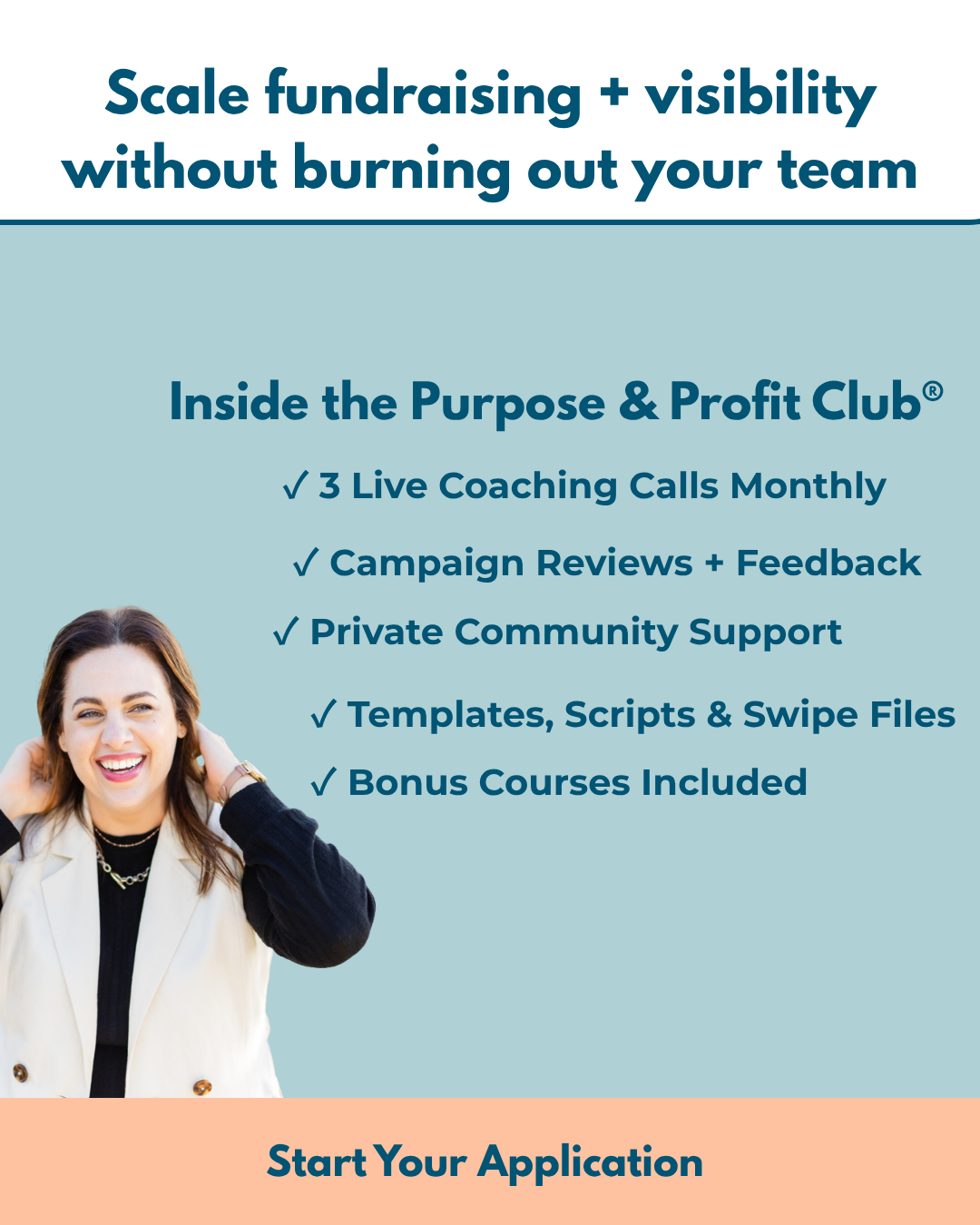
Inside The Purpose & Profit Club®, we help nonprofit leaders build high-converting fundraising campaigns and create the systems, messaging, and Social Street Teams® that amplify them.
You'll learn how to identify aligned ambassadors, create campaigns they actually want to share, equip them with the right tools, and turn influence into sustainable fundraising growth.
Because you don't need millions of followers.
You need the right people advocating for your mission—and a strategy that gives them something worth advocating for.