The 3 Questions Every Donor Asks Before They Give
(And How to Answer Them Honestly and Powerfully)
If you’ve ever sent out a fundraising email, launched a campaign, or had a big donor meeting and wondered why they didn’t give, this one’s for you.
Because here’s the truth: every donor—whether it’s your most loyal supporter, a new prospect, or a corporate partner—is quietly asking three questions before they decide to give.
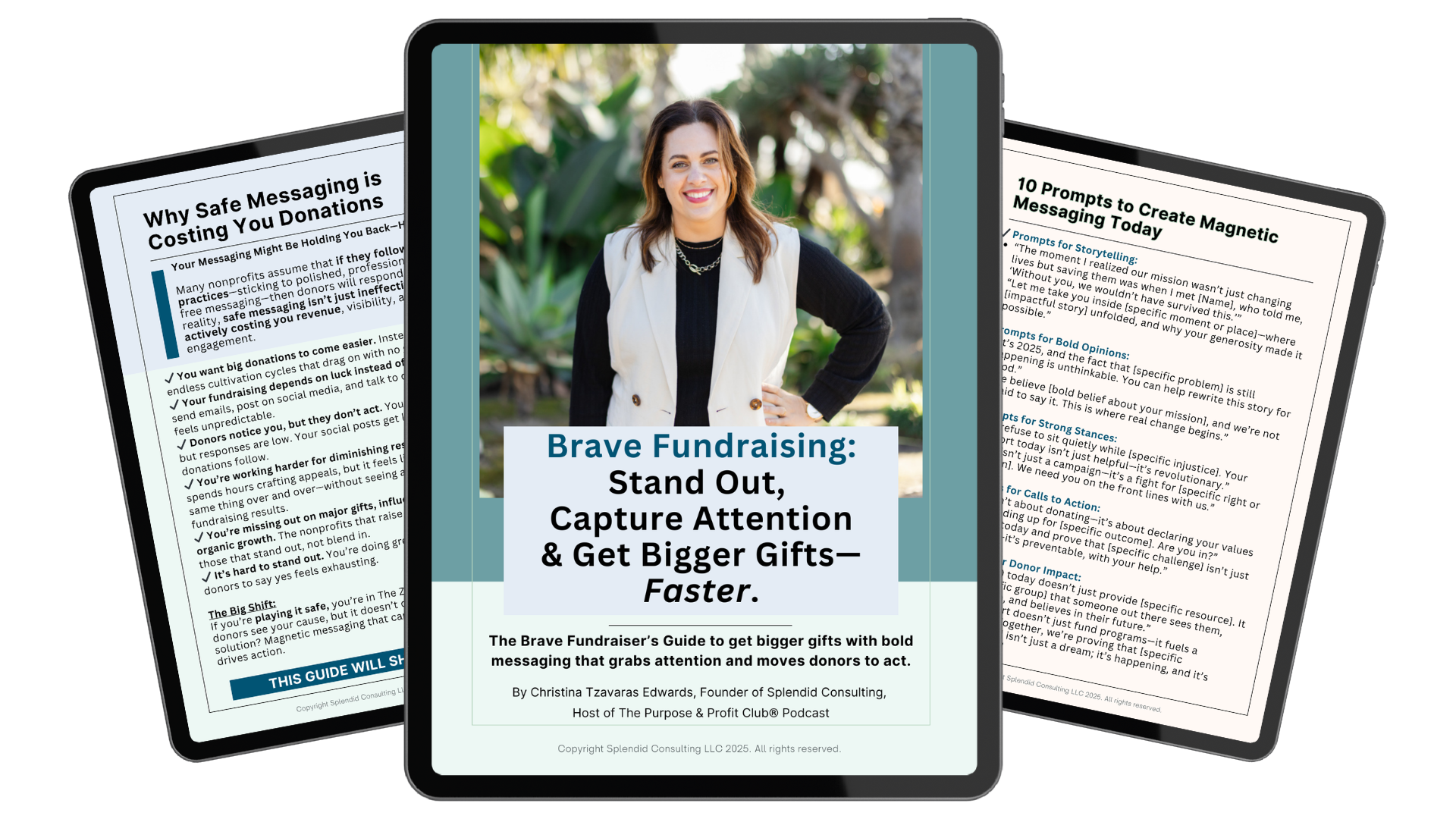
Click here to check this out!
They might not say them out loud, but their brain runs through them in seconds.
And if you can answer them clearly and confidently, you’ll transform how people respond to your message—before the holidays, and all year long.
Let’s dig in.
Question 1: “Why Should I Care?”
Sounds blunt, right? But it’s real.
Every day, people are inundated with messages—ads, notifications, videos, podcasts, even the “lost cat” flyer on a telephone pole. Everyone is constantly filtering: Is this for me? Should I care?
That’s why your campaign has to cut through the noise fast and answer that question from the first line.
But here’s the nuance: the goal isn’t to make the donor the hero.
That old “you saved the day” narrative can slip into savior language and actually distance your audience from the mission.
Instead, think of your donors as partners—strategic collaborators, not rescuers.
They’re investors in change, not buyers of a product.
That shift changes everything about how you write, speak, and ask.
Because when someone feels like a partner in impact—not a one-time transaction—they stick around. They give again. They invite others. They see themselves as part of something bigger.
And that’s the real difference between a donor who gives $25 once… and one who gives $25,000 over time.
So before you send your next appeal, ask yourself:
“Am I treating my donors like partners or like transactions?”
That small mindset shift is the foundation of trust, generosity, and longevity.
Question 2: “Will My Gift Really Make a Difference?”
You’ve probably said this phrase a hundred times:
“Your gift will make a difference.”
But donors are thinking something more specific: Will my gift actually make a difference?
They’re asking:
Is this a one-and-done donation or part of a bigger ripple of change?
How does this connect to my values or the legacy I want to leave?
Is this organization solving symptoms—or dismantling systems?
Here’s what this means in practice:
Let’s say you’re a cat rescue. You could say,
“$50 feeds a rescued cat for a week.”
But what if you went deeper?
“Your $50 helps a rescued cat today—and helps us reduce the stray population across our community over the next five years.”
See the shift? You’re not selling a week of food. You’re inviting them into a movement of change.
People don’t want to fund quick fixes. They want to fund progress.
The same goes for human services, environmental causes, and beyond.
You can’t keep showing up with “emergency” campaigns every week—it signals instability and keeps donors in panic mode.
Instead, show them the through line between today’s action and tomorrow’s outcome.
Paint the picture: What happens in three years because of this one decision today?
That’s how you move donors from giving once to giving with intention.
Question 3: “Do I Trust You?”
This one’s the make-or-break.
And here’s what no one tells you: trust isn’t built with a badge or a polished website.
Sure—have your GuideStar seal, updated 990s, and a donation form that actually works on mobile (please). Those are table stakes.
But real trust is built when you show up as human.
It’s built when you stop hiding behind brand formality and start letting your community see the people behind the mission—the messy, honest, brave, “flawsome” humans doing the work.
It’s why emails from a real name (not “Development Team”) get opened.
It’s why authentic updates outperform glossy press releases.
It’s why a neighbor’s endorsement means more than any ad ever could.
That’s also why I teach the Social Street Team® Method—because word-of-mouth, peer-led, influencer-style trust moves money faster than anything else.
Your donors don’t just want to know your programs.
They want to know you.
When you show up authentically, they stop questioning whether you’re legit—and start believing that you’re worth backing.
Bringing It All Together
So before your next appeal, campaign, or donor meeting, pause and ask:
Why should they care?
Does your message connect to their values and vision?
Will their gift make a difference?
Are you showing the ripple effect, not just the short-term result?
Do they trust you?
Are you showing up like a real human and inviting connection?
If you can answer these three questions with confidence and clarity, you’ll stop chasing donors—and start building a movement.
Ready to Go Deeper?
This is exactly what we work on inside my coaching programs.
The Purpose & Profit Club® – for scaling teams ready to lead boldly, stop spinning, and fundraise with clarity and confidence.
The SPRINT Method™ – for lean teams and solo founders ready to raise consistent $10K+ campaigns without the hustle.
You don’t need more urgency.
You need alignment, trust, and a system that scales.
Let’s build it together.